What does Coetzee’s strange Nobel speech reveal about mind
TL;DR
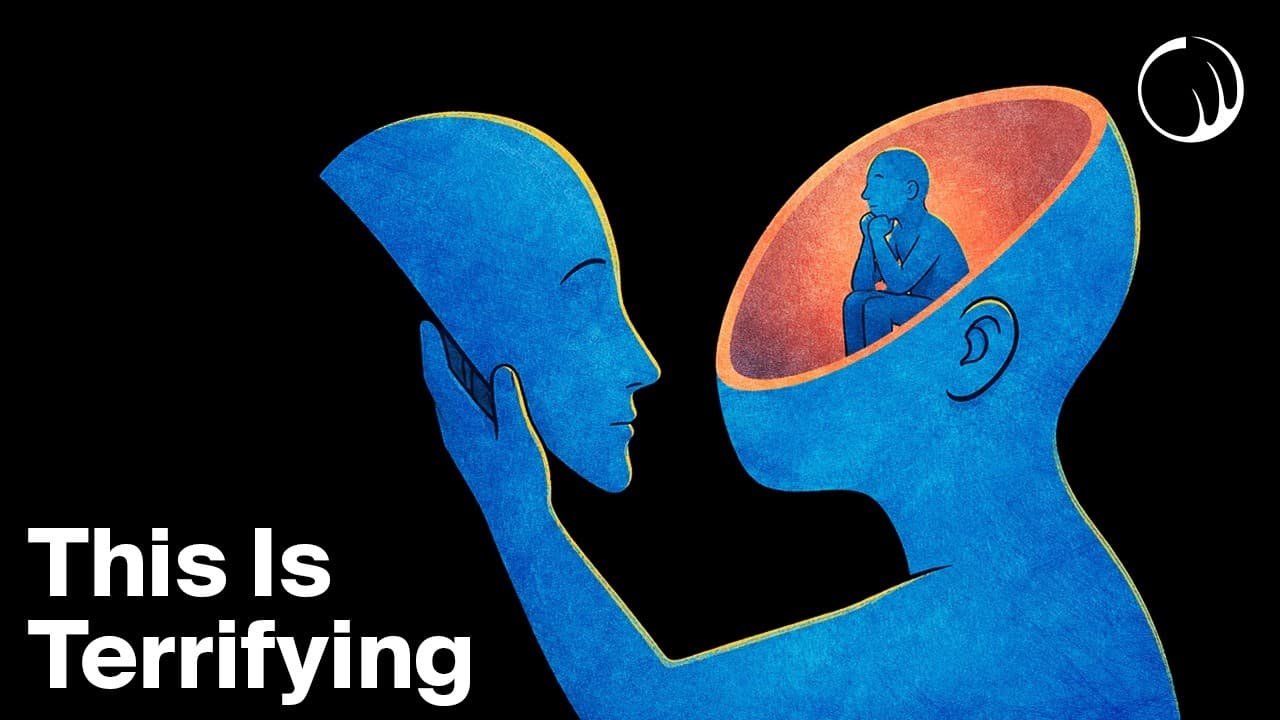
The video argues that we live two lives, one sensory and unconscious and one conscious and linguistic, which often misalign. It uses Coetzee’s speech and the duck decoy metaphor to show how reality is shaped by perception and language. Kant, Schopenhauer, and Taoist ideas are used to frame the mismatch between experience and understanding.
Transcript
This video is sponsored by Factor. Get chef-crafted, ready-to-eat meals delivered straight to your door. Go to factor75.com and use code WONDERFB50 to get 50% off your first Factor box and free breakfast for 1 year. In 2003, J.M. Coetzee was awarded the Nobel Prize in literature. When giving his acceptance speech, he didn't discuss his career, he d... Read More
Key Insights
- The mind operates on two channels, experiencer and observer, which often fail to align.
- Conscious language and beliefs are proxies for reality, not direct representations.
- Duck decoy systems illustrate how appearances deceive observers and create false certainty.
- Coetzee’s speech is interpreted as a reflection on the relationship between author and created characters.
- Transcendental idealism frames knowledge as appearances shaped by human perception, not things-in-themselves.
- Schopenhauer’s distinction between will and representation explains why we misinterpret the world.
- Taoist thought suggests reality cannot be fully named or understood and must be experienced fluidly.
- The overall message is that reality is more complex than linguistic constructs and requires humility about certainty.
- More videos from this channel:
- More from this channel: Pursuit of Wonder
Install to Summarize YouTube Videos and Get Transcripts
Explore YouTube Video Summarizer or Get YouTube Transcript Extractor
Questions & Answers
Q: What is the central claim about mind and reality in the video?
The video argues there are two channels of experience, the unconscious lived experience and the conscious observer using language, concepts, and beliefs. These channels are in constant tension, making direct access to reality difficult. Language serves as a proxy for experience, but it cannot fully capture or convey the true nature of things as they are.
Q: How does Coetzee’s Nobel speech relate to the theme of self and consciousness?
Coetzee’s speech uses a parable where a writer and his character interact, illustrating how a creator and their invention coextend each other. The piece suggests the self is partly a product of the conscious narrator and partly of the experiences that shape perception, implying the self and its stories are interdependent and not fully separable.
Q: What does the duck decoy metaphor illustrate?
The duck decoy metaphor shows how representations look real to those who follow them, guiding behavior even though the ponds and ducks are not genuine. This serves as a model for how human perception uses constructed cues to navigate reality, which can lead to being misled by appearances and not seeing the underlying truth.
Q: Which philosophers are referenced and why are they relevant?
Kant is invoked for the idea that knowledge is limited to appearances, not things-in-themselves. Schopenhauer is cited for the distinction between will and representation, showing how perception distorts reality. Taoist thought is used to emphasize flowing with reality rather than rigidly naming or categorizing it, aligning with the broader theme.
Q: What is meant by reality being a language based decoy system?
Reality is described as a structure built by human language that imitates and communicates experience but does not fully recreate it. This decoy system explains why there can be a persistent gap between what is perceived and what actually exists, highlighting the limitations of language and concepts.
Q: How does the video interpret the two channels of experience in practice?
The experiencer gathers sensory data and reacts automatically, while the observer tries to organize that data into concepts and beliefs. These processes operate on different levels and with different aims, often producing dissonance and limiting our understanding of the external world.
Q: What role does language play in shaping our understanding of reality?
Language acts as a proxy for experience, organizing perception into usable concepts and narratives. While essential for communication and meaning, it inevitably distorts or simplifies the raw data of experience, preventing a direct apprehension of the true nature of reality.
Q: What broader implication does the video draw about knowledge and authorship?
The video suggests that authors and artists may be both readers and creators of their worlds, using conscious processes to shape narratives while being constrained by the underlying experiential substrate. This implies a paradox where knowledge is both constructed and rooted in bodily and sensory experience.
Summary & Key Takeaways
-
The video explains a two life model where unconscious experience and conscious interpretation diverge, creating a gap between what is real and what is understood. It uses Coetzee’s Nobel speech and the duck decoy metaphor to illustrate this gap and its consequences for meaning.
-
It connects the idea that language and concepts are proxies for reality, not the thing itself, to philosophical traditions such as Kant, Schopenhauer, and Taoism, arguing that perception is limited and reality cannot be fully captured by words.
-
It concludes by suggesting that writers and artists may be creating reality through conscious awareness while being formed by a deeper experiential substrate, highlighting the paradox of self and representation in human knowledge.
Read in Other Languages (beta)
Share This Summary 📚
Summarize YouTube Videos and Get Video Transcripts with 1-Click
Try YouTube Summary with ChatGPT & Claude or YouTube Transcript Generator
Explore More Summaries from Pursuit of Wonder 📚
Summarize YouTube Videos and Get Video Transcripts with 1-Click
Try YouTube Summary with ChatGPT & Claude or YouTube Transcript Generator