How to Use Anxiety for Personal Growth
TL;DR
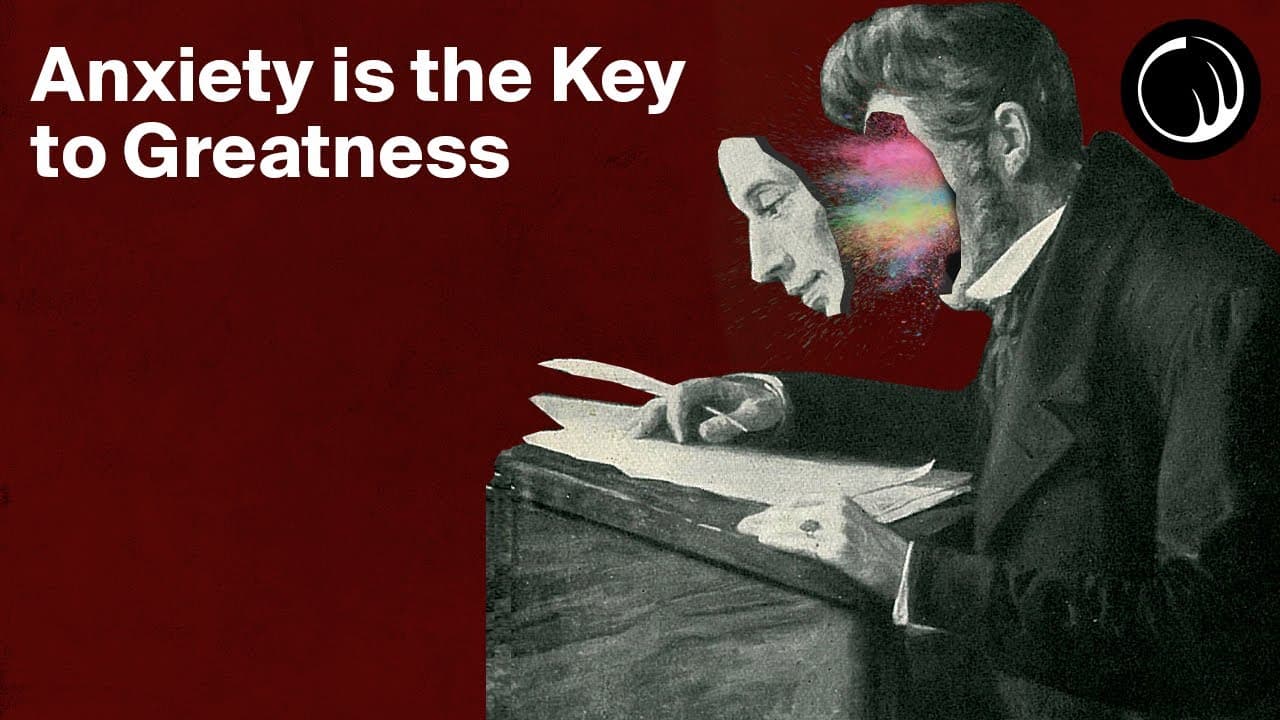
Søren Kierkegaard viewed anxiety as an inherent part of the human condition, essential for personal development. He argued that embracing anxiety can lead to a more meaningful life by encouraging individuals to pursue their passions and subjective truths. Rather than avoiding anxiety, confronting it allows for the realization of one's true potential.
Transcript
Deeply perplexed by the absurdities and troubles of existence, nineteenth-century theologian and philosopher Søren Kierkegaard explored and wrote of profound new ideas that would ultimately challenge the way humanity thinks about philosophy, religion, and psychology. Considered by most to be the father of Existentialism, his work examines theme... Read More
Key Insights
- Søren Kierkegaard is considered the father of Existentialism, exploring themes of anxiety, freedom, and responsibility.
- Anxiety, according to Kierkegaard, is the dizziness of freedom, reflecting the uncertainty of existence and the choices we must make.
- Kierkegaard believed that anxiety is a necessary aspect of life, driving individuals to act and find meaning.
- He suggested that personal growth and self-realization come from embracing anxiety and pursuing passions grounded in subjective truth.
- Avoiding anxiety through conformity or distractions leads to despair and a lack of self-fulfillment.
- Kierkegaard's solution to existential anxiety was faith, but his philosophy can apply to various subjective views of meaning.
- Anxiety is seen as a fundamental part of human consciousness, not merely a weakness or illness.
- Navigating anxiety involves taking leaps of faith into personal beliefs and values, striving for a life worth living.
Install to Summarize YouTube Videos and Get Transcripts
Explore YouTube Video Summarizer or Get YouTube Transcript Extractor
Questions & Answers
Q: What is existential anxiety according to Kierkegaard?
Existential anxiety, as described by Søren Kierkegaard, is the feeling of dread and uncertainty that arises from the freedom and responsibility inherent in human existence. It is not a clinical disorder but a fundamental aspect of being human, reflecting the challenges and unknowns of life. Kierkegaard believed that this anxiety is essential for personal growth and self-realization.
Q: How does Kierkegaard suggest we deal with anxiety?
Kierkegaard suggests that we should embrace anxiety as a necessary part of life rather than avoiding it. He argues that by facing anxiety, individuals can pursue their passions and subjective truths, leading to personal growth and a more meaningful existence. This involves taking leaps of faith into personal beliefs and values, allowing for self-realization and fulfillment.
Q: Why does Kierkegaard view anxiety as a positive force?
Kierkegaard views anxiety as a positive force because it drives individuals to act and make choices, ultimately leading to personal growth and self-realization. He argues that anxiety reflects the freedom and responsibility of existence, and by embracing it, individuals can pursue their passions and subjective truths, finding meaning and fulfillment in life.
Q: What role does subjective truth play in Kierkegaard's philosophy?
Subjective truth plays a central role in Kierkegaard's philosophy, as he believes that individuals must pursue passions and beliefs that are personally meaningful. He argues that true fulfillment comes from committing to these subjective truths, even in the absence of objective certainty. This approach allows individuals to navigate anxiety and find purpose in their actions and choices.
Q: How does Kierkegaard's view of anxiety differ from modern perspectives?
Kierkegaard's view of anxiety differs from modern perspectives by framing it as an inherent and necessary aspect of human existence rather than a disorder to be eliminated. He sees anxiety as a catalyst for personal growth and self-realization, encouraging individuals to confront it and pursue meaningful passions. Modern perspectives often focus on managing or reducing anxiety as a negative experience.
Q: What are the consequences of avoiding anxiety, according to Kierkegaard?
According to Kierkegaard, avoiding anxiety leads to despair, a state of depression and apathy. It results in a lack of self-realization and fulfillment, as individuals fail to confront the challenges and responsibilities of existence. By succumbing to distractions and conformity, individuals miss the opportunity for personal growth and the development of a meaningful self.
Q: How does Kierkegaard's philosophy address the uncertainty of existence?
Kierkegaard's philosophy addresses the uncertainty of existence by emphasizing the importance of embracing anxiety and taking leaps of faith into personal beliefs and values. He argues that uncertainty is an inherent part of life, and by confronting it, individuals can pursue passions and subjective truths, leading to personal growth and a more meaningful existence.
Q: What is the relationship between anxiety and freedom in Kierkegaard's thought?
In Kierkegaard's thought, anxiety is closely linked to freedom, as it arises from the responsibility and uncertainty of making choices in life. He describes anxiety as the dizziness of freedom, reflecting the challenges of navigating existence. By embracing this anxiety, individuals can exercise their freedom to pursue meaningful passions and subjective truths, leading to personal growth and fulfillment.
Summary & Key Takeaways
-
Søren Kierkegaard explored the concept of anxiety as a fundamental part of the human experience, viewing it as the dizziness of freedom. He argued that rather than avoiding anxiety, individuals should embrace it to achieve personal growth and self-realization. This involves pursuing passions and subjective truths, leading to a more meaningful and fulfilled life.
-
Kierkegaard believed that anxiety is inherent to the human condition, reflecting the uncertainty and responsibility of existence. He suggested that facing anxiety head-on allows individuals to develop a unique and meaningful self, whereas avoiding it leads to despair and a lack of fulfillment.
-
The key to navigating anxiety, according to Kierkegaard, is to take leaps of faith into personal beliefs and values. This approach encourages individuals to move forward despite uncertainty, finding meaning in their actions and choices. Kierkegaard's ideas remain relevant, offering insights into how anxiety can be a catalyst for personal growth.
Read in Other Languages (beta)
Share This Summary 📚
Summarize YouTube Videos and Get Video Transcripts with 1-Click
Try YouTube Summary with ChatGPT & Claude or YouTube Transcript Generator
Explore More Summaries from Pursuit of Wonder 📚

Summarize YouTube Videos and Get Video Transcripts with 1-Click
Try YouTube Summary with ChatGPT & Claude or YouTube Transcript Generator