How to Make 2D Animation Stories with Sora 2 Prompts

TL;DR
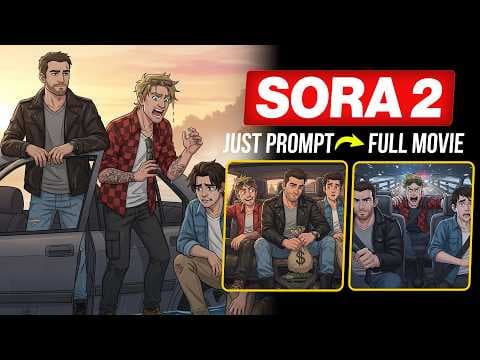
You can build a full 2D animated story with consistent characters using only free AI tools and no animation experience. The workflow moves from a hook-driven script in ChatGPT, to consistent characters in Google Whisk, to free voiceovers in Google AI Studio, and finally to 10-second cinematic clips generated in Sora 2.
Transcript
Have you ever wondered how you could make $86,000 a month from 2D animation stories without even knowing how to animate? I thought it was impossible until I found a faceless YouTube channel earning that exact amount just by uploading simple 2D stories that were pulling millions of views. And here's the thing, I don't even know how to create 2D anim... Read More
Key Insights
- The entire workflow runs on free tools: ChatGPT for scripting and prompts, Google Whisk for characters, Google AI Studio for voiceover, and Sora 2 for animation, with no subscriptions, paid software, or animation experience required.
- Viral AI stories follow a storytelling formula built on three hooks: a question hook that sparks curiosity, a story hook that drops the viewer into the action, and a statement hook that shocks or surprises, stacked together for retention.
- Character consistency is the main reason AI stories fail, not the plot. A character prompt template reads the script, identifies each role's look, mood, and personality, and turns them into text-to-image prompts for Google Whisk.
- Sora 2 generates videos that are 10 seconds long per generation, so no single scene should ever exceed that limit, which is why scripts must be divided into timed scenes before prompting.
- Narration timing is calculated using an average of 18 characters per second, so a 37-character line lasts about 2 seconds, letting creators assign timestamps to every narration line.
- Because each Sora 2 clip lasts 10 seconds, each scene should contain no more than 180 characters of narration total, with one cut created for every line of narration.
- Free studio-quality voiceovers come from Google AI Studio text-to-speech: select single speaker audio, preview and choose a voice matching the story's mood, paste the script, and download narration within seconds.
- Following the tutorial, a creator can launch their first AI story channel within 24 hours, and after posting their first 15 videos, start seeing traction through views, subscribers, YouTube ads, brand deals, and collaborations.
Install to Summarize YouTube Videos and Get Transcripts
Explore YouTube Video Summarizer or Get YouTube Transcript Extractor
Questions & Answers
Q: How do you make 2D animation stories without knowing how to animate?
You use free AI tools instead of traditional animation. The creator built a story entirely with AI: no animation software, no paid tools, and no team, just free resources, a simple step-by-step workflow, and creativity. AI handles the hard part while you focus on telling the story, so no animation experience, editing skills, or special setup is required to build a full 2D animated story.
Q: What free tools are used in this Sora 2 animation workflow?
The workflow uses ChatGPT to write high-retention scripts and generate prompts, Google Whisk to create consistent character images from text-to-image prompts, Google AI Studio's text-to-speech for free studio-quality voiceover narration, and Sora 2 to generate the actual 2D animation clips. Every tool shown is completely free with no subscriptions, hidden costs, or paid software required to complete the entire process.
Q: Why do some AI stories go viral while others flop?
Viral AI stories succeed because of story rhythm, not visuals. Every few seconds something pulls the viewer back, a question, a twist, or a burst of emotion. They follow a storytelling formula built on three hooks: a question hook that sparks curiosity, a story hook that drops the viewer into the action, and a statement hook that shocks or surprises. Stacking these keeps even simple 2D animation irresistible.
Q: How do you keep characters consistent across every scene?
Character consistency is achieved with a character prompt template that reads your script, identifies every main role along with their look, mood, and personality, and turns them into detailed text-to-image prompts. You copy these prompts into Google Whisk, which generates perfectly consistent characters across every scene within seconds. This matters because most AI stories fail when characters keep changing faces or styles, which breaks the illusion and makes viewers click away.
Q: How long can each Sora 2 video clip be?
Sora 2 creates videos that are 10 seconds long per generation, so no single scene should ever exceed that limit. Sora 2 can also create multi-cut videos with multiple camera angles and shots within that clip. This 10-second constraint is the reason the script must be broken into timed scenes before prompting, ensuring each generated clip stays within the tool's limit while still feeling cinematic and well-paced.
Q: How do you calculate scene timing for Sora 2 narration?
Timing is calculated using simple math based on an average narrator speed of 18 characters per second. For example, a line with 37 characters lasts about 2 seconds and is marked from 0 to 2 seconds, while a 10-character line lasts about 0.5 seconds. Since each Sora 2 clip is 10 seconds, each scene should hold no more than 180 characters total, with one cut created for every line of narration.
Q: How do you create a free voiceover for an AI animation story?
You use Google AI Studio's text-to-speech tool, linked in the video description. Select single speaker audio, preview the available voices, and choose one that matches your story's mood. Paste your script and hit run, and within seconds you get studio-quality narration ready to download and sync with your animation. No paid software, fancy microphone, or studio is needed, since this free Google tool delivers professional results in under a minute.
Q: How soon can you start earning from an AI story channel?
If you follow the tutorial carefully, you can launch your first AI story channel within 24 hours. After posting your first 15 videos, you can start seeing real traction, including views, subscribers, and income through YouTube ads, brand deals, and storytelling collaborations. The video references a faceless YouTube channel reportedly earning $86,000 a month by uploading simple 2D stories that pulled millions of views, presented as the inspiration behind this method.
Summary & Key Takeaways
-
The video demonstrates creating 2D animation stories entirely with free AI tools, inspired by a faceless YouTube channel reportedly earning $86,000 a month from simple 2D stories. No animation software, paid tools, or team is needed, only free resources, a workflow, and creativity, with AI handling the hard parts.
-
The process runs in chapters: writing a high-retention script using question, story, and statement hooks in ChatGPT; generating consistent characters with a prompt template fed into Google Whisk; and producing free studio-quality voiceover narration through Google AI Studio's single-speaker text-to-speech feature.
-
Scripts are broken into timed scenes because Sora 2 clips run 10 seconds each, using 18 characters per second to calculate timing and a 180-character-per-scene limit. Each scene is converted into a detailed Sora 2 ready prompt via a ChatGPT template, then generated as cinematic 2D animation clips.
Read in Other Languages (beta)
Share This Summary 📚
Summarize YouTube Videos and Get Video Transcripts with 1-Click
Try YouTube Summary with ChatGPT & Claude or YouTube Transcript Generator
Explore More Summaries from zapiwala ai 📚




Summarize YouTube Videos and Get Video Transcripts with 1-Click
Try YouTube Summary with ChatGPT & Claude or YouTube Transcript Generator