How to stop automatic negative thoughts fueling anxiety
TL;DR
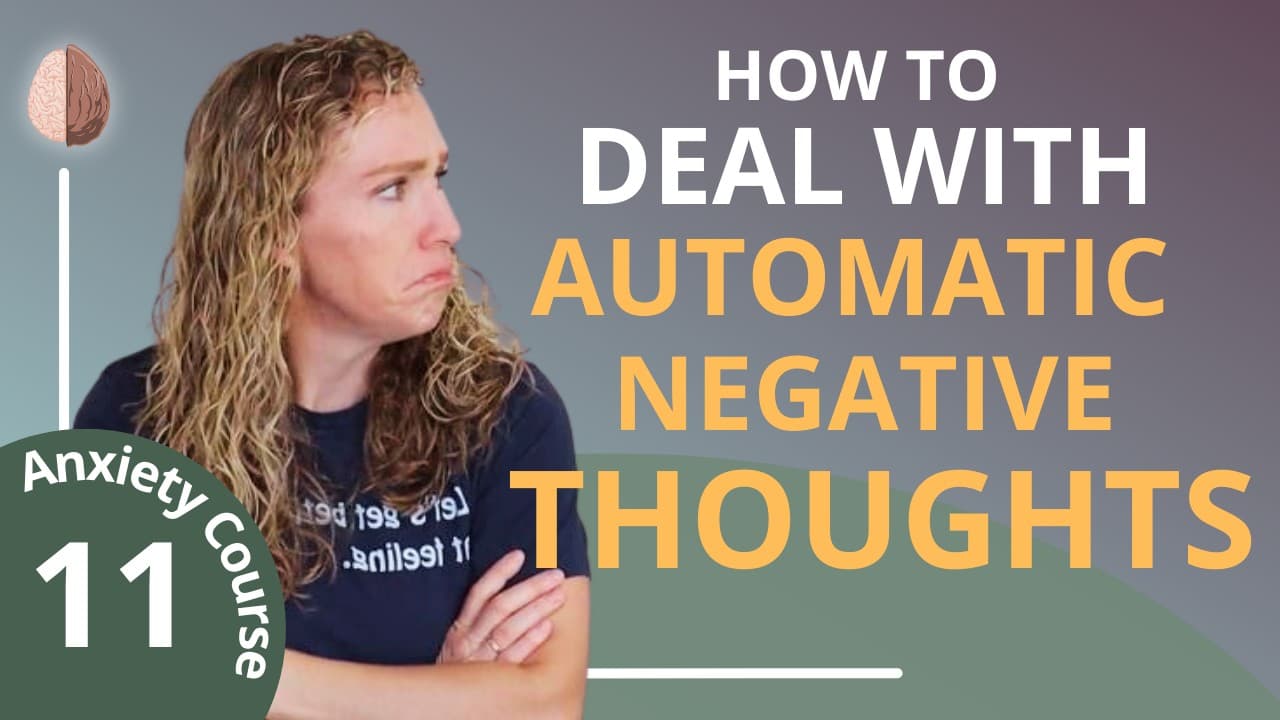
Automatic negative thoughts drive anxiety by shaping how we interpret events. By identifying these thoughts and using CBT and ACT strategies to defuse them, you can break the anxiety cycle, reduce fear responses, and improve mood and resilience over time. The process emphasizes awareness, cognitive defusion, and purposeful action.
Transcript
Let me tell you a story about the invisible thing that fuels anxiety and depression, and then I'm going to teach you some skills to stop letting it control you and how you feel. So one day when I was super pregnant, super tired, exhausted, overwhelmed with parenting three little kids and growing a human inside of me, I had to go to Home Depot t... Read More
Key Insights
- Automatic negative thoughts are involuntary, habitual thoughts that focus on the negative and distort perception.
- The anxiety cycle starts with a stimulus, then interpretation, which triggers the fight or flight response and shapes emotions and behavior.
- Changing how you think can physically alter brain structure due to neural plasticity, illustrating the mind body connection.
- CBT and ACT offer complementary approaches to defuse and reframe thoughts, reducing their grip on feelings of anxiety.
- Common automatic thoughts include self blame, fear of failure, and catastrophic predictions about the future.
- Catching and labeling thoughts moves them from invisible whispers to concrete, testable ideas.
- Assumptions about others and future events often fuel anxiety; testing these assumptions can lower distress.
- Noticing and challenging thoughts helps create a space for choosing responses rather than reacting impulsively.
Install to Summarize YouTube Videos and Get Transcripts
Explore YouTube Video Summarizer or Get YouTube Transcript Extractor
Questions & Answers
Q: How can I identify my automatic negative thoughts in daily life
Automatic negative thoughts are quick, habitual thoughts that arise in response to situations and often go unexamined. To identify them, recall a recent anxious moment and write down the exact thought that appeared first. Then check for distortions such as all or nothing thinking, magnification, or personalizing events. This process makes the hidden thoughts concrete and allows you to begin challenging their accuracy.
Q: What is the first step to start defusing these thoughts
The first step is to become aware of the thoughts as they occur and name them when possible. By labeling a thought as an automatic negative thought rather than a fact, you create a separation between you and the thought. This cognitive defusion reduces its power and opens space for alternative interpretations and responses.
Q: How does CBT help reduce the impact of negative thoughts on anxiety
Cognitive Behavioral Therapy helps by teaching you to identify distortions, evaluate evidence for and against a thought, and replace it with more balanced thinking. Through practice, you learn to pause before reacting, choose healthier interpretations, and adopt behaviors that support calm and resilience, gradually diminishing the influence of negative thoughts on anxiety.
Q: What role does ACT play in managing anxious thinking
Acceptance and Commitment Therapy focuses on defusing from thoughts rather than fighting them. Techniques include observing thoughts nonjudgmentally, naming them, and choosing actions aligned with values despite the thoughts. This approach reduces struggle with thoughts and increases psychological flexibility, making anxious thinking less burdensome.
Q: Can changing thoughts actually affect brain structure
Yes, according to the idea of neural plasticity, changing how you think and act can influence the brain’s physical structure. Repeatedly practicing healthier thinking patterns can strengthen alternative neural pathways, potentially reducing vulnerability to anxiety and depression by reshaping brain networks involved in emotion regulation.
Q: What is a practical exercise to test automatic negative thoughts
A practical exercise is to write down a threatening thought, then examine the evidence for and against it. Consider alternative explanations and imagine a more balanced or neutral interpretation. Finally, plan a small action that would support a more adaptive outcome, reinforcing that thoughts are not fixed truths.
Q: How can one reduce avoidance driven by negative thoughts
Address avoidance by gradually exposing yourself to feared social or daily activities, guided by the belief that thoughts do not have to dictate behavior. Start with small, manageable steps, track mood changes, and celebrate progress. Over time, this reduces the power of negative predictions and lowers avoidance.
Q: Why is awareness of thought patterns essential for emotional health
Awareness helps you catch thoughts before they escalate into intense emotions or self destructive behaviors. By recognizing and labeling patterns, you gain the option to reframe interpretations, choose constructive actions, and build resilience. This self awareness creates space for growth, recovery, and a more balanced emotional life.
Summary & Key Takeaways
-
Automatic negative thoughts are involuntary and habitual, focusing on the negative and distorting perception, which can trigger strong emotions and harmful behaviors. Recognizing these thoughts is the first step toward reducing their influence on anxiety and mood.
-
The video explains the anxiety cycle: a stimulus triggers interpretation, which activates the fight or flight response. Reframing interpretations can dampen fear responses and open space for intentional, constructive actions.
-
Practical skill-building is emphasized, including catching thoughts, challenging distortions, and applying CBT and ACT techniques. The goal is to create cognitive distance from thoughts, enabling healthier responses and reduced avoidance and isolation.
Read in Other Languages (beta)
Share This Summary 📚
Summarize YouTube Videos and Get Video Transcripts with 1-Click
Try YouTube Summary with ChatGPT & Claude or YouTube Transcript Generator
Explore More Summaries from Therapy in a Nutshell 📚






Summarize YouTube Videos and Get Video Transcripts with 1-Click
Try YouTube Summary with ChatGPT & Claude or YouTube Transcript Generator