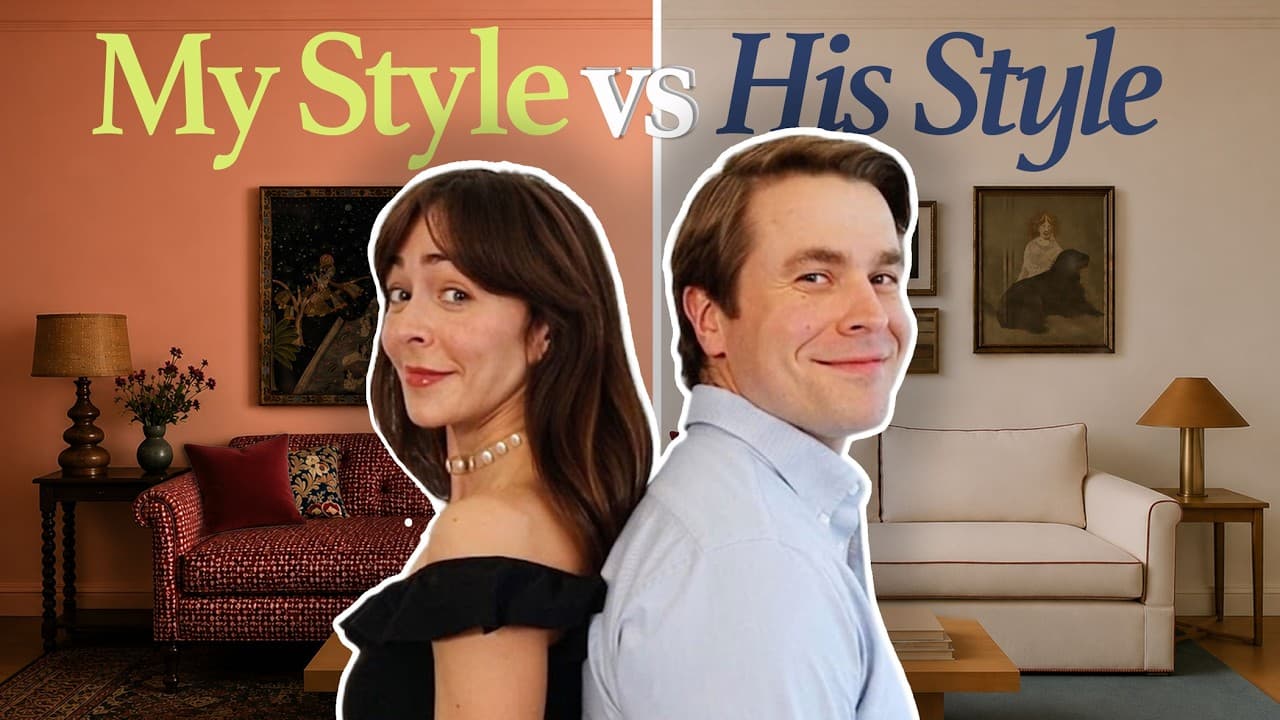
How to Blend Interior Design Styles as a Couple
TL;DR
Use visual references and specific descriptive words to find shared preferences before choosing furniture, colors, or layouts. Each person should contribute options instead of merely rejecting ideas, clarify which decisions matter most, and accept room-specific compromises based on priorities such as functionality, aesthetics, art, or meaningful possessions.
Transcript
Okay, it's time to talk about the greatest test that any marriage or any relationship will ever go through, which is decorating a home together. I'm kind of joking, but not really. Any interior designer who works with a couple will tell you that 90% of their job is couples counseling. 90% of the job of designing with a couple is trying to teach the... Read More
Key Insights
- Decorating together is a new form of creative collaboration, even for couples who already have substantial trust and mutual respect. Both people may need time to establish confidence in each other's judgment because they have not previously completed this kind of shared project.
- Visual references are necessary because spoken descriptions do not guarantee that two people imagine the same room. A collage, drawing, reference photo, or collection of images can communicate relationships among colors, furniture, patterns, and atmosphere without requiring a polished professional mockup.
- Broad style labels are less useful than precise descriptions of desired qualities. Terms such as cozy, layered, patterned, airy, bright, fresh, modern, minimal, moody, or uncluttered can reveal meaningful overlap that labels such as Victorian grandma or Scandinavian might conceal.
- A rejection becomes constructive when it includes an alternative. Someone who wants an equal voice should contribute research, inspiration images, possible products, or other ideas in proportion to how frequently they criticize proposals, rather than leaving all discovery work to the other person.
- Design participation does not need to be divided equally. An 80/20 arrangement may suit a couple when one person cares more about aesthetics while the other has a limited set of priorities, such as avoiding certain colors, displaying souvenirs, or improving functionality.
- Room-specific authority can reflect how each person uses the home. A household cook may reasonably lead decisions about kitchen functionality and layout, then remain flexible about aesthetics, while influence in an office, living room, or another space may be allocated differently.
- Priority ranking makes disagreements easier to resolve because not every preference can carry maximum importance. Asking each person to rate how strongly they care about a color, inherited table, layout, or other request helps distinguish firm needs from preferences that can be conceded.
- Compromise is an expected part of designing a shared home. One partner might accept a less preferred table location when functionality matters greatly to the other, then receive greater freedom over aesthetic choices, creating an exchange based on each person's strongest priorities.
- More videos from this channel:
- More from this channel: Caroline Winkler
Install to Summarize YouTube Videos and Get Transcripts
Explore YouTube Video Summarizer or Get YouTube Transcript Extractor
Questions & Answers
Q: How can couples combine different interior design styles?
Couples can combine their preferences by replacing broad style labels with specific qualities they each enjoy, such as cozy, layered, patterned, airy, bright, fresh, modern, minimal, or uncluttered. They should compare visual references, identify overlapping characteristics, and discuss why particular rooms appeal to them. This process can reveal shared preferences that labels such as Victorian grandma or Scandinavian initially obscure.
Q: Why should couples use visual references when decorating?
Visual references help because no one else can directly see a design concept that exists in one person's mind. Language alone may lead both partners to believe they imagine the same result when their mental pictures are actually different. Reference photos, drawings, image collections, and simple collages can show how individual pieces work together without requiring a detailed professional mockup.
Q: What should someone do when rejecting a partner's decor idea?
Someone rejecting a proposal should bring alternative options instead of repeatedly saying that they dislike each suggestion. Useful contributions can include inspiration photos, different furniture choices, paint samples, sourced products, or a revised concept. If both people expect an equal voice, the effort spent researching and developing possibilities should be reasonably proportionate to how strongly and frequently each person expresses opinions.
Q: Does decorating a shared home need to be a 50/50 process?
Decorating does not need to involve equal participation in every decision. An 80/20 split may work when one person cares much more about aesthetics and the other focuses on a few priorities, such as avoiding particular colors, displaying art and travel souvenirs, or optimizing the floor plan. The important step is discussing what matters to each person and agreeing on their respective influence.
Q: How can partners decide who leads design choices in each room?
Partners can allocate influence room by room according to use, expertise, and priorities. In the example provided, the household cook strongly prioritized kitchen functionality and wanted the layout to match the way he worked, while remaining more flexible about aesthetics. Similar arrangements can apply to an office, living room, or another space that matters especially strongly to one person.
Q: How can couples prioritize conflicting decor requests?
Couples can rate how important each request is on a scale of 1 to 10. A high rating for keeping an old table, choosing a color, or arranging a room in a particular way signals that the other person should seriously try to accommodate it. The method only works if neither partner treats every preference as a maximum-priority demand.
Q: Why can decorating create conflict in a trusting relationship?
Decorating can create conflict because it may be the couple's first substantial creative or group project together. Existing trust and mutual respect do not automatically establish confidence in each person's design judgment or ability to execute a shared vision. Like entering any unfamiliar collaborative setting, both partners begin without experience in that particular arena and must build trust through communication and repeated decisions.
Q: How should a couple handle unequal effort in home design?
The person doing more work should explain how much research and decision-making the process requires, then ask the other partner to contribute ideas they genuinely like. Selecting a sofa, comparing pillows, sourcing items, and assembling inspiration can demand significant effort that may not be obvious from the outside. The couple can then negotiate either greater participation or an openly unequal division of responsibility.
Summary & Key Takeaways
-
Decorating a shared home can take longer because partners must communicate, evaluate options, and develop trust in a new creative setting. Even relationships with strong mutual respect may find this difficult. The additional time is part of creating a nourishing environment together rather than making every decision independently.
-
Visual communication is essential because one person cannot automatically see the design concept another person has imagined. Reference photos, drawings, collections of images, and simple collages can make intentions clearer. Using visuals prevents both people from assuming that the same verbal description has produced the same mental picture.
-
Productive compromise requires identifying each person's priorities, effort level, and flexibility. Partners should bring alternatives when rejecting proposals, decide whether participation is evenly divided or closer to an 80/20 split, and rank requests by importance. Responsibilities and influence can also vary by room, especially when one person prioritizes its functionality.
Read in Other Languages (beta)
Share This Summary 📚
Summarize YouTube Videos and Get Video Transcripts with 1-Click
Try YouTube Summary with ChatGPT & Claude or YouTube Transcript Generator
Explore More Summaries from Caroline Winkler 📚



Summarize YouTube Videos and Get Video Transcripts with 1-Click
Try YouTube Summary with ChatGPT & Claude or YouTube Transcript Generator