How to Redesign a Living Room Without Spending
TL;DR
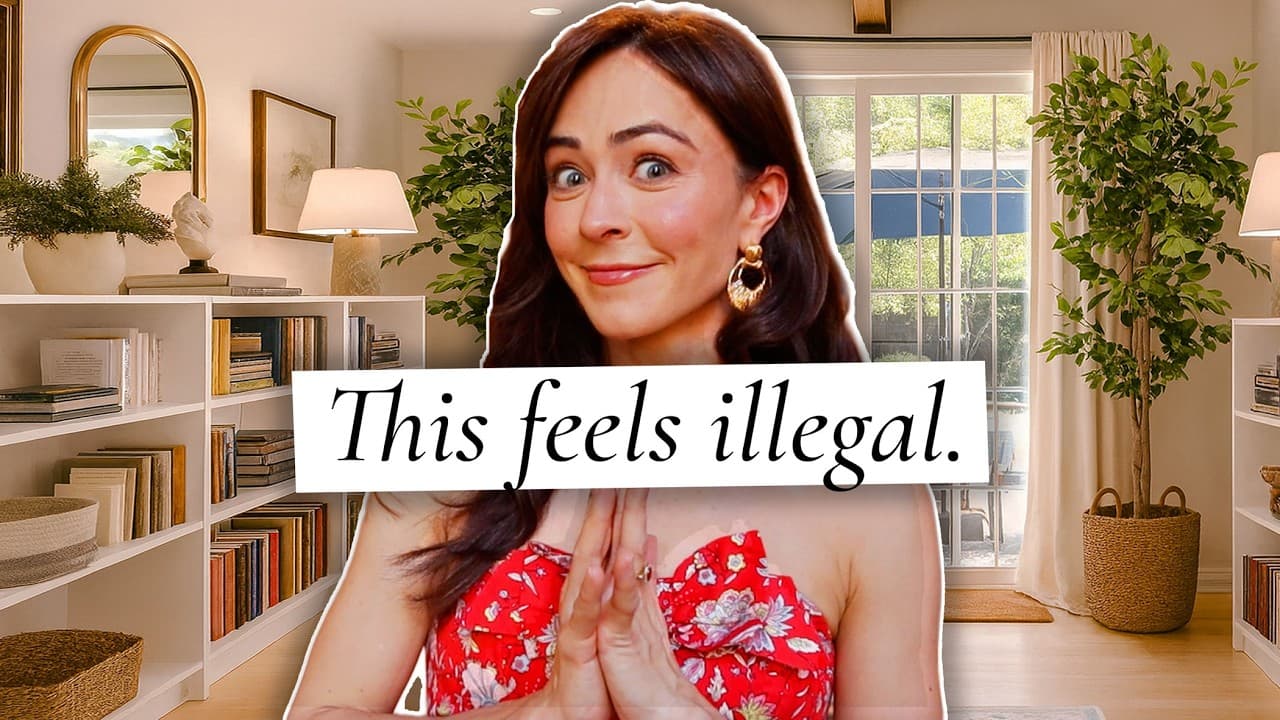
Create a more intentional living room by removing unused items, testing furniture arrangements, dividing the space into functional zones, and redecorating with objects found elsewhere in the home. Rotating a rug, grouping furniture by purpose, and placing color near the entrance can make an existing room feel refreshed without purchasing anything new.
Transcript
Okay, here's the scenario. We are doing a noby makeover in the home of one of my subscribers. That means we are going to try to elevate this room using only what they already own, what's already in the house, not buying anything new. These are the scariest makeovers to me because I have no idea what we're going to do. So, let's figure it out. Y'all... Read More
Key Insights
- • A zero-dollar makeover is created by rearranging, removing, and regrouping items already owned rather than purchasing replacements. The constraint makes experimentation essential because the final design must emerge from the available furniture, artwork, books, rugs, decor, and children's equipment.
- • Tinkering is the main method for discovering a better layout. Physically moving furniture makes it possible to evaluate arrangements that may be difficult to understand through a computer floor plan, especially for someone who responds more readily to the room as a visible, three-dimensional space.
- • Decluttering is the first practical step in reassessing a room. Removing artwork, books, decorative objects, and children's items that are no longer used creates a clearer working space and reveals which possessions should return, move elsewhere, or go into storage.
- • The most visible wall deserves focused attention because it shapes the first impression when someone enters. In this room, neutral artwork offered little color, so the makeover prioritized finding existing colorful pieces that could create greater visual impact near the entrance.
- • A long rectangular room becomes easier to organize when it is divided into distinct functional zones. The redesigned layout separates an entry walkway from the family sitting area, reducing the sense that furniture and activities are scattered around one undifferentiated space.
- • Rug orientation can define boundaries between activities. Rotating the main rug prevents it from extending into the second zone, while a runner taken from the laundry room reinforces the length and purpose of the newly established entry walkway.
- • Intentional design comes from grouping objects that support the same activity. A chair can feel random by itself, but combining it with a lamp and small side table clearly identifies the arrangement as a reading corner rather than leftover furniture.
- • Shopping other rooms can provide useful decor without spending money. Relocating shelves, rugs, artwork, and other overlooked possessions gives familiar items a new context while adding color, warmth, function, and cohesion to the room being refreshed.
- More videos from this channel:
- More from this channel: Caroline Winkler
Install to Summarize YouTube Videos and Get Transcripts
Explore YouTube Video Summarizer or Get YouTube Transcript Extractor
Questions & Answers
Q: How can you redesign a living room without spending money?
Start by removing artwork, books, decor, and any equipment that is no longer being used. Then experiment with the furniture until the room has clear functional areas. Reuse rugs, shelves, lamps, tables, artwork, and colorful objects from other rooms. The goal is to make existing possessions feel intentional through placement, grouping, and a clearer layout rather than buying replacements.
Q: How should you begin a zero-dollar living room makeover?
Begin by clearing movable decor and identifying objects that no longer belong in the room, such as outgrown children's equipment. Keep organized collections together while temporarily relocating them so they are easier to restore later. With the room simplified, physically test different furniture positions. Even an unsuccessful arrangement provides useful information about circulation, sightlines, and how the space might function better.
Q: How do you arrange furniture in a long rectangular living room?
Divide the long room into separate zones based on how the household uses the space. In this makeover, one section becomes the family sitting area and another becomes an intentional entry walkway. Bookshelves and a runner emphasize the walkway, while the sofa and rotated rug define the sitting zone. Clear boundaries prevent one activity area from visually bleeding into another.
Q: Why should you physically test different furniture layouts?
Physical experimentation shows how an arrangement feels in the actual room, including its views, walking paths, boundaries, and relationship to other furniture. The makeover relies on repeated tinkering because a computer floor plan did not usually reveal the preferred layout. Trying an idea is still productive when it fails, since rejecting weak arrangements helps narrow the available choices.
Q: How can a rug help define zones in a living room?
A rug can visually contain a functional area and distinguish it from an adjacent zone. Rotating the main rug in this room helps it cover the family sitting area without extending into the entry walkway. A separate runner reinforces the walkway's length. Together, the rugs make the two areas feel deliberate even though they remain part of one rectangular room.
Q: How can you make disconnected furniture look intentional?
Group furniture and accessories according to a shared purpose. A single chair may appear random, but placing it beside a lamp and a small side table turns the collection into a recognizable reading nook. The same principle applies to children's spaces: placing their table, art materials, and related objects together makes the area feel planned rather than scattered throughout the room.
Q: How can you add color without buying new home decor?
Search the rest of the home for colorful artwork, books, shelves, textiles, and decorative objects that can be relocated. Concentrate some of that color where it will have strong visual impact, particularly on the first wall seen from the entrance. In this makeover, moving a bookshelf adds both warmth and color while preserving the light, cohesive character found elsewhere in the home.
Q: How can a shared living room work for adults and children?
Create visible, activity-based areas instead of pushing every children's item into an isolated corner. The arrangement should allow adults in the sitting area to see the children without repeatedly looking over their shoulders. A dedicated children's table, nearby supplies, and a playful seating setup give the children defined places for crafts and play while keeping the room useful for relaxing, hosting, and watching television.
Summary & Key Takeaways
-
The makeover begins by removing artwork, books, decor, and outgrown children's equipment so the room can be reconsidered without visual clutter. Because no new products can be purchased, every design decision depends on experimenting with the family's existing furniture, decorations, rugs, books, and unused objects from elsewhere in the house.
-
The long rectangular room is divided into two clearer zones. The sofa and rug define the main family sitting area, while bookshelves and a runner establish an intentional entry walkway. Moving the sofa also replaces its view of a blank wall with a view through the windows and keeps the children more visible.
-
Purposeful groupings turn disconnected objects into functional areas. A chair, lamp, and side table become a reading nook, while children's furniture and art supplies create a dedicated activity area. The process demonstrates that rearranging familiar possessions, relocating colorful objects, and giving each corner a clear function can refresh a room without spending money.
Read in Other Languages (beta)
Share This Summary 📚
Summarize YouTube Videos and Get Video Transcripts with 1-Click
Try YouTube Summary with ChatGPT & Claude or YouTube Transcript Generator
Explore More Summaries from Caroline Winkler 📚




Summarize YouTube Videos and Get Video Transcripts with 1-Click
Try YouTube Summary with ChatGPT & Claude or YouTube Transcript Generator