How to Decorate Your Home When You Feel Stuck
TL;DR
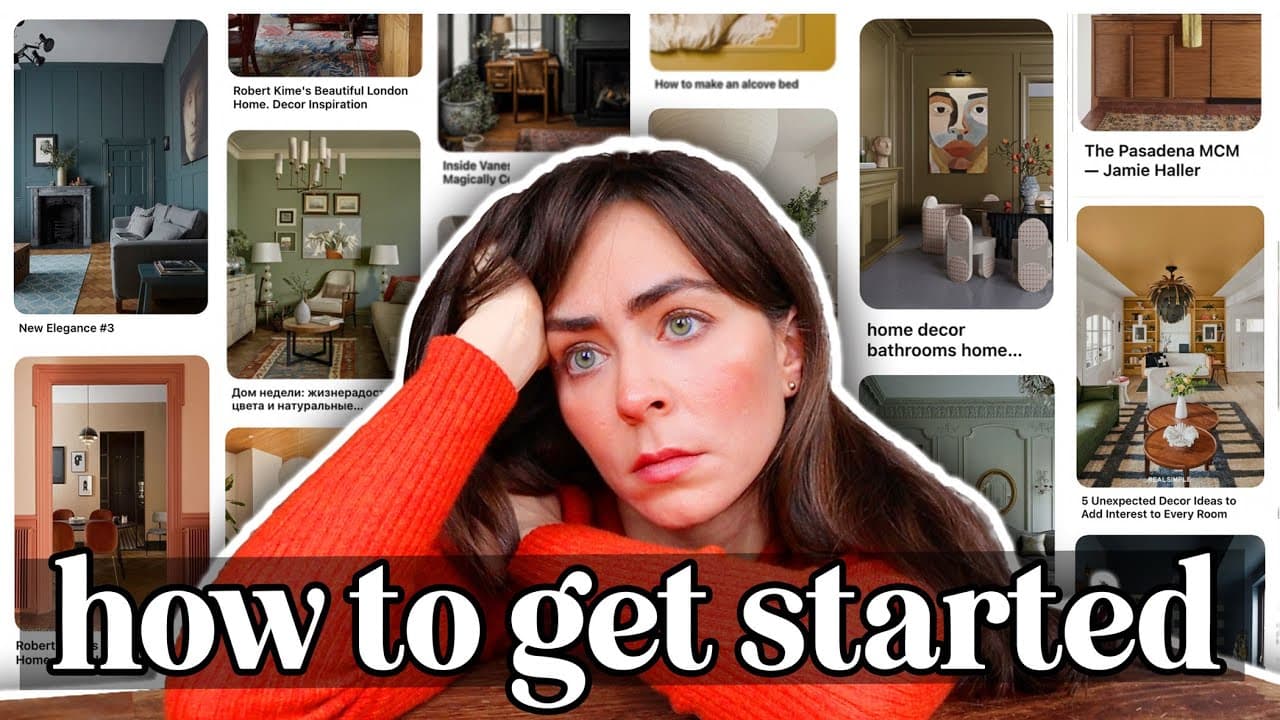
Start with practical restrictions such as budget, architecture, existing furniture, pets, and children, because limits narrow the choices and make creativity easier. Build a broad inspiration board, identify recurring preferences, remove ideas that will not work in your actual space, and use the resulting focused board as a North Star for purchases and design decisions.
Transcript
listen wolf sometimes the videos I make there's really no value to them but that that's not true this one's going to be good this one's important I'm pretty excited whether you have just bought a home whether you're renting whether you are redecorating or renovating this video is for everybody everybody at some point feels that feeling of indecisio... Read More
Key Insights
- A blank canvas is a major inhibitor of creativity because unlimited possibilities offer no clear starting point. Indecision often becomes strongest when someone faces an empty room or imagines a future home without any defined budget, architecture, furniture, or practical requirements.
- Restrictions are useful creative tools because they reduce the number of plausible design directions. Budget, architecture, fixed finishes, existing furniture, pets, children, and a partner's preferences can all provide the boundaries needed to develop a room that feels intentional and distinctive.
- Existing features can inspire unexpected design choices. Cherrywood kitchen cabinets prompted the selection of a dark blue that complemented and emphasized their red tones, transforming an initially unwanted rental feature into the basis for a favorite room.
- Budget limitations can produce memorable focal points. When wallpapering every bedroom wall was unaffordable, placing wallpaper on the ceiling created a distinctive view from the bed while allowing the rest of the room to remain bright and airy.
- Planning should come before taste decisions. The room's budget, dimensions, lighting, ceiling height, required durability, and immovable objects should be identified first, because those practical conditions determine which attractive ideas can function successfully in the actual space.
- A personal home does not need a single named design style. Labels such as modern glam, farmhouse, or rustic can encourage imitation and make a room feel themed, while a mixture of personally meaningful preferences can produce a more original and homey result.
- An inspiration board should begin broadly and without concern for consistency. Collect every appealing image, use unusual adjectives and search queries to move beyond familiar recommendations, and expose yourself to styles or examples that might otherwise remain outside your usual algorithm.
- A focused inspiration board works as a North Star for design decisions. Recurring themes reveal durable preferences, while removing outliers and ideas that conflict with real constraints produces a practical reference for evaluating furniture, paint colors, and potential purchases.
- More videos from this channel:
- More from this channel: Caroline Winkler
Install to Summarize YouTube Videos and Get Transcripts
Explore YouTube Video Summarizer or Get YouTube Transcript Extractor
Questions & Answers
Q: How can I start decorating when every option feels possible?
Begin by identifying the conditions that already limit the room. Record the budget, architecture, ceiling height, lighting, existing furniture, fixed finishes, pets, children, and anything else that must remain or be accommodated. These restrictions reduce the overwhelming number of possibilities and create a practical starting point. Once the plan is clear, make taste decisions within those boundaries.
Q: Why does a blank room make decorating decisions harder?
A blank room can make decorating difficult because it appears to permit every possible style, color, layout, and object. That freedom offers no clear direction for choosing among attractive alternatives. Creativity becomes easier when the room has defined boundaries, such as a budget, an architectural feature, an existing couch, low ceilings, or another requirement that narrows the available choices.
Q: Should I choose an interior design style before decorating?
Choosing a single named style is not necessary, especially when several styles are appealing. A clearly labeled room can become an imitation of an existing category rather than an expression of personal taste. Instead, collect varied inspiration and look for recurring preferences, such as wood furniture or sparse rooms. Those repeated qualities can guide a personal, homey design without requiring one style label.
Q: What does plan first, taste second mean in interior design?
Plan first, taste second means defining the room's practical requirements before selecting ideas solely because they look attractive. Determine the budget, physical dimensions, lighting, ceiling height, existing pieces, household needs, and immovable features. Then evaluate colors, furniture, and inspiration within that framework. The plan narrows the options, making taste decisions more manageable and relevant to the real room.
Q: How do I create an inspiration board when I like many styles?
Create a new board and initially save every image that appeals to you, without requiring a consistent theme or deciding whether each example is realistic. Search with unusual adjectives and queries so that familiar recommendations do not determine everything you see. After gathering many images, review the collection repeatedly and identify qualities that appear across different styles, rooms, and examples.
Q: How do I turn a broad mood board into a practical design plan?
Review the board several times and identify recurring themes, such as preferred materials, colors, or levels of visual simplicity. Treat unusual images that do not connect with the broader pattern as possible outliers. Then compare every remaining image with the room's restrictions, including budget, dimensions, light, architecture, pets, children, and existing objects. Remove ideas that would not translate successfully.
Q: How should I evaluate whether an inspiration photo will work in my room?
Ask what specifically makes the photograph appealing and whether that quality depends on features your room does not have. Consider ceiling height, windows, natural light, archways, dimensions, fixed finishes, and other architectural conditions. An image that succeeds in a bright room with distinctive architecture may not work equally well in a dim room without those features, so assess the underlying reasons for its effect.
Q: How can a focused inspiration board help with shopping?
A focused inspiration board acts as a North Star by showing the preferences that continue to matter after outliers and impractical ideas have been removed. When considering furniture, paint, or another purchase, return to the board and ask whether the item moves the room closer to that direction. This reference helps restore focus when attractive alternatives create renewed indecision.
Summary & Key Takeaways
-
A completely blank canvas can make decorating harder because unlimited possibilities provide no useful starting point. Existing architecture, fixed finishes, budgets, furniture, household needs, and other constraints can guide creative choices. The practical approach is to accept these conditions and design around them instead of treating them only as obstacles.
-
Plan the room before making decisions based on taste. Identify the budget, dimensions, lighting, ceiling height, existing pieces, pets, children, and immovable features that must shape the result. These requirements narrow the available options and help distinguish attractive inspiration from ideas that could genuinely succeed in the space being decorated.
-
Create an inspiration board without initially forcing every image into one named style. Collect widely, search beyond familiar recommendations, and then review the board repeatedly for recurring qualities. Remove outliers and impractical examples. The remaining images become a North Star that can refocus decisions about furniture, paint, and other purchases.
Read in Other Languages (beta)
Share This Summary 📚
Summarize YouTube Videos and Get Video Transcripts with 1-Click
Try YouTube Summary with ChatGPT & Claude or YouTube Transcript Generator
Explore More Summaries from Caroline Winkler 📚





Summarize YouTube Videos and Get Video Transcripts with 1-Click
Try YouTube Summary with ChatGPT & Claude or YouTube Transcript Generator