What Is Putin’s New Demand as Kiev Collapses, and Why Is the EU Arguing Over an Envoy?
TL;DR
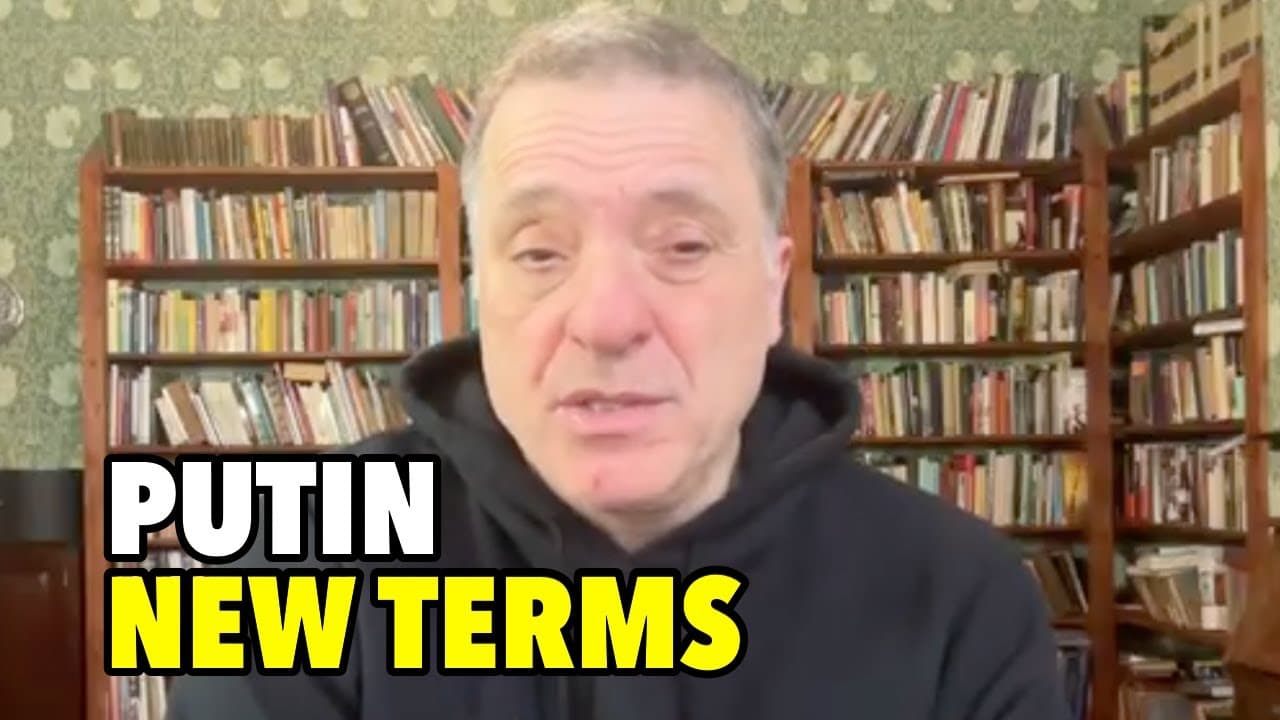
Putin’s new demand links peace in Ukraine to renewed talks on NATO expansion and a new European security architecture. In a foreign-policy speech discussed on 16 January 2026, he blamed the Ukraine crisis on years of disregarding Russia’s security interests and said Russia would continue pursuing its objectives until other capitals accepted the need for a long-term settlement. Read on for the speech’s implications for Ukraine, Europe, Cuba, and the Middle East.
Transcript
Good day. Today is Friday, 16th January, 2026. And before I proceed with this program, let me remind you again uh to tick the like button and to check your subscription to this channel. If once you've watched this program or whatever part of the program you want to watch, you decide that you like what you've heard and you wish to indicate that fact... Read More
Key Insights
- Putin demands a reversal of NATO's eastward expansion as a condition for peace in Ukraine.
- Russia's position on Ukraine has hardened, making diplomatic resolutions more complex.
- Putin emphasizes the need for a new European security architecture.
- The Russian leader criticizes US unilateral actions and advocates for a multipolar world.
- Ukraine faces a humanitarian crisis with widespread blackouts and economic breakdown.
- Russia's military continues to advance in Ukraine, with strategic planning underway.
- European leaders are increasingly open to dialogue with Russia amid shifting geopolitical dynamics.
- Russia considers Cuba an ally and is prepared to provide economic assistance, including oil.
Install to Summarize YouTube Videos and Get Transcripts
Explore YouTube Video Summarizer or Get YouTube Transcript Extractor
Questions & Answers
Q: What does Putin demand for a peaceful settlement in Ukraine?
Putin calls for a substantive discussion of Russia’s previous proposals for a new European and global security architecture. He argues that a long-term settlement must reliably ensure everyone’s security and cannot be limited to negotiations about Ukraine alone.
Q: How does Putin connect NATO expansion to the Ukraine crisis?
Putin describes the Ukraine crisis as a direct consequence of ignoring Russia’s stated interests and advancing NATO toward Russia’s borders. He also says that this expansion contradicted public promises made to Russia.
Q: Why does the speaker believe Putin’s position on Ukraine has hardened?
The speaker interprets Putin’s remarks as moving the focus beyond an isolated settlement of the Ukraine conflict to the wider European security order. In the speaker’s assessment, this makes a diplomatic resolution significantly more complicated and potentially beyond reach if Putin is taken at his word.
Q: What security arrangement does Putin propose for Europe?
Putin proposes returning to Russia’s earlier options for what he calls a reliable and fair architecture of European and global security. He says these proposals contain rational solutions intended to satisfy countries in Europe, Asia, America, and elsewhere.
Q: What will Russia do until other capitals accept these security talks?
Putin says Russia will continue to pursue its objectives consistently. He expresses hope that Kiev and the capitals supporting it will eventually recognize the need for the broader security discussion he proposes.
Q: What humanitarian conditions are described in Ukraine?
The existing account describes major Ukrainian cities facing blackouts after damage to energy infrastructure from Russian aerial strikes. Economic activity and essential services are said to be breaking down, creating the risk of a humanitarian catastrophe during subzero temperatures.
Q: What position does Putin take on Russia’s relationship with Cuba?
Putin presents Cuba as a Russian ally and signals a red line following threats described as coming from Donald Trump and other American officials. The account also says Russia is prepared to provide economic assistance, including oil, and highlights cooperation in energy and infrastructure.
Q: What diplomatic role is Russia playing in the Middle East?
Putin held telephone discussions with Iranian President Pezeshkian and Israeli Prime Minister Netanyahu following protests in Iran. The account says Russia favors political and diplomatic solutions and is involved in mediation efforts surrounding Iran and broader regional tensions.
Summary & Key Takeaways
-
Putin has linked peace in Ukraine to a reversal of NATO's eastward expansion, complicating diplomatic efforts. He emphasizes the need for a new security architecture in Europe and criticizes US unilateral actions. This hardening stance comes amid worsening conditions in Ukraine and shifting European attitudes towards dialogue with Russia.
-
Ukraine is experiencing a humanitarian crisis with major cities in blackout and economic activities halted. Russia's military continues to make strategic advances, with Putin's recent speech indicating a significant hardening of Moscow's position on Ukraine and broader European security issues.
-
European leaders are showing a renewed interest in dialogue with Russia as they grapple with the geopolitical shifts and the deteriorating situation in Ukraine. Meanwhile, Russia reaffirms its alliance with Cuba, offering economic assistance, and continues its mediation efforts in the Middle East.
Read in Other Languages (beta)
Share This Summary 📚
Summarize YouTube Videos and Get Video Transcripts with 1-Click
Try YouTube Summary with ChatGPT & Claude or YouTube Transcript Generator
Explore More Summaries from Alexander Mercouris 📚
Summarize YouTube Videos and Get Video Transcripts with 1-Click
Try YouTube Summary with ChatGPT & Claude or YouTube Transcript Generator