Why Is US Diplomacy on Ukraine in Chaos After the Witkoff-Kushner Moscow Trip, Failed UAE Meeting, Media Leaks, and Pokrovsk Pressure?
TL;DR
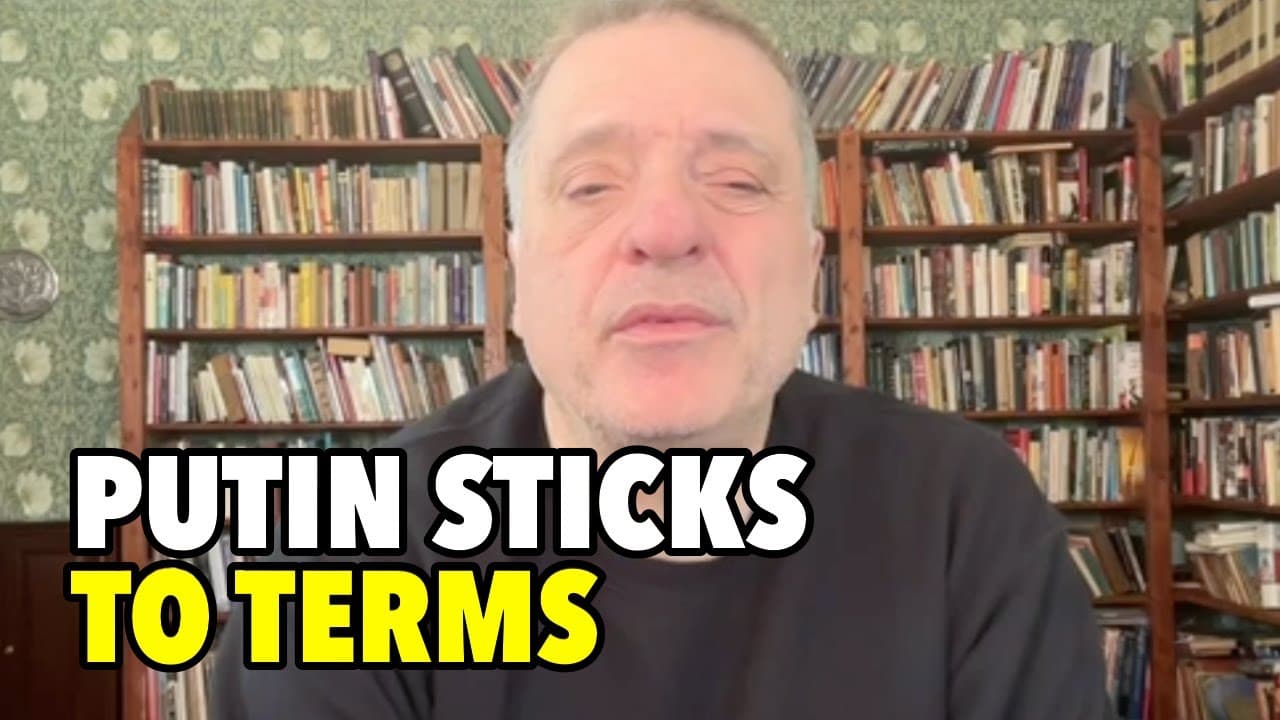
US diplomacy on Ukraine appears chaotic because Marco Rubio’s claims of major progress after Geneva conflict with unresolved disputes over NATO membership, territory, and Ukraine’s armed forces. The analysis contrasts Russia’s proposed 85,000-person cap in April 2022 with Ukraine’s proposed 250,000 and a later reported demand for 800,000, while arguing that battlefield pressure around Pokrovsk drives the talks. Read on to understand the eight obstacles dividing Washington, Kyiv, Moscow, and Europe.
Transcript
Good day. Today is Wednesday, 26th November 2025 and as you can see I am back in London and may I first of all take this opportunity to thank you all for bearing with me whilst I was away in Edinburgh. I should add that as well as being a holiday, I had some very fruitful meetings with um well one particular person who resides in Edinburgh and with... Read More
Key Insights
- The central argument is that military developments are driving diplomatic choices. The speaker says negotiations cannot be understood without accepting his assessment that Ukraine is losing ground and faces a serious risk of broader military collapse.
- Western media coverage is portrayed as concentrating on plans, personalities, and statements while giving insufficient attention to battlefield conditions. The speaker argues that this separation makes the diplomatic process appear abstract and obscures why Washington is pursuing negotiations.
- The Geneva discussions did not resolve Ukraine’s position on NATO membership, according to the account presented. Ukraine reportedly remained unwilling to alter its constitutional commitment to eventual membership, a stance the speaker says is also supported by European governments.
- Ukraine’s desired military size remains a major obstacle in the proposed settlement. The speaker argues that the force level reportedly sought by Ukraine and its supporters would be financially difficult to sustain and far above what Russia previously considered acceptable.
- Territorial recognition remains unresolved because Ukraine reportedly refused to acknowledge Russian control over Crimea, Donbas, or other territory. The speaker also expresses doubt that Kyiv is prepared to withdraw its forces from Donbas under the current proposals.
- Marco Rubio’s optimistic description of the Geneva meeting is challenged by subsequent reporting. The speaker interprets the gap between public assurances and unresolved disputes as evidence that the American administration lacks a unified approach to the negotiations.
- Russian participation is indispensable because Moscow must accept any agreement for it to end the conflict. Lavrov’s comments are presented as a warning that revisions favoring Ukrainian demands could undermine provisions Russia had viewed as a possible basis for discussion.
- Washington leaks are portrayed as part of an internal struggle over peace policy. The speaker connects disclosures about diplomatic meetings, including contacts involving American envoys, with resistance inside the political establishment and bureaucracy to the administration’s negotiating initiative.
Install to Summarize YouTube Videos and Get Transcripts
Explore YouTube Video Summarizer or Get YouTube Transcript Extractor
Questions & Answers
Q: Why does the analysis describe US diplomacy on Ukraine as chaotic?
Marco Rubio portrayed the Geneva meeting as a major advance, but later reporting indicated that fundamental disputes remained over NATO, military strength, and territorial control. The speaker also argues that the administration, US political class, and permanent bureaucracy do not unanimously support the peace initiative, while media leaks expose those internal divisions.
Q: What disagreements remained after the Geneva talks?
Ukraine reportedly remained unwilling to change its constitutional commitment to joining NATO, accept significant limits on its armed forces, or recognize Russian control over disputed territory. The analysis therefore characterizes these as essential unresolved issues rather than minor details.
Q: Why is Ukrainian NATO membership central to the negotiations?
Ukraine reportedly would not amend the constitutional commitment directing it toward eventual NATO membership. The transcript says that Ukraine continues to insist on ultimately joining the alliance and that European governments support this position.
Q: Why is the proposed size of Ukraine’s armed forces disputed?
During the April 2022 Istanbul negotiations, Russia proposed limiting Ukraine’s armed forces to 85,000 personnel, while Ukraine sought 250,000. A later proposal reportedly called for 800,000, exceeding the 600,000 figure in the American 28-point draft and creating another major obstacle to agreement.
Q: Why are territorial concessions difficult to negotiate?
Ukraine reportedly refused to recognize Russian control over Crimea, Donbas, or other territory. The analysis also questions whether Kyiv would withdraw its forces from Donbas, leaving territorial status unresolved in any settlement requiring Moscow’s acceptance.
Q: How does the battlefield situation, including Pokrovsk, affect diplomacy?
The speaker argues that military conditions drive political and diplomatic decisions, describing Ukraine as losing badly and facing a serious risk of total military collapse. The supplied analysis identifies mounting pressure around Pokrovsk as part of that worsening situation and says Western coverage gives the battlefield too little attention.
Q: What role do Washington media leaks play in the negotiations?
The analysis presents leaks about diplomatic meetings and contacts involving American envoys as evidence of an internal struggle over peace policy. It argues that officials or institutions opposed to the initiative use disclosures to weaken negotiations and proposed compromises.
Q: How does Moscow view the American peace framework?
Moscow is portrayed as conditionally receptive to provisions in the original American framework but skeptical of later revisions. Sergey Lavrov’s comments are interpreted as warning that changes favoring Ukrainian and European demands could undermine provisions Russia had considered a possible basis for discussion.
Summary & Key Takeaways
-
The analysis presents the diplomatic process as fragmented and confusing. It contrasts Marco Rubio’s positive account of the Geneva discussions with reports that Ukraine retained firm positions on NATO membership, military strength, and territorial concessions. These unresolved issues are portrayed as fundamental disagreements rather than minor details awaiting final negotiation.
-
Russian acceptance is described as essential to any settlement, yet Moscow is portrayed as skeptical of revisions made after the original American proposal circulated. Sergey Lavrov’s comments are interpreted as signaling that Russia distinguishes between provisions it considered workable and later changes that appear more favorable to Ukraine and its European supporters.
-
The battlefield is presented as the force shaping every diplomatic initiative. The speaker argues that Ukraine faces shrinking military capacity and mounting pressure around Pokrovsk, while Western coverage concentrates on negotiations and leaks. From this perspective, diplomatic confusion persists because political positions remain disconnected from worsening military realities.
Read in Other Languages (beta)
Share This Summary 📚
Summarize YouTube Videos and Get Video Transcripts with 1-Click
Try YouTube Summary with ChatGPT & Claude or YouTube Transcript Generator
Explore More Summaries from Alexander Mercouris 📚
Summarize YouTube Videos and Get Video Transcripts with 1-Click
Try YouTube Summary with ChatGPT & Claude or YouTube Transcript Generator