Why Are Greenland Tariffs Straining NATO?
TL;DR
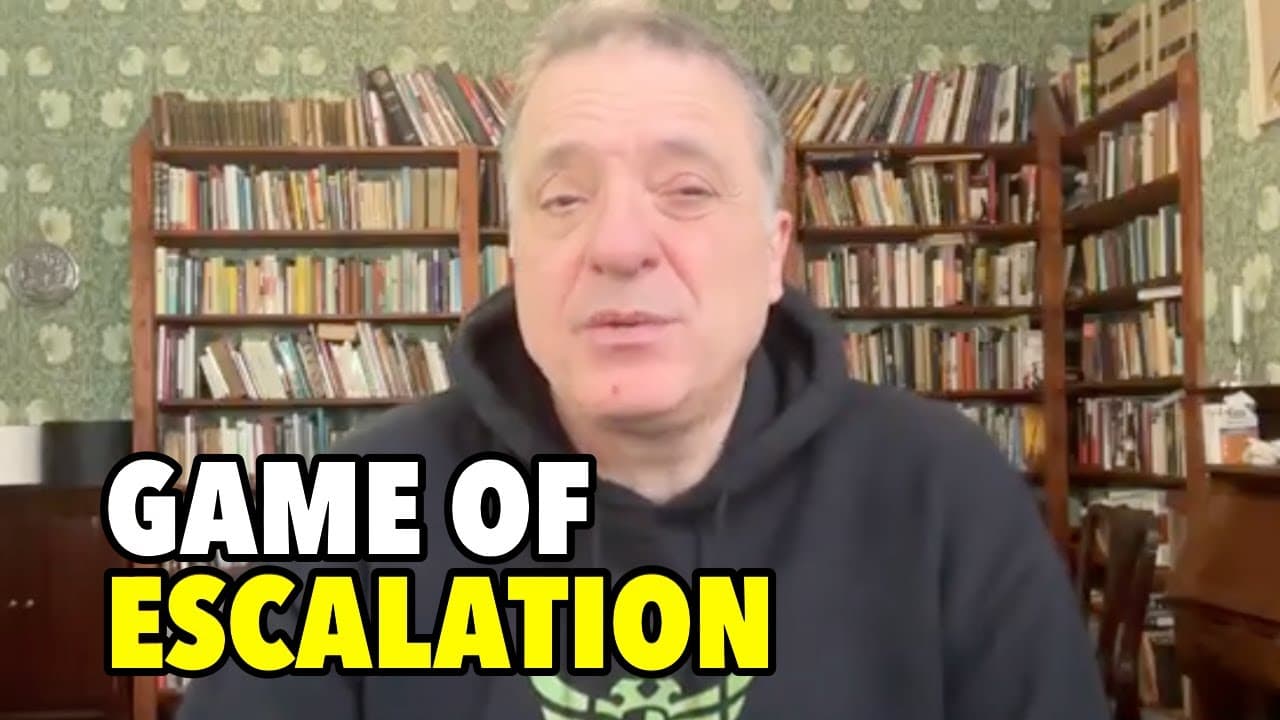
Trump imposed additional tariffs on European countries and tied their removal to a mechanism for transferring Greenland to the United States, according to the commentary. The analysis argues that Europe’s token military deployment provoked Washington without providing deterrence, while dependence on American security, intelligence, and LNG leaves European leaders with few credible options for retaliation.
Transcript
Good day. Today is Sunday, 18th January, 2026. And before I proceed with this program, let me remind you again to tick the like button and to check your subscription to this ch to this channel. If once you've watched this video or whatever part of the video you want to watch, you decide that you like what you've heard and wish to indicate that fact... Read More
Key Insights
- The Greenland deployment is described as a small European military mission organized without consultation with Washington and outside a formal NATO framework. The commentary argues that its unclear purpose made it strategically ineffective and increased the likelihood of an angry American response.
- A Russian or Chinese attack on Greenland is dismissed as implausible in the commentary. The speaker says Russia has denied plans to seize the territory, China currently lacks the necessary reach, and any Russian attack on Denmark would trigger NATO’s collective defense mechanism.
- Token military deployments cannot credibly deter the United States, according to the analysis. Whether the contingent contained tens or several hundred personnel, the speaker argues that it could not alter the military balance and would instead appear to challenge NATO’s dominant member.
- Trump’s tariff response is presented as leverage for acquiring Greenland. The commentary states that an additional 10 percent tariff raised the claimed total burden to 25 percent for European Union goods and 20 percent for British goods, with further increases threatened by June.
- European leaders are described as condemning the tariffs as unfriendly and as a challenge to sovereignty and territorial integrity. The commentary criticizes their references to Russia and China, arguing that those countries do not explain the immediate dispute between Europe and Washington.
- Closing American bases is presented as a dangerous European retaliation. The speaker argues that such action could contribute to NATO’s collapse and prompt Washington to withdraw security commitments, intelligence assistance, or participation in the Washington Treaty.
- Europe’s energy dependence is identified as a major vulnerability in any confrontation with Washington. The commentary argues that stopping American LNG deliveries could have catastrophic consequences because Europe reduced Russian pipeline gas imports and has relied heavily on American LNG since 2022.
- Europe lacks a coherent strategic plan for handling the Greenland dispute, according to the commentary. Its leaders are portrayed as having adopted a provocative symbolic deployment without preparing credible military, economic, diplomatic, or energy responses to predictable American retaliation.
Install to Summarize YouTube Videos and Get Transcripts
Explore YouTube Video Summarizer or Get YouTube Transcript Extractor
Questions & Answers
Q: Why did European countries send troops to Greenland?
The commentary says the stated or implied justification involved protecting Greenland from possible Russian or Chinese threats, but it rejects that explanation as implausible. It also considers whether the deployment was intended to show solidarity with Denmark or deter the United States. Because the mission was small, apparently outside NATO, and undertaken without American consultation, the speaker concludes that its purpose was unclear and strategically unsound.
Q: Why does the commentary call the Greenland deployment ineffective?
The deployment is called ineffective because its reported size ranged from extremely small numbers to, in the speaker’s estimate, perhaps a couple of hundred personnel. Such a force could not defeat a serious attacker or deter the United States. The commentary argues that sending a symbolic contingent without NATO coordination created political provocation while contributing almost nothing to Greenland’s practical defense.
Q: How did Trump respond to the European deployment in Greenland?
According to the commentary, Trump issued angry public comments and imposed an additional 10 percent tariff on affected European countries. The account says European Union goods then faced 25 percent tariffs and British goods faced 20 percent tariffs. Trump reportedly linked the continuation of these measures to finding a mechanism for transferring Greenland entirely to the United States and threatened further increases by June.
Q: Why could the Greenland dispute create a NATO crisis?
The dispute places NATO members in direct conflict with the alliance’s dominant military power, according to the analysis. European troops were deployed without using NATO or consulting Washington, while European retaliation could include closing American bases. The commentary argues that such escalation might cause the United States to reconsider its security commitments, intelligence support, participation in NATO, or adherence to the Washington Treaty.
Q: Could Europe retaliate by closing American military bases?
The commentary says Europe could consider closing American bases, but describes that option as extraordinarily dangerous. Such a decision could encourage Washington to end intelligence assistance, withdraw its interest in NATO, or seek to rescind its treaty commitments. Because European politicians have invested heavily in NATO and American protection, the speaker argues that this retaliation could damage Europe more severely than it damages the United States.
Q: Why is American LNG important in the tariff dispute?
American LNG is presented as a source of leverage because Europe has received large volumes of it since 2022, after reducing its reliance on Russian pipeline gas. The commentary claims these supplies did not fully replace lost Russian gas and says reduced industrial activity helped Europe manage the shortfall. It therefore argues that suspended American LNG deliveries could cause a severe European energy and economic crisis.
Q: Why does the commentary reject a Russian threat to Greenland?
The speaker says Russia has repeatedly denied having plans to occupy or control Greenland and has no meaningful interest in starting a major war over the territory. Because Greenland belongs to Denmark, an attack would implicate NATO’s collective defense provisions. The commentary argues that an invading Russian force would face an American response, leaving Russia with either humiliation or a wider war over territory it does not need.
Q: What options does Europe have for resolving the Greenland dispute?
The commentary suggests that Europe has few strong escalation options because it depends on the United States for security, intelligence, trade, and LNG. Military deterrence is portrayed as unrealistic, while closing bases or sustaining a tariff confrontation could produce damaging American countermeasures. The analysis therefore implies that European governments will face pressure to negotiate, reconsider their deployment, or accept a humiliating retreat from their current position.
Summary & Key Takeaways
-
European countries deployed a small contingent of troops to Greenland without presenting it as a NATO mission or consulting the United States, according to the commentary. The speaker rejects Russia and China as credible reasons for the deployment and argues that a token European force could neither defend Greenland nor deter a major power.
-
Trump responded by imposing an additional 10 percent tariff on the affected European countries and linking its removal to the transfer of Greenland, according to the account. The commentary says European Union goods consequently face 25 percent tariffs and British goods face 20 percent tariffs, with another possible increase threatened for June.
-
The commentary portrays Europe as strategically trapped by its dependence on the United States for defense, intelligence, and LNG. Closing American bases could threaten NATO’s survival, while Washington could retaliate economically or suspend energy deliveries. The speaker expects European governments to face pressure to negotiate rather than sustain an escalating confrontation.
Read in Other Languages (beta)
Share This Summary 📚
Summarize YouTube Videos and Get Video Transcripts with 1-Click
Try YouTube Summary with ChatGPT & Claude or YouTube Transcript Generator
Explore More Summaries from Alexander Mercouris 📚

Summarize YouTube Videos and Get Video Transcripts with 1-Click
Try YouTube Summary with ChatGPT & Claude or YouTube Transcript Generator