How to Create Meta Ads That Scale and Last
TL;DR
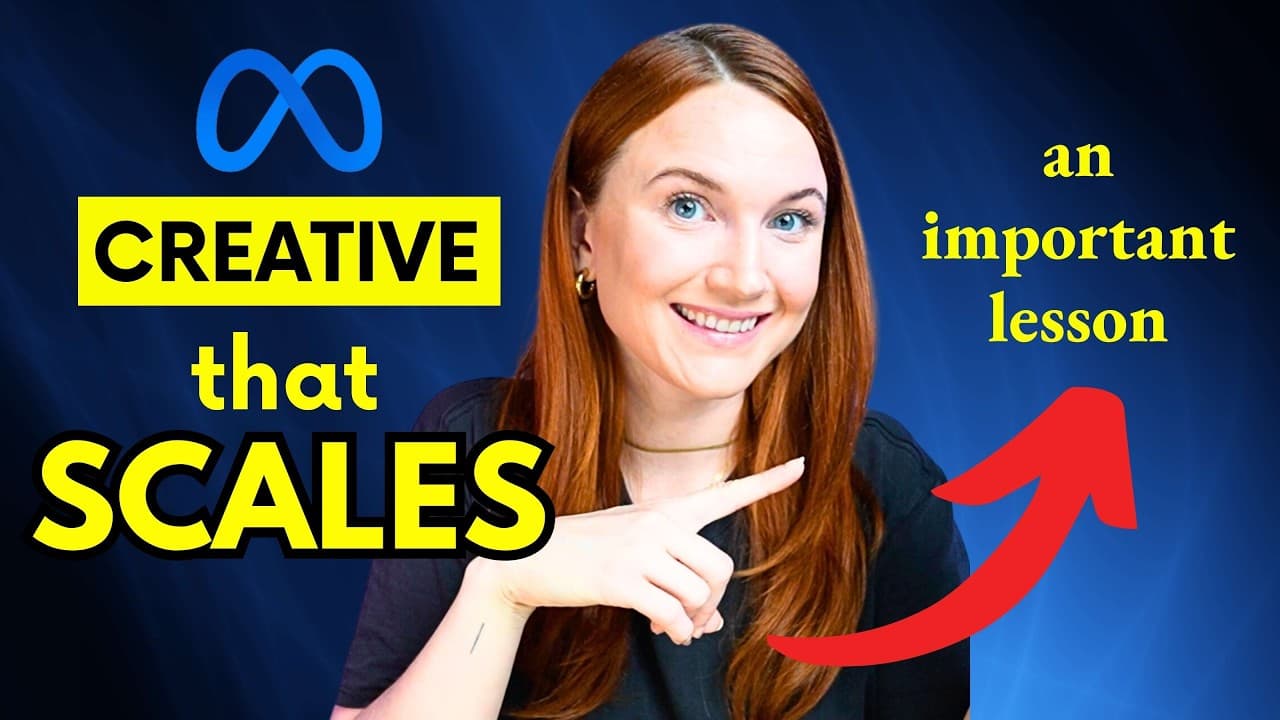
Meta ad creative scales better when its message appeals to people beyond those already familiar with the product or solution. Start with proven creative, test new headlines and hooks, and move the messaging toward broader problems, education, tutorials, or human desires while supporting it with broad audiences and high-converting landing pages.
Transcript
a huge thanks to story blocks for sponsoring this video this is one of the most common problems I hear on meta ads it'll be something along the lines of this oh every time I launch a new creative it'll perform for 2 to 4 days and then all of a sudden results will fall off a cliff sound familiar I'm going to let you in on a little secret come close ... Read More
Key Insights
- Scalable creative is advertising designed to appeal to a broader group of people, increasing the room available for performance beyond a narrow audience. The central planning question is how the message, creator, format, or hook could persuade as many relevant people as possible.
- Short-lived performance is often caused by the ad creative itself, according to the video's diagnosis, rather than account structure, targeting, or creative-testing procedures. Creative focused only on people already familiar with the solution or product can reach its practical audience limit quickly.
- A scalable advertising ecosystem includes broad audiences, high-converting landing pages, and direct-response creative with wide appeal. The speaker's agency experience found that quizzes and listicles could serve as useful landing pages within this system, alongside creative capable of converting more people.
- Awareness stages correspond with different creative formats and messages. Celebrity, educational, how-to, and tutorial content can address unaware audiences, while user-generated content, single testimonials, and founder stories often address problem-aware people who already recognize a need.
- Solution-aware advertising works by explaining why one solution is better than another. Formats such as comparison ads and feature-benefit callouts require less education because viewers are already sold on the general solution and mainly need a reason to choose the advertised option.
- Product-aware and most-aware advertising includes testimonials, three-reasons-why messages, and offers. These formats can convert people near a purchase decision, but relying on them alone may produce ads that perform for only a few days or weeks before declining.
- Awareness levels are more useful for reviewing existing ads than for starting the messaging process. The speaker prefers to begin with core human desires, specificity, and problem angles because these approaches can drive performance more directly than selecting an awareness category first.
- Creative iteration can extend a proven concept without rebuilding the entire ad. In the client example, an image ad featuring a bundle offer remained a top performer for months, so the next tests preserved the creative and changed headlines to address age groups and mothers.
- More videos from this channel:
- More from this channel: Dara Denney
Install to Summarize YouTube Videos and Get Transcripts
Explore YouTube Video Summarizer or Get YouTube Transcript Extractor
Questions & Answers
Q: How can Meta ad creative be made more scalable?
Meta ad creative can be made more scalable by framing it for a broader group of people. When preparing a creative brief, ask how the messaging, creator, format, headline, and hook could appeal more widely. Existing winners can also be expanded through additional hooks or image variations, especially when the original headline speaks to a narrowly defined audience.
Q: Why do new Meta ad creatives stop performing quickly?
New Meta ad creatives may stop performing after a few days or weeks because their messages primarily address people who are already solution-aware or product-aware. Those viewers are easier to sell because they understand the problem or solution, but the reachable group is narrower. Moving the message toward broader problems or education can create more room for scale.
Q: What components support scalable Meta advertising?
A scalable Meta advertising system combines broad audiences, landing pages with high conversion rates, and direct-response creative that appeals to many people. The speaker's agency used quizzes and listicles as landing-page formats for this purpose. Creative must work within this broader ecosystem because audience size, page performance, and message appeal collectively determine how much scaling can occur.
Q: Which ad formats work at different awareness levels?
Unaware audiences can be addressed with celebrity, educational, how-to, or tutorial content. User-generated content, single testimonials, and founder stories often fit the problem-aware stage. Comparison messages and feature-benefit callouts fit solution-aware viewers, while testimonials, three-reasons-why messages, and direct offers are associated with product-aware and most-aware people closer to purchasing.
Q: Why can comparison ads perform well for a new brand?
Comparison ads can perform well because they speak to solution-aware people who are already convinced that the general type of solution is useful. The creative therefore does not need to sell the entire category from the beginning. It can focus on explaining why the advertised product is better than a competing option, making these viewers relatively accessible early customers.
Q: Should awareness levels guide the initial ad message?
Awareness levels can help classify and review finished creative, but the speaker does not recommend making them the primary starting point for new strategists. Core human desires, specific claims or contexts, and problem angles can be more useful for generating messages that drive performance. Awareness analysis can then reveal where each resulting concept sits in the messaging journey.
Q: How can a winning Meta ad be iterated without replacing it?
A winning ad can be iterated by preserving its proven format and testing new headlines or hooks. In the example, an image ad promoting a bundle with three items at $9 each remained among the top performers for months. New versions changed the headline to address a particular age group or mothers, using earlier results, comments, and reviews as inputs.
Q: How can customer feedback inform Meta ad headlines?
Customer feedback can reveal groups that already identify strongly with a product. In the client example, comments and reviews showed that mothers formed a meaningful part of the market, even though the brand had not tested a headline that directly addressed them. That observation supported a new demographic-specific variation built from an existing top-performing image ad.
Summary & Key Takeaways
-
Meta ads that perform briefly may be limited by the creative itself, rather than by account structure, targeting, or testing methods. A more useful creative brief asks how the ad can appeal to more people through its messaging, creators, formats, hooks, and variations without requiring much additional production effort.
-
Scalable advertising requires an ecosystem that can support growth. The speaker identifies broad audiences, landing pages with strong conversion rates, and direct-response creative with broad appeal as important components. Quizzes and listicles previously served as useful landing-page formats, while additional hooks and image variations helped widen a creative concept's potential audience.
-
Awareness levels provide a retrospective framework for evaluating creative scale. Product-aware and solution-aware ads can capture people already close to purchasing, but they may exhaust that audience. Broader problem-aware or unaware messaging can expand reach, although core human desires, specific angles, and problem angles may be stronger starting points for developing messages.
Read in Other Languages (beta)
Share This Summary 📚
Summarize YouTube Videos and Get Video Transcripts with 1-Click
Try YouTube Summary with ChatGPT & Claude or YouTube Transcript Generator
Explore More Summaries from Dara Denney 📚
Summarize YouTube Videos and Get Video Transcripts with 1-Click
Try YouTube Summary with ChatGPT & Claude or YouTube Transcript Generator