How to Build Better Stories Through Character
TL;DR
Start a strong story by defining the central character’s theory of control, a simple belief about how to stay safe, succeed, or get what they want. Let the plot emerge by testing that belief, exposing its consequences, and creating opportunities for change. Memorable stories depend on specific characters whose choices make events feel authentic, original, and meaningful.
Transcript
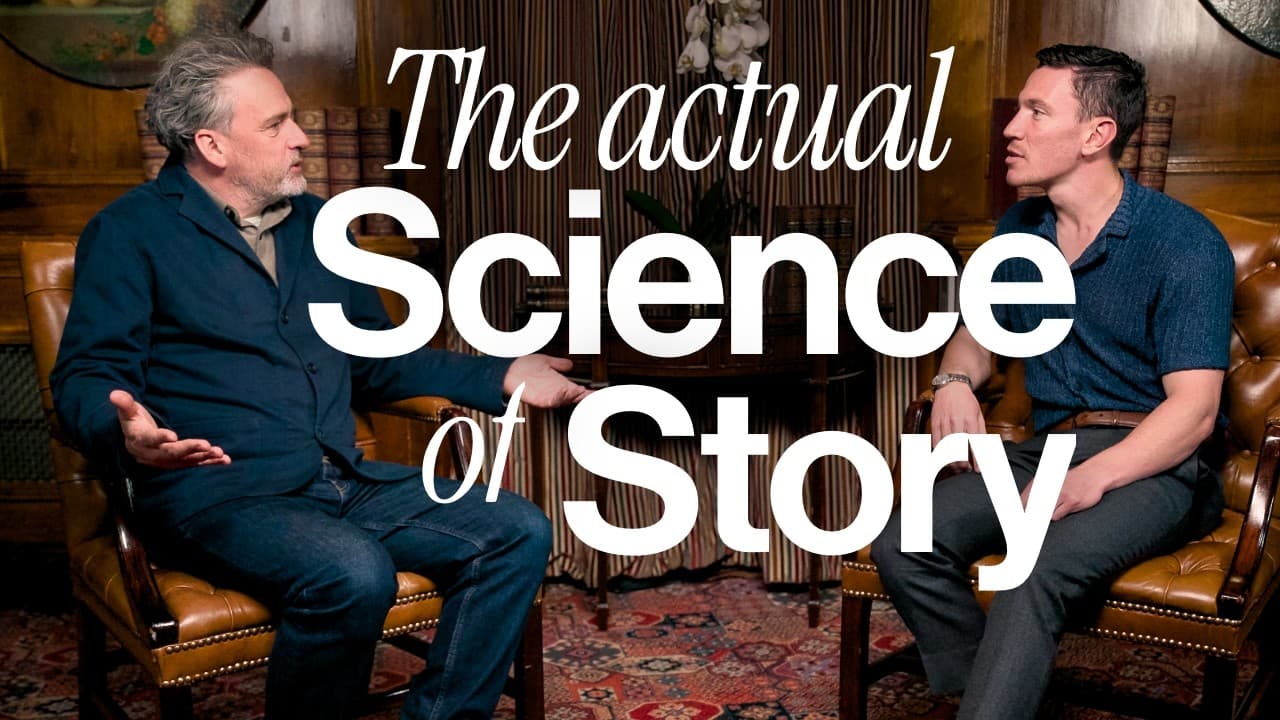
will store is on the show today and he's written seven books and he is like a scientist for storytelling and now you might think "Oh my goodness do we need another storytelling person?" But Will's different and he's different because he talks about character instead of plot most people talk about the hero's journey but Will says you know let's talk... Read More
Key Insights
- Stories are tools for simplifying reality because human experience is enormously complex and chaotic. A story converts that complexity into a relatively clear, linear sequence, making events easier to interpret while helping people connect past regrets, present behavior, and imagined futures.
- Human storytelling capacity supports survival and progress by allowing people to imagine futures that do not yet exist. Dreams, ambitions, goals, and regrets all take narrative form, giving people a way to consider alternatives and pursue changes beyond their immediate circumstances.
- Character is at least as essential as plot, and memorable stories often derive their lasting power from memorable people. A sequence of escalating events cannot create the same depth when the writer has not defined who makes the decisions or why those decisions occur.
- A character is a theory of control, meaning a set of beliefs about how to influence the world and obtain desired outcomes. Different characters facing the same situation will act differently because each understands safety, success, connection, and control through a distinctive personal framework.
- The sentence "I am only safe if I..." is a practical starting point for character design. Completing it identifies the belief governing a character’s behavior, allowing the writer to generate choices, conflicts, consequences, and possible transformation from one concise psychological premise.
- Scrooge is defined by the belief that safety requires keeping money and love to himself. The three ghosts reveal the damage created by that belief, and his eventual generosity reverses his original approach, bringing him love and status by the story’s conclusion.
- A strong story tests the central belief embodied by its character. When Harry claims that men and women cannot be friends because sex interferes, the screenplay examines arguments and experiences around that idea, giving the narrative depth beyond a collection of dramatic incidents.
- Plot emerges authentically from character because responses to events reflect a person’s theory of control. Writers who outline many events without understanding the central character risk creating behavior that feels generic, unrealistic, or disconnected from the story’s most important idea.
Install to Summarize YouTube Videos and Get Transcripts
Explore YouTube Video Summarizer or Get YouTube Transcript Extractor
Questions & Answers
Q: How do you create a compelling story character?
Create a compelling character by defining a simple belief about how that person controls the world and gets what they want. One useful prompt is, "I am only safe if I..." The completed sentence should guide the character’s behavior, choices, and relationships. The story becomes compelling when events test that belief, reveal the damage or benefits it creates, and make change possible.
Q: What is a character’s theory of control?
A theory of control is a character’s core idea about how the world works and how they must behave to secure safety or achieve desired outcomes. It shapes how the character approaches every problem. Donald Trump, Gandalf, and Peppa Pig would respond differently to the same challenge because each represents a different way of understanding influence, behavior, and control.
Q: Why should writers develop character before plot?
Writers should develop character before plot because actions and responses emerge from who a person is. Without a clear character, the writer cannot convincingly determine what will happen when that person encounters a challenge. A plot built from an established theory of control is more likely to feel authentic, interesting, and original than events assigned to a vaguely defined protagonist.
Q: How does character generate plot in a story?
Character generates plot when a person’s governing belief determines how they react to circumstances. Each decision creates consequences, conflict, and further choices. A character who believes personal value comes only from sexuality will produce a different chain of events from someone obsessed with money or success. The plot therefore develops from the character’s attempt to control the world according to that belief.
Q: Why are plot formulas not enough for strong storytelling?
Plot formulas are not enough because they primarily describe recurring arrangements of events. Following a recipe such as the hero’s journey does not automatically produce a memorable story or successful work. Strong storytelling also requires a specific character whose beliefs drive choices. Without that foundation, escalating action can remain superficial rather than becoming a meaningful examination of human behavior and the world.
Q: How does A Christmas Carol test Scrooge’s beliefs?
Scrooge begins with the belief that he can remain safe only by keeping money and love to himself. The three ghosts show him the consequences of that theory of control and the damage it has caused throughout his life. He learns from what they reveal, changes into a generous person, and ultimately receives the love and status associated with his transformation.
Q: How can a central belief give a story depth?
A central belief gives a story depth by turning its events into an examination of an important human question. Harry’s claim that men and women cannot truly be friends because sex interferes gives When Harry Met Sally a specific idea to test. The screenplay can explore evidence for and against that belief, making the narrative more substantial than steadily escalating action alone.
Q: What happens when writers outline plot without knowing the character?
Writers who outline plot without understanding the character may produce a list of events but lack a convincing reason for the protagonist’s responses. Describing the central figure merely as a nice person who is struggling provides too little guidance. A precise theory of control supplies behavioral logic, helping each plot development feel like a credible result of the character’s established beliefs and goals.
Summary & Key Takeaways
-
Stories simplify a reality that is otherwise enormously complex and chaotic. They give people a relatively linear way to interpret experience, imagine possible futures, pursue ambitions, and understand regrets. This storytelling capacity supports human behavior, survival, and progress by turning confusing events into meaningful sequences that people can mentally process.
-
Effective storytelling requires more than arranging familiar plot points into formulas such as the hero’s journey. Plot and character are both essential, but memorable stories often depend most heavily on distinctive characters. Their beliefs determine how they approach problems, make choices, pursue goals, and respond when the world challenges their assumptions.
-
A writer can begin character design with a one-sentence theory of control, such as completing the statement, "I am only safe if I..." The story then tests that belief through its consequences. Starting with this foundation allows plot events to emerge naturally from character decisions instead of feeling imposed, generic, or emotionally unconvincing.
Read in Other Languages (beta)
Share This Summary 📚
Summarize YouTube Videos and Get Video Transcripts with 1-Click
Try YouTube Summary with ChatGPT & Claude or YouTube Transcript Generator
Explore More Summaries from David Perell 📚


Summarize YouTube Videos and Get Video Transcripts with 1-Click
Try YouTube Summary with ChatGPT & Claude or YouTube Transcript Generator