How AI Transforms Critical Thinking in Education
TL;DR
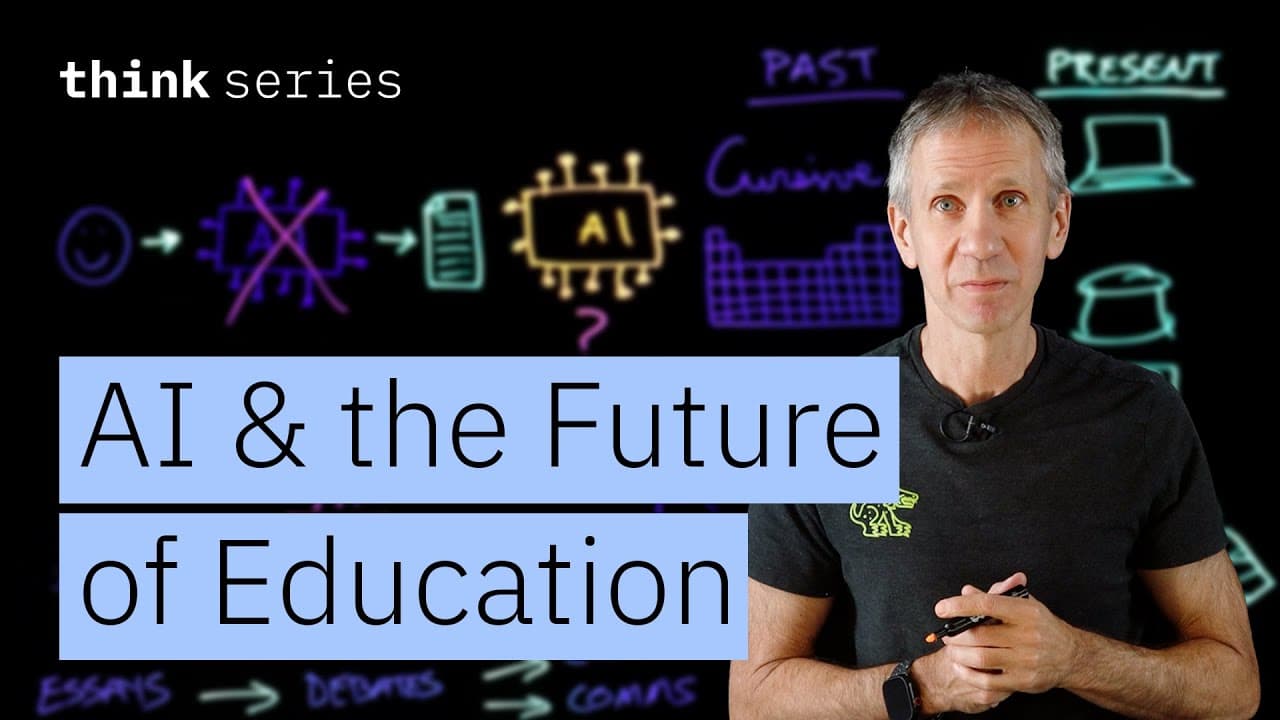
AI is reshaping education by moving away from traditional skills like memorization and cursive writing, towards fostering adaptability, creativity, and critical thinking. AI can provide personalized learning, serve as a tutor, and help with accessibility, but requires a strong understanding of AI literacy and ethics to be effectively integrated into modern education.
Transcript
AI is changing everything, including the way we learn. I'm an adjunct professor, and the first time I saw it—what a chatbot leveraging generative AI could do—I knew immediately there was no point in assigning essays to my students to write, because I'd only be grading chatbot output. And I don't need the practice. Most educators took the position t... Read More
Key Insights
- AI is transforming the educational landscape by shifting focus from traditional skills to adaptability and critical thinking.
- Memorization and handwriting are becoming less critical due to technological advancements like AI and digital tools.
- AI can offer personalized education by acting as a patient, adaptable tutor for diverse learning needs.
- AI literacy and understanding of ethics are crucial for effectively leveraging AI in education.
- AI can enhance accessibility, providing educational resources to students regardless of geographical or economic constraints.
- Critical thinking skills are essential as AI can generate content that may not always be accurate or useful.
- AI can save educators time by assisting with grading and administrative tasks, allowing them to focus on teaching content.
- The future of education involves integrating AI to prepare students for modern job markets and technological advancements.
Install to Summarize YouTube Videos and Get Transcripts
Explore YouTube Video Summarizer or Get YouTube Transcript Extractor
Questions & Answers
Q: How can AI transform education?
AI can transform education by providing personalized learning experiences, acting as a tutor, and enhancing accessibility for students with disabilities. It shifts the focus from traditional skills like memorization to fostering adaptability and critical thinking. AI also assists educators by handling administrative tasks, allowing them to concentrate on teaching critical content.
Q: Why is critical thinking important in the era of AI?
Critical thinking is crucial because AI-generated content may not always be accurate or useful. Students need to evaluate AI outputs critically, discerning truth from misinformation. This skill ensures they can use AI effectively, making informed decisions and understanding the implications of AI-generated information in various contexts.
Q: What role does AI literacy play in modern education?
AI literacy is vital for understanding what AI can and cannot do, including its limitations and possibilities. It equips students and educators with the knowledge to use AI responsibly and effectively, ensuring ethical considerations are met and maximizing AI's potential as a learning tool in modern educational settings.
Q: How does AI offer personalized learning experiences?
AI offers personalized learning by adapting to each student's unique learning style and pace. It acts as a patient tutor, providing tailored explanations and exercises. This customization helps students grasp complex concepts more effectively, catering to individual needs and overcoming challenges that traditional teaching methods may not address.
Q: What are the ethical considerations of using AI in education?
Ethical considerations include ensuring AI is used responsibly, avoiding biases, and understanding the societal impacts of AI. Educators must teach students to think critically about AI outputs and consider the consequences of AI decisions. Responsible AI usage involves transparency, accountability, and fairness in educational applications.
Q: How can AI enhance accessibility in education?
AI can enhance accessibility by providing tools like text-to-speech and image-to-speech for students with disabilities. It offers educational resources online, making learning accessible to students regardless of geographical or economic constraints. This democratizes education, providing equal opportunities for all students to access quality learning experiences.
Q: In what ways can AI assist educators in the classroom?
AI assists educators by handling administrative tasks such as grading, lesson planning, and providing feedback on student work. This allows teachers to focus more on teaching content and engaging with students. AI can also offer insights into student performance, helping educators tailor their teaching strategies to meet diverse learning needs.
Q: Why is flexibility important for students in the age of AI?
Flexibility is important because AI continuously evolves, presenting new possibilities and challenges. Students need to adapt to these changes, thinking creatively and outside traditional frameworks. Flexibility enables them to leverage AI effectively, preparing them for future job markets and ensuring they can navigate the dynamic landscape of technology-driven education.
Summary & Key Takeaways
-
AI is reshaping education by moving away from traditional skills like memorization and cursive writing. The focus is shifting towards fostering adaptability, creativity, and critical thinking. AI can provide personalized learning, serve as a tutor, and help with accessibility, but requires a strong understanding of AI literacy and ethics to be effectively integrated into modern education.
-
AI can offer just-in-time education and personalized tutoring, adapting to each student's learning style and pace. This technology can serve as an editor, enhance accessibility, and provide equitable educational opportunities. Educators can leverage AI to focus more on teaching critical content and less on repetitive administrative tasks.
-
Understanding AI's possibilities and limitations is crucial for its effective use in education. Educators must emphasize ethical considerations, ensuring responsible AI usage. By integrating AI into classrooms, students can be better prepared for future job markets, using AI as a tool rather than relying solely on traditional learning methods.
Read in Other Languages (beta)
Share This Summary 📚
Summarize YouTube Videos and Get Video Transcripts with 1-Click
Try YouTube Summary with ChatGPT & Claude or YouTube Transcript Generator
Explore More Summaries from IBM Technology 📚
Summarize YouTube Videos and Get Video Transcripts with 1-Click
Try YouTube Summary with ChatGPT & Claude or YouTube Transcript Generator