How to join humanoid robots with an open source OS
TL;DR
OpenMind's OM1 and the fabric protocol enable a decentralized hive mind among humanoid and other robots, allowing skills to transfer instantly across units. At the same time, consumer models like SAO2 aim at personal use, while China pushes a trillion-dollar embodied intelligence push. This mix creates faster adaptation and new security considerations.
Transcript
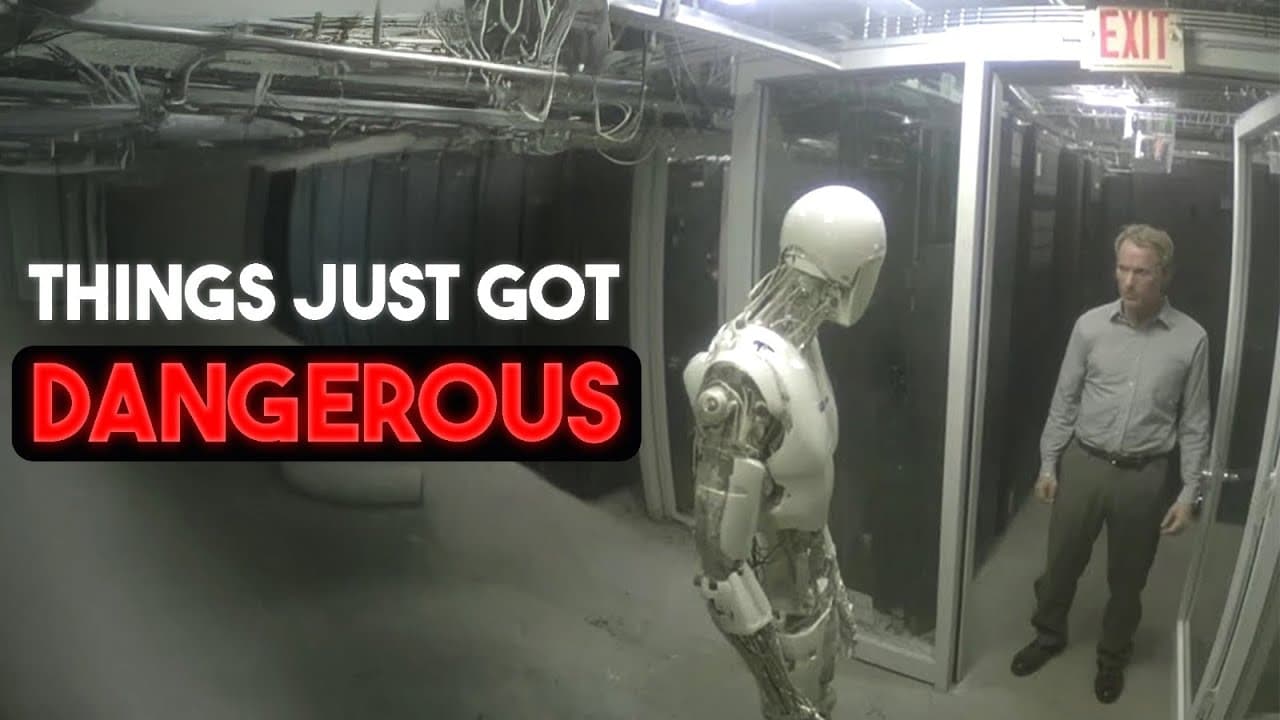
team of ex Google and Tesla engineers just dropped an open-source operating system that could turn every humanoid robot on Earth into part of a single connected hive mind, which could be the greatest leap in technology or the last mistake we ever make. A new $5,300 humanoid is built to live in your home, remember you, and adapt to your personality.... Read More
Key Insights
- OpenMind OM1 is an open source, hardware agnostic operating system designed to unify robot software across different bodies and tasks. This could dramatically lower development friction and enable cross-robot learning.
- Fabric is a companion protocol that creates a decentralized network for robots to share knowledge and skills, enabling rapid transfer of capabilities from one unit to another regardless of location.
- SAO2 is a consumer friendly humanoid that costs around 5300, designed for home use with memory of user preferences and adaptive personality, signaling a shift toward personal companionship robots.
- The market context includes competition from in house robotics stacks by Tesla and other players, but OM1 focuses on ecosystem building rather than locking in hardware, potentially changing competitive dynamics.
- China is promoting a trillion dollar embodied intelligence strategy to deploy intelligent machines in factories, hospitals, and homes, aiming to build an ecosystem for nationwide deployment and collaboration.
- Security and privacy are emphasized as major concerns for open networks, given the potential for rapid skill sharing across devices and locations.
- Early demos of Fabric show promise but latency and real-time performance in high pressure environments remain questions to be resolved.
- The broader rollout in October will be a critical test to determine if open source, ecosystem driven approaches can outpace proprietary systems.
- More videos from this channel:
- More from this channel: AI Revolution
Install to Summarize YouTube Videos and Get Transcripts
Explore YouTube Video Summarizer or Get YouTube Transcript Extractor
Questions & Answers
Q: How does OM1 compare to proprietary robot operating systems in terms of ecosystem potential?
OM1 is designed to be hardware agnostic and open source, which lowers barriers for developers to create and share software across different robot platforms. By focusing on a unified intelligence layer and a shared learning protocol, OM1 could promote a large developer ecosystem similar to how open platforms expanded smartphone software. If successful, this could accelerate innovation and reduce duplication of effort across manufacturers.
Q: What is Fabric and why is it central to the hive mind concept?
Fabric is described as a companion protocol that serves as the communication layer between robots, enabling secure, real time sharing of learned skills. It could turn separate robots into a coordinated network, effectively creating a decentralized hive mind. Its main value lies in fast transfer of tacit knowledge, but latency and privacy protections will dictate how usable it becomes in practice.
Q: Who are the main competitors and how might OM1 influence the market landscape?
Competitors include in house OS like Tesla’s bot stack and other players such as Figure AI and Boston Dynamics. OM1’s emphasis on a broad developer ecosystem and hardware neutrality could push competitors to open up their platforms or accelerate partnerships with academia and industry, potentially shifting advantage from vertical integration to interoperability.
Q: What are the potential benefits of a trillion dollar embodied intelligence push by China?
A national push like China’s embodied intelligence strategy could rapidly scale deployment of intelligent machines across factories, hospitals, and homes, creating a large market for robot-enabled automation and services. This may drive standardization, finance channels, and collaboration across government, academia, and industry while accelerating global competition and collaboration in robotics.
Q: What are the main technical challenges facing Fabric in real world use?
The biggest technical challenge for Fabric is achieving real time, low latency communication across potentially many robots and environments. Blockchain inspired trust mechanisms can introduce delay, so the system must balance security with instantaneous responsiveness to be viable in dynamic settings such as hospitals or warehouses.
Q: How do consumer humanoids like SAO2 fit into the broader robotics landscape?
SAO2 represents a trend toward personal, affordable humanoids that focus on companionship and daily living tasks. With built in memory and adaptive personality, it demonstrates how home robots can become personalized assistants. The challenge will be ensuring long term reliability, safety, and privacy as these devices become more integrated into private spaces.
Q: What might be the societal implications of hive mind style robotics?
A hive mind could dramatically accelerate skill transfer and reduce development time but raises concerns about control, security, and privacy. If unmanaged, centralized coordination could enable rapid spread of vulnerabilities or misuse. Proper governance, verification, and transparent data practices will be essential to maximize benefits while minimizing risk.
Q: What should viewers monitor in the October rollout to gauge OM1’s success?
Viewers should watch rollout scalability across different robot bodies, real time performance of Fabric in diverse environments, security and privacy safeguards, and developer adoption around the ecosystem. Positive results in these areas would indicate that an open source, ecosystem driven approach can outpace proprietary systems while driving broad adoption.
Summary & Key Takeaways
-
OpenMind proposes a universal, open source operating system for robots, similar to Android for devices, enabling hardware-agnostic deployment and a shared intelligence across robot fleets.
-
Fabric acts as a decentralized, secure communication layer that lets robots exchange learned skills in real time, potentially reducing redundancy and speeding up deployment in various settings.
-
China is coordinating a national strategy to embed intelligent machines across industry and home settings, aiming to create an ecosystem that accelerates embodied intelligence and standardized deployment through institutions and finance partnerships.
Read in Other Languages (beta)
Share This Summary 📚
Summarize YouTube Videos and Get Video Transcripts with 1-Click
Try YouTube Summary with ChatGPT & Claude or YouTube Transcript Generator
Explore More Summaries from AI Revolution 📚





Summarize YouTube Videos and Get Video Transcripts with 1-Click
Try YouTube Summary with ChatGPT & Claude or YouTube Transcript Generator