How to Start Investing With Just $100 as a Beginner
TL;DR
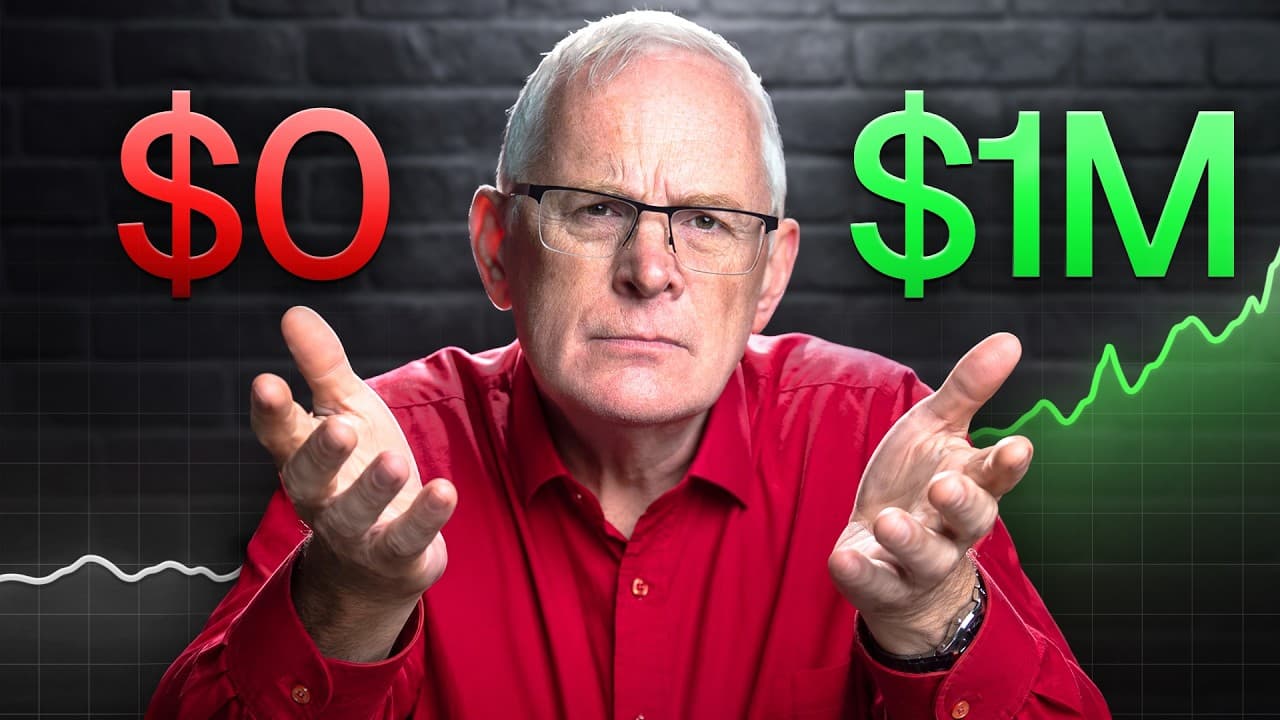
Start with a high interest savings account as an emergency fund, then move up the risk scale to gold, index funds, REITs, and flipping items. $100 per month in an index fund returning 7% annually grows to $123,000 after 30 years. Tax containers like a Roth IRA in America or an ISA in the UK let you keep the profits.
Transcript
- Hi, it's Mark. So, have you ever had $100 in your pocket and wondered how you could turn it into 1,000, 10,000, or even $100,000? Well, sadly, this isn't something they teach in school. Come to think of it, it'd have been pretty awesome if they had. Because of this lack of knowledge, it seems pretty scary for most beginners to get started in inve... Read More
Key Insights
- An emergency fund is the real purpose of a beginner savings account, not the interest. Money on hand covers unexpected costs and keeps you out of debt: Mark's fund saved him over $200 on a hot water system replacement by avoiding a payday loan.
- The two criteria for choosing a savings account are a good interest rate, which mostly depends on the economy, and the ability to access your money instantly. Marcus by Goldman Sachs pays 0.7%, which is low but among the best currently available.
- The US dollar has lost 95% of its value since the Federal Reserve was created in 1913, leaving 5% of its original purchasing power. A $100 nugget of gold from the year 2000 would be worth roughly $580 now, though the metal itself has not changed size.
- Gold carries a 2 out of 10 risk rating because of opportunity cost, not volatility. It protects $100 against inflation but forfeits faster growth elsewhere, making it best suited to people who already have a lot of money and simply want to preserve it.
- Buying physical gold means overpaying, since the seller builds in a profit above the metal's true value. Broker apps like Robinhood in the USA or Trading 212 in the UK let you buy at true value and sell much faster.
- Compound interest turns $100 per month into $123,000 after 30 years at a 7% annual return, and requires no knowledge of the stock market. Warren Buffett proved the point by winning a million dollar bet against hedge funds, settled in 2017.
- An index fund is a pre-assembled selection of the most popular companies, such as Apple, Microsoft, Amazon, and Facebook, with your money split between them. Fractional investing means you do not need a full share, even though the S&P 500 trades above $3,000.
- REITs let people own a share of income-producing property without buying one. Equity REITs hold offices, shopping centers, apartments, and hotels, earn through rent, and are legally required to pass 90% of profits to investors like a dividend.
Install to Summarize YouTube Videos and Get Transcripts
Explore YouTube Video Summarizer or Get YouTube Transcript Extractor
Questions & Answers
Q: How can I start investing with only $100?
Mark walks through five options ordered by rising risk: a high interest savings account at 1 out of 10, gold at 2 out of 10, a low cost index fund at 3 out of 10, a real estate investment trust at 3 out of 10, and buying and selling items at roughly 4 out of 10. He invests $100 into each one on camera. Before any of these, his usual answer to the question is to invest in yourself by buying books and improving your skills.
Q: What is the safest way to invest $100 as a beginner?
A high interest savings account, rated 1 out of 10 on the risk scale, is the lowest risk option. It is on the list mainly because it builds an emergency fund rather than because of the interest, which is extremely hard to find at a substantial level nowadays. The fund gives you money you can access when something unexpected comes up, letting you avoid debt and crazy fees. Look for a good interest rate and instant access to your money.
Q: Why is gold considered a safe haven investment?
Gold cannot be manufactured and lasts for thousands of years, and it was the original currency. Since the Federal Reserve was created in 1913 the US dollar has lost 95% of its value, leaving only 5% of its original purchasing power, so gold holds value as the dollar erodes. A $100 nugget of gold from the year 2000 would be worth approximately $580 now, even though the piece of metal itself has not changed in size. What changed is how much gold a dollar can buy.
Q: What is the risk of investing in gold?
The risk is opportunity cost, which is why it gets 2 out of 10 rather than a lower score. You have to ask whether you only want to protect your $100 against inflation or whether you want it to grow more quickly somewhere else. Money in gold misses out on those potential profits, which makes it slightly risky. Mark describes it as the ideal investment for someone who already has a lot of money and only wants to protect it.
Q: How do you buy gold without overpaying?
Buying physical gold such as jewelry, bars, or coins usually means paying more than the true value, because the person selling it wants to make a profit on top. The alternative is buying gold inside a broker app, such as Robinhood in the USA or Trading 212 in the UK, where you get gold at its true value and can sell much more quickly. In the USA, Mark would look for the GLD ETF on Robinhood, one of the largest gold ETFs in the world, which as of June 2020 held over 36.49 million ounces of gold in vaults worldwide.
Q: How much can $100 a month in an index fund grow to?
Investing $100 per month into an index fund with a 7% annual return produces $123,000 after 30 years. That is the power of compound interest, and it requires no knowledge of the stock market at all. Mark points to Warren Buffett's million dollar bet that a simple S&P 500 index fund would outperform a professionally picked portfolio of hedge funds over 10 years. The contest wrapped up in 2017, the results were made public, and Buffett won, showing an everyday person can take on the pros.
Q: What is an index fund in simple terms?
Mark compares an index fund to a bag of Haribo gummies: a factory machine puts a range of the most popular candy into one bag so you enjoy the best of the best without picking and buying each one individually. Replace the candy with companies and you have an index fund, a selection bag of the most popular companies in the world such as Apple, Microsoft, Amazon, and Facebook, with your money split between them. The S&P 500 has averaged a 7% yearly return over the last 20 years.
Q: How does a REIT work and what returns does it produce?
A REIT pools money from many investors to buy income-producing property and splits the rental income among them, so everyone benefits without buying a property outright. Equity REITs own offices, shopping centers, apartments, hotels, and more, and by law must pass 90% of all profits to investors like a dividend, though they are taxed a little differently. At the start of 2019 the 10-year average return for REIT ETFs beat the S&P 500 at 10%, and Vanguard's VGSLX averages 12%, beating the average real estate investor.
Summary & Key Takeaways
-
The video ranks beginner investments by risk on a 10-point scale, starting at 1 out of 10 with a high interest savings account and rising through gold at 2, index funds and REITs at 3, and buying and selling items at 4. Mark invests $100 of his own money into each option on camera to demonstrate the process.
-
A savings account is presented less as a return generator than as an emergency fund. Mark recounts his hot water system failing two months after buying his first apartment, where the fund saved him over $200 by avoiding a payday loan. He looks for a good interest rate plus instant access, and names Ally Bank, Marcus by Goldman Sachs, and Citibank.
-
Index funds and REITs occupy the middle of the list. An S&P 500 index fund averaged 7% yearly over the last 20 years, and Warren Buffett won a million dollar bet that it would beat professionally picked hedge funds over 10 years. REIT ETFs had a 10-year average return of 10% at the start of 2019, with Vanguard's VGSLX averaging 12%.
Read in Other Languages (beta)
Share This Summary 📚
Summarize YouTube Videos and Get Video Transcripts with 1-Click
Try YouTube Summary with ChatGPT & Claude or YouTube Transcript Generator
Explore More Summaries from Mark Tilbury 📚
Summarize YouTube Videos and Get Video Transcripts with 1-Click
Try YouTube Summary with ChatGPT & Claude or YouTube Transcript Generator