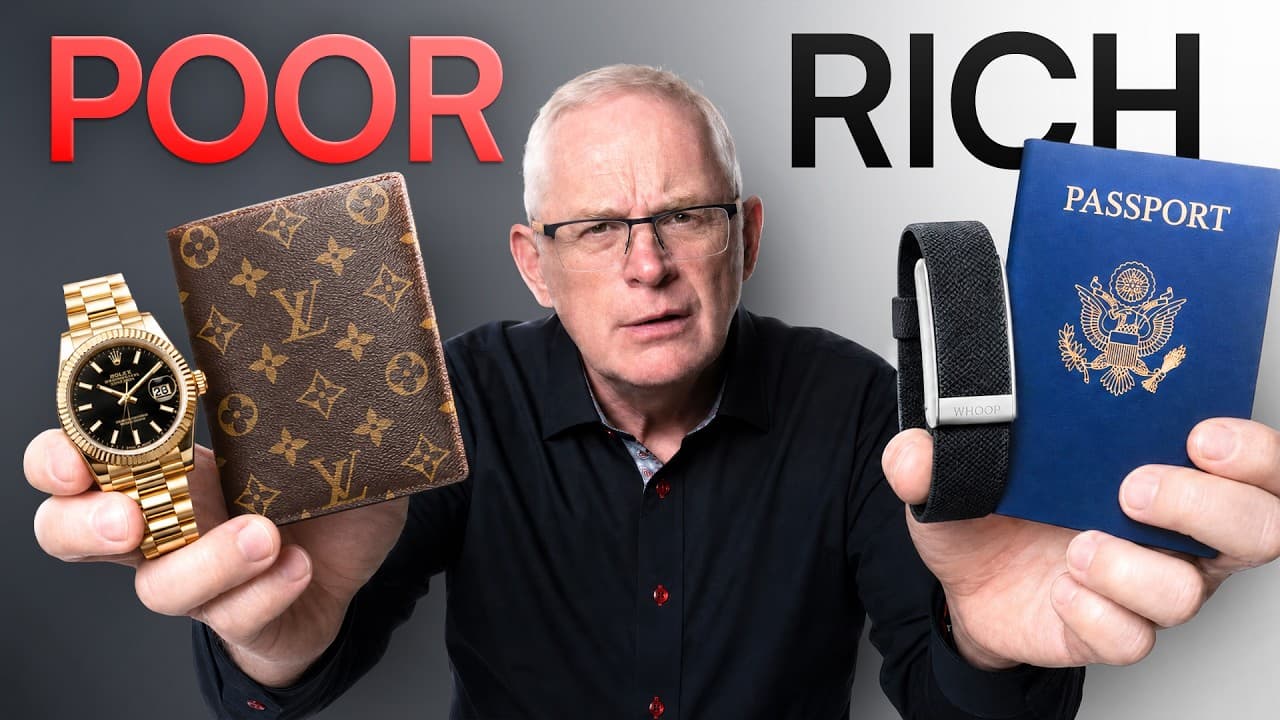
What 10 Things Should You Upgrade Once You Get Money?
TL;DR
Once you have spare money, upgrade investments, reclaim time through outsourcing, buy knowledge through books, and choose a partner who supports your goals, but build a solid investment foundation first. The speaker suggests comparing outsourcing costs with your effective hourly rate and recommends four books for different business and investing needs. Read on for the specific calculations, examples, and recommendations behind these upgrades.
Transcript
A lot of you probably weren't expecting this. Normally, I tell you what not to buy, but today, I'm going rogue and doing the complete opposite. So, here are 10 things that you should buy as soon as you get some money. >> [music] >> I've made loads of videos about investing on this channel that are applicable to almost anyone, [music] no matter your... Read More
Key Insights
- Investing in individual stocks carries risk but can yield high returns if chosen wisely.
- Alternative investments like classic cars, watches, and art can appreciate in value over time.
- Outsourcing tasks is beneficial when the cost is less than your effective hourly rate.
- Books offer a high return on investment by providing condensed life experiences and knowledge.
- Choosing the right partner can significantly impact your financial success and wealth accumulation.
- Mentors and digital skills are crucial for career advancement and financial independence.
- Upgrading business tools can enhance productivity and be written off as expenses.
- Experiences provide lasting happiness and memories compared to material possessions.
Install to Summarize YouTube Videos and Get Transcripts
Explore YouTube Video Summarizer or Get YouTube Transcript Extractor
Questions & Answers
Q: What should you upgrade first once you get money?
First, build a solid foundation through a fund portfolio or index fund strategy. Once you have spare money you can afford to lose, consider upgrading your investments, outsourcing lower-value tasks, buying useful books, and prioritizing a supportive partner.
Q: When should you consider investing in individual stocks or alternative assets?
Consider them only after establishing a solid investment foundation and setting aside spare money you can afford to lose. Individual investments can rise or fall, so the speaker says choosing them well gives you the highest chance of success.
Q: Which alternative investments may hold or increase their value?
The transcript identifies classic cars, certain watches, fine wine, and art as assets with the potential to hold or increase their value over time. Unlike figures on a screen, these are physical assets that their owners can also live with and enjoy.
Q: What classic-car investment example does the speaker give?
The speaker bought a Ford Fiesta XR2 for £1,750, approximately $2,350, and later sold it for about £2,700. He says that keeping it until today would have produced a 1,000% return because its value subsequently rose.
Q: When is outsourcing household or personal tasks worth the cost?
Calculate your effective hourly rate by dividing annual earnings by annual working hours. The speaker's rule is to seriously consider outsourcing when someone can perform the task for less than that hourly rate.
Q: How is the effective hourly rate calculated?
Divide the amount you earn in a year by the number of hours you work. For example, earning $80,000 while working about 2,000 hours per year produces an effective hourly rate of $40 per hour.
Q: Why does the speaker recommend buying books?
Books can condense decades of another person's experience into a couple of hundred pages for roughly the price of a couple of cups of coffee. The biography Virgin King, about Richard Branson, changed the speaker's perspective when he was struggling at school and suffering with dyslexia.
Q: Which four books does the speaker recommend for business and investing?
The recommendations are The Millionaire Fastlane, The E-Myth Revisited, The Little Book of Common Sense Investing, and How to Win Friends and Influence People. The transcript connects them respectively with fastlane wealth-building, creating a business that runs without its owner, hands-off investing, and building productive relationships.
Summary & Key Takeaways
-
Investing in individual stocks can be risky but rewarding. Consider alternative investments like classic cars and art, which can appreciate in value over time. Outsource tasks when the cost is lower than your effective hourly rate to free up time for higher-value activities.
-
Books provide a significant return on investment by offering condensed knowledge and life experiences. Choosing a supportive partner can have a profound impact on your financial success, as married individuals often accumulate more wealth.
-
Mentorship and learning digital skills are crucial for career growth and financial independence. Prioritize experiences over material possessions for lasting happiness, and upgrade business tools to enhance productivity and take advantage of tax deductions.
Read in Other Languages (beta)
Share This Summary 📚
Summarize YouTube Videos and Get Video Transcripts with 1-Click
Try YouTube Summary with ChatGPT & Claude or YouTube Transcript Generator
Explore More Summaries from Mark Tilbury 📚

Summarize YouTube Videos and Get Video Transcripts with 1-Click
Try YouTube Summary with ChatGPT & Claude or YouTube Transcript Generator