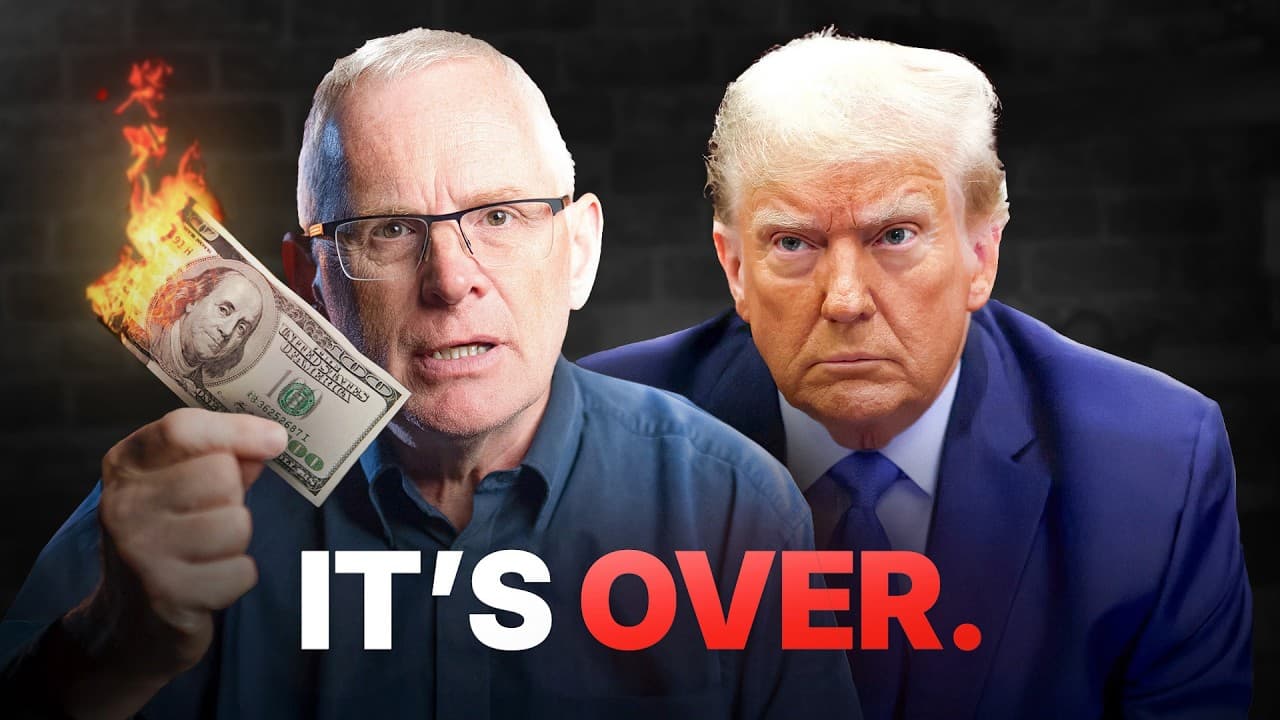
Is Trump Intentionally Crashing the Stock Market?
TL;DR
Donald Trump's trade policies, NATO stance, and potential strategic plans are contributing to stock market uncertainty. His use of tariffs and challenging international alliances might be tactics to push for favorable trade terms or lower interest rates. Investors should focus on long-term strategies, diversify investments, and avoid panic selling during market downturns.
Transcript
- "The stock market is over, and you should get out before Trump triggers a full-blown recession." That's what the mainstream media want you to think. Headlines are screaming disaster, social media is in a frenzy, and everyone is asking the same question, "Should I sell now before it gets worse?" But there's more to this than meets the eye. If you ... Read More
Key Insights
- Trump's trade war is a significant factor impacting the stock market, potentially leading to higher consumer prices and economic recession.
- The Smoot-Hawley Tariff Act of 1930 is a historical example of tariffs causing economic downturns, similar to Trump's current policies.
- Trump's stance on NATO could destabilize global security, affecting investor confidence and market stability.
- There is speculation that Trump might be intentionally causing market volatility to force the Federal Reserve to lower interest rates.
- Lower interest rates could benefit the U.S. government by reducing the cost of servicing its $36.5 trillion debt.
- The stock market's reaction to uncertainty can lead to investor panic, but historical trends show eventual recovery after crashes.
- Investors are advised to maintain a diversified portfolio, including stocks, bonds, and other assets, to mitigate risks during downturns.
- Long-term investment strategies like dollar-cost averaging can help investors capitalize on market lows and avoid emotional decision-making.
Install to Summarize YouTube Videos and Get Transcripts
Explore YouTube Video Summarizer or Get YouTube Transcript Extractor
Questions & Answers
Q: How do tariffs impact the stock market?
Tariffs can lead to increased costs for businesses that rely on imported goods, which often results in higher prices for consumers. This can reduce consumer spending, slow economic growth, and lead to market instability. Historically, tariffs have contributed to economic downturns, as seen in the Great Depression following the Smoot-Hawley Tariff Act.
Q: What is the significance of Trump's stance on NATO?
Trump's questioning of NATO's role and suggesting reduced U.S. involvement could destabilize global security. This creates uncertainty in international relations, potentially encouraging adversarial nations to exploit power vacuums. Such geopolitical instability can lead to increased military spending and volatile markets, affecting investor confidence.
Q: Why might Trump want lower interest rates?
Lower interest rates reduce the cost of borrowing, which can stimulate economic growth by encouraging spending and investment. For the U.S. government, lower rates mean reduced costs in servicing its $36.5 trillion debt, potentially saving billions in interest payments. Trump may see this as a strategic advantage for economic and political gains.
Q: How should investors respond to market downturns?
Investors should avoid panic selling during downturns, as this locks in losses. Instead, they should focus on long-term strategies like dollar-cost averaging, which involves investing a fixed amount regularly. Diversifying investments across different asset types can also mitigate risks and position investors to benefit from eventual market recoveries.
Q: What is dollar-cost averaging?
Dollar-cost averaging is an investment strategy where an investor consistently invests a fixed amount of money at regular intervals, regardless of market conditions. This approach reduces the risk of making large investments at inopportune times and allows investors to purchase more shares when prices are low, potentially increasing returns over time.
Q: What role does uncertainty play in the stock market?
Uncertainty can lead to investor panic and market volatility, as markets dislike unpredictability. Factors like geopolitical tensions, trade wars, and unclear economic policies can create uncertainty, causing investors to react emotionally. This can result in rapid market fluctuations, impacting investment decisions and overall market confidence.
Q: How do geopolitical factors affect the stock market?
Geopolitical factors, such as international conflicts, trade relationships, and alliances, can significantly impact market stability. Changes in these areas can alter economic conditions, affect trade flows, and influence investor sentiment. Markets may react negatively to perceived threats to global stability, leading to volatility and shifts in investment strategies.
Q: What is the historical impact of market crashes?
Historically, market crashes have been followed by recoveries, as economic conditions stabilize and investor confidence returns. While crashes can lead to short-term losses, they often present buying opportunities for strategic investors. Understanding market cycles and maintaining a long-term perspective can help investors navigate downturns and capitalize on eventual upswings.
Summary & Key Takeaways
-
Trump's trade policies, including tariffs, are causing market instability and could lead to higher prices and economic recession. His approach might be a negotiation tactic for better trade terms, but it creates uncertainty that spooks investors. Historical examples show tariffs can worsen economic conditions, as seen in the Great Depression.
-
Trump's questioning of NATO commitments adds to global instability, potentially encouraging adversarial nations to exploit power vacuums. This uncertainty can lead to increased military spending and volatile energy prices, affecting the stock market. Investors should be aware of geopolitical factors impacting market confidence.
-
Speculation exists that Trump is intentionally causing market volatility to pressure the Federal Reserve into lowering interest rates, which could benefit the U.S. by reducing debt servicing costs. Investors should focus on long-term strategies, diversify investments, and avoid panic selling during market downturns.
Read in Other Languages (beta)
Share This Summary 📚
Summarize YouTube Videos and Get Video Transcripts with 1-Click
Try YouTube Summary with ChatGPT & Claude or YouTube Transcript Generator
Explore More Summaries from Mark Tilbury 📚



Summarize YouTube Videos and Get Video Transcripts with 1-Click
Try YouTube Summary with ChatGPT & Claude or YouTube Transcript Generator