How to Cut Spending and Build Long-Term Wealth
TL;DR
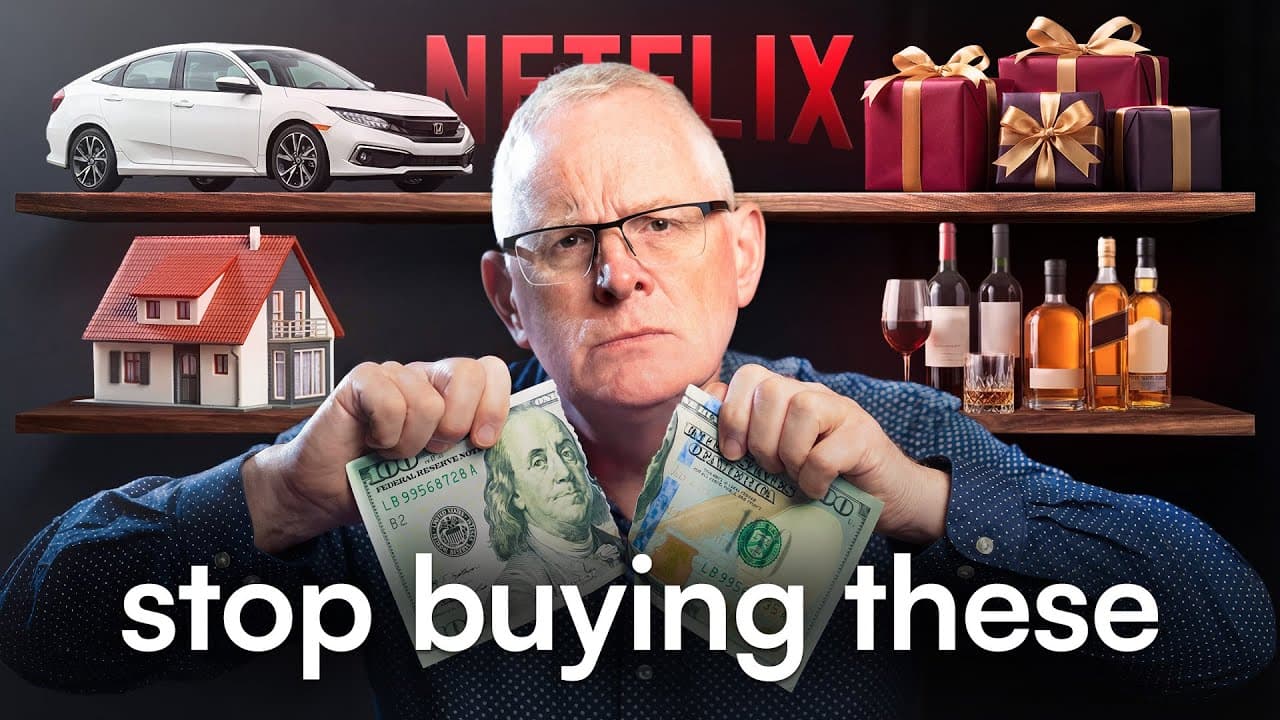
Building wealth requires consistently redirecting money from avoidable expenses into investments that can compound over time. The suggested cuts include extended warranties, new cars, penny stocks, frequent restaurant meals, expensive gifts, hotels, passion purchases, and excessive subscriptions, while still allowing room for affordable enjoyment and meaningful experiences.
Transcript
So, this might be really hard to hear, but if you're spending money on more than one of these things, you'll never become rich. Well, unless you have an extremely high paid job or win the lottery. Now lots of people will try and tell you that becoming rich is easy. Probably because they want to sell you some sort of get-rich-quick scheme. However, ... Read More
Key Insights
- Wealth building is a strategic process, not an easy or guaranteed outcome. The speaker argues that avoiding recurring, unnecessary, and high-risk expenses can improve a person's chances of becoming wealthy, particularly when those savings are invested early enough to benefit from compounding.
- Extended warranties can duplicate protections already supplied by manufacturers, consumer rights, or credit cards. Retailers may promote them because product sales have small profit margins, while warranties generate extra profit and can include fine print that makes successful claims difficult.
- New cars can undermine financial freedom through large monthly payments, depreciation, and repeated upgrades motivated by status. The speaker notes that average United States car payments are between $500 and $600 monthly and illustrates how investing $500 monthly could produce over one million dollars after 30 years at a 10% return.
- Penny stocks are highly risky because they often involve young companies with limited information and trading history. Their small market capitalizations and low liquidity make prices easier to manipulate, while a few large sales can cause sharp declines that smaller investors may not escape.
- Frequent restaurant meals can consume more than $3,000 annually for the average American household, excluding alcohol. Cooking at home can reduce costs and may be healthier, while limiting alcohol can also prevent lost productivity caused by spending the following day recovering from a hangover.
- Expensive gifts can delay investing during the period when compounding matters most. The speaker argues that young people should not feel obligated to buy luxury gifts, especially for temporary relationships, and that having enough cash for an item does not necessarily mean it is affordable.
- Hotels do not need to become a routine travel expense. Staying with friends, camping, sleeping in a van, or converting a vehicle into living accommodation can lower costs while preserving travel experiences. One vehicle conversion reportedly saved the speaker around $10,000 and was later sold for a profit.
- Passion purchases and excessive subscriptions should be limited rather than allowed to consume money automatically. The speaker recommends finding cheaper ways to enjoy hobbies, such as repairing existing radio-controlled models, while the description identifies overspending on subscriptions as the eighth category to stop buying.
Install to Summarize YouTube Videos and Get Transcripts
Explore YouTube Video Summarizer or Get YouTube Transcript Extractor
Questions & Answers
Q: How can cutting unnecessary spending help build wealth?
Cutting unnecessary spending increases the amount of money available for investing, which allows compounding to begin earlier and continue longer. The speaker treats extended warranties, new cars, speculative penny stocks, frequent meals out, expensive gifts, hotels, passion purchases, and excessive subscriptions as common drains on investable income. The goal is strategic restraint, not eliminating every enjoyable experience.
Q: Why should buyers reconsider extended warranties?
Extended warranties may provide little additional value when manufacturer warranties, consumer rights, or credit-card protections already cover a purchase. The speaker says retailers can earn extra profit from these plans and may use fear to encourage customers to buy them. He also warns that restrictive fine print can make claims difficult and that customers may forget they purchased the coverage.
Q: Why can buying a new car delay financial freedom?
A new car can create a large recurring payment while encouraging an ongoing cycle of status-driven upgrades. The speaker says average United States car payments range from $500 to $600 each month. He contrasts that expense with investing $500 monthly for 30 years, which he says could grow beyond one million dollars if average stock-market returns were 10%.
Q: What makes penny stocks especially risky investments?
Penny stocks can involve relatively new companies with limited information and little operating history. Their small market capitalizations, low liquidity, and volatility make their prices easier to manipulate than those of much larger companies. A few large sellers can push a price sharply downward. The speaker made money from some penny stocks but attributes that outcome to luck and considers the downside unjustified.
Q: How does eating out regularly affect a wealth plan?
Regular restaurant spending can divert thousands of dollars from saving and investing. The speaker states that the average American household spends more than $3,000 per year eating out, without including alcohol. He recommends cooking at home because it costs less and is generally healthier. He also argues that drinking can impair the following day's productivity in addition to increasing expenses.
Q: When should someone avoid buying expensive gifts?
Expensive gifts should be avoided when they interfere with investing or require spending beyond what a person can genuinely afford. The speaker emphasizes that young people are not obligated to prove affection through luxury purchases, particularly when relationships may be temporary. He distinguishes having money in a bank account from being able to afford an item while continuing to invest consistently.
Q: How can travelers reduce or avoid hotel expenses?
Travelers can stay with friends, camp, sleep on a blow-up mattress in a van, or create mobile living accommodation when those options are practical. The speaker used these approaches during business travel and motorsport events. He says converting part of a lorry into sleeping, cooking, and entertainment space saved around $10,000, and he later sold the vehicle for a profit.
Q: How can people control hobby and subscription spending?
People can preserve hobbies while replacing frequent purchases with lower-cost alternatives. The speaker describes repairing radio-controlled models instead of continually taking new products from his shop, which would have reduced its profit. The description also identifies excessive subscriptions as the eighth expense category. The broader principle is to limit recurring and passion-driven purchases so more money remains available for investment.
Summary & Key Takeaways
-
The central argument is that wealth building depends on strategic spending rather than a get-rich-quick solution. Avoiding unnecessary purchases leaves more money available for investing, especially when young. Because investments need time to compound, purchases that appear affordable today can create a much larger long-term opportunity cost.
-
Extended warranties may duplicate manufacturer coverage, consumer rights, or credit-card protection. New cars can create recurring payments and encourage status-driven upgrades, while penny stocks expose investors to volatility, limited information, low liquidity, and price manipulation. The speaker presents these expenses and investments as avoidable barriers to financial freedom.
-
Lifestyle spending also deserves scrutiny. Frequent restaurant meals, alcohol, expensive gifts, hotels, passion purchases, and excessive subscriptions can steadily reduce investable income. The suggested alternatives include cooking at home, giving modestly, staying with friends, camping, using converted vehicles, repairing hobby equipment, and limiting purchases without abandoning enjoyable experiences entirely.
Read in Other Languages (beta)
Share This Summary 📚
Summarize YouTube Videos and Get Video Transcripts with 1-Click
Try YouTube Summary with ChatGPT & Claude or YouTube Transcript Generator
Explore More Summaries from Mark Tilbury 📚



Summarize YouTube Videos and Get Video Transcripts with 1-Click
Try YouTube Summary with ChatGPT & Claude or YouTube Transcript Generator