How to Build Wealth Starting With No Money
TL;DR
Build wealth from nothing by increasing income, taking calculated career risks, investing early for the long term, and diversifying both assets and income sources. Question limiting advice, develop multiple solutions to obstacles, and never invest in something you do not understand. The approach favors a three-fund portfolio, measured risk, and consistent reinvestment over leverage or concentrated bets.
Transcript
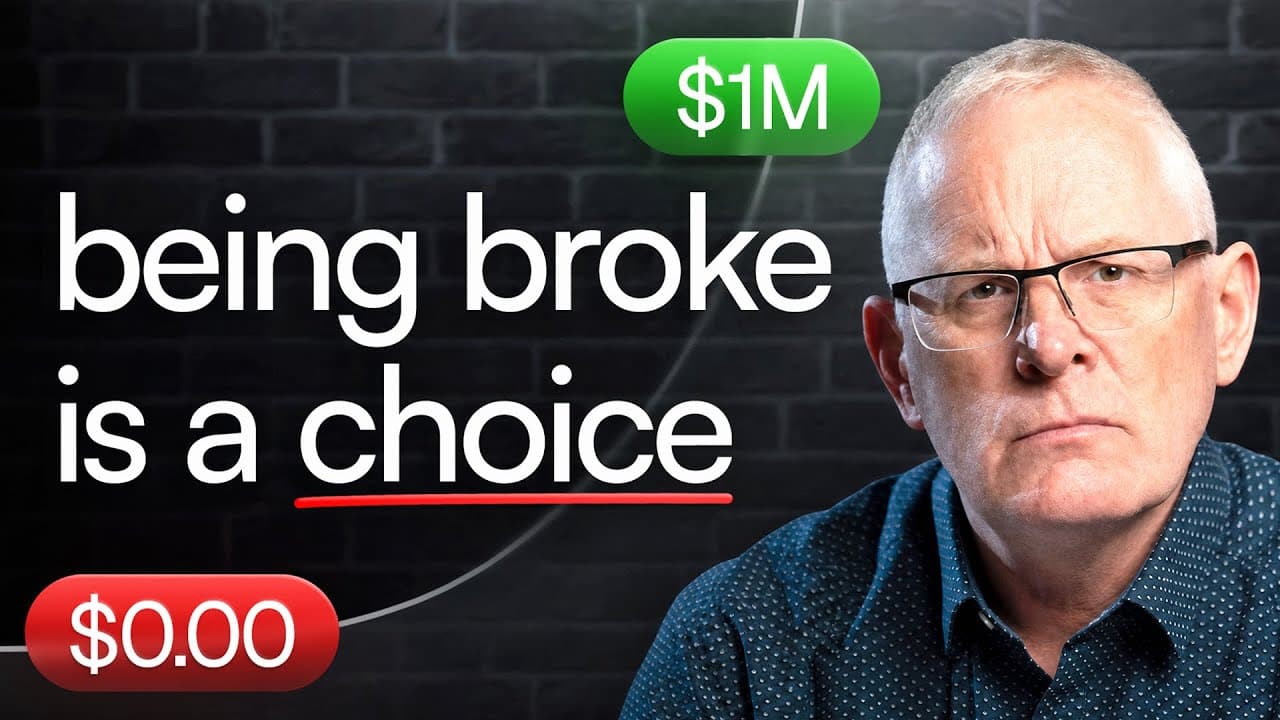
A lot of people aren't gonna like this one, but making millions doesn't have to take you decades of hard work. Sure, being a millionaire in your fifties is all right, but being a millionaire when you're younger is far better. Take it from someone who's experienced both. And no, I wasn't born into a rich family. Quite the opposite. The odds were sta... Read More
Key Insights
- Belief is a prerequisite for sustained wealth-building effort because people who consider financial success impossible are unlikely to perform the work required. The transcript advises resisting pressure to lower ambitions while pairing confidence with practical action, problem-solving, and calculated decisions.
- Financial advice is most useful when it comes from people with relevant results and experience. Friends and parents may have good intentions, but the transcript recommends questioning wealth advice from anyone who has not personally built a significant amount of wealth.
- Persistent problem-solving works by generating multiple responses to the same obstacle. The speaker considers at least 10 possible solutions, chooses the best option, and moves to another when the first fails, continuing until a workable path produces the desired result.
- Calculated career risk can be safer than remaining in a dead-end position. The speaker left a hostile carpentry apprenticeship at age 20, later started a business, and argues that people with fewer responsibilities can consider business ownership, side hustles, or periodic job changes.
- Early investing gives money more time to grow and reduces dependence on catching particular market days. A cited Fidelity study says missing the five best trading days across four decades reduced long-term gains by 38%, while missing the 10 best days reduced them by 55%.
- A useful investment platform should provide understandable charts, access to a broad selection of stocks and ETFs, and paper trading. Virtual-money practice can help test strategies without risking real funds, but it should be treated seriously so behavior remains consistent when actual money is involved.
- Leverage can magnify losses beyond the amount originally invested. The speaker describes a wealthy friend whose investment group reportedly earned 30% to 50% annually before collapsing, with leveraged members losing considerably more than they had invested and the friend losing his fortune.
- Diversification reduces exposure to a single failed investment or income source. The speaker uses a three-fund portfolio covering US stocks, international stocks, and bonds, while also holding other assets and earning through shops, distribution, affiliates, advertising, dividends, and rental properties.
Install to Summarize YouTube Videos and Get Transcripts
Explore YouTube Video Summarizer or Get YouTube Transcript Extractor
Questions & Answers
Q: How can someone begin building wealth with no money?
Building wealth with no starting capital begins by raising earning power rather than waiting for investment returns. The transcript suggests starting a business, creating a side hustle, or moving to better jobs periodically. It also recommends choosing work that rewards results instead of hours, reinvesting business income, developing multiple solutions to obstacles, and beginning long-term investing as soon as money becomes available.
Q: Why does mindset matter when building wealth from nothing?
Mindset matters because a person who assumes wealth is impossible is unlikely to complete the difficult work needed to create it. The transcript recommends preserving ambition despite pressure to be realistic, carefully selecting whose advice to accept, and treating obstacles as problems with multiple possible solutions. Confidence alone is not presented as sufficient, but it supports persistence, calculated risk-taking, and continued action after setbacks.
Q: How should financial obstacles be solved more effectively?
The recommended method is to examine each obstacle from multiple angles and write down at least 10 possible solutions. After selecting the strongest option, try it and move to the next idea if it fails. This process prevents one unsuccessful attempt from becoming proof that the goal is impossible. It also builds persistence by turning a difficult challenge into a sequence of testable decisions.
Q: When should someone take more career risk to increase income?
The transcript says younger people with few responsibilities may be better positioned to take calculated career risks because they have fewer dependents and obligations. Examples include leaving a dead-end job, starting a business, adding a side hustle, or upgrading jobs periodically. The risk should remain calculated, and the speaker specifically distinguishes career experimentation from putting all available money into a speculative asset such as crypto.
Q: Why should long-term investing begin as early as possible?
Starting early gives invested money more time to grow and reduces the difficulty of building wealth later. The transcript cites a Fidelity study stating that missing the five best trading days over four decades reduced long-term gains by 38%, while missing the 10 best days reduced gains by 55%. Its conclusion is to develop a long-term investing habit instead of delaying participation or trying to catch isolated market moves.
Q: What features should an investment platform provide?
The transcript recommends clear, easy-to-use charts for tracking investment growth, along with a wide selection of stocks and ETFs that supports diversification across sectors and asset classes. It also favors paper trading, which lets users practice the investment process with virtual money and test strategies without risking actual funds. Paper trades should be treated seriously so the strategy does not change when real money is involved.
Q: What is a three-fund portfolio in this wealth strategy?
The three-fund portfolio described in the transcript contains a total US stock market index fund, a total international stock index fund, and a total bond market fund. Together, these components spread investments across different markets and asset classes. The stated purpose is to reduce risk while retaining potential for long-term growth, rather than concentrating all available capital in one company, market, or type of asset.
Q: How can diversification protect accumulated wealth?
Diversification protects wealth by reducing dependence on a single investment, asset class, business, or income stream. The transcript combines US stocks, international stocks, and bonds, then adds assets such as real estate, classic cars, and high-end timepieces. It also describes income from physical shops, distribution, affiliates, advertising, dividends, and rentals. This structure limits the damage that one poor decision or failed source can cause.
Summary & Key Takeaways
-
Building wealth begins with believing the goal is possible and refusing to let conventional expectations determine personal ambition. The recommended mindset includes carefully choosing whose financial advice to trust, generating at least 10 possible solutions when facing an obstacle, and deliberately entering challenging situations that encourage personal and professional growth.
-
Increasing income can involve starting a business, developing a side hustle, or changing jobs periodically. Younger people with fewer responsibilities may be able to accept more calculated career risk. The preferred employee path rewards results rather than hours, while business owners can reinvest earnings to support expansion before directing more money toward investments.
-
Long-term investing should begin early, use researched holdings, and avoid excessive concentration or leverage. The described three-fund portfolio combines total US stocks, international stocks, and bonds. Additional diversification can include real estate, classic cars, timepieces, businesses, dividends, advertising, affiliate revenue, and rental income, although every investment still carries risk.
Read in Other Languages (beta)
Share This Summary 📚
Summarize YouTube Videos and Get Video Transcripts with 1-Click
Try YouTube Summary with ChatGPT & Claude or YouTube Transcript Generator
Explore More Summaries from Mark Tilbury 📚



Summarize YouTube Videos and Get Video Transcripts with 1-Click
Try YouTube Summary with ChatGPT & Claude or YouTube Transcript Generator