How to Start Investing in Stocks for Beginners
TL;DR
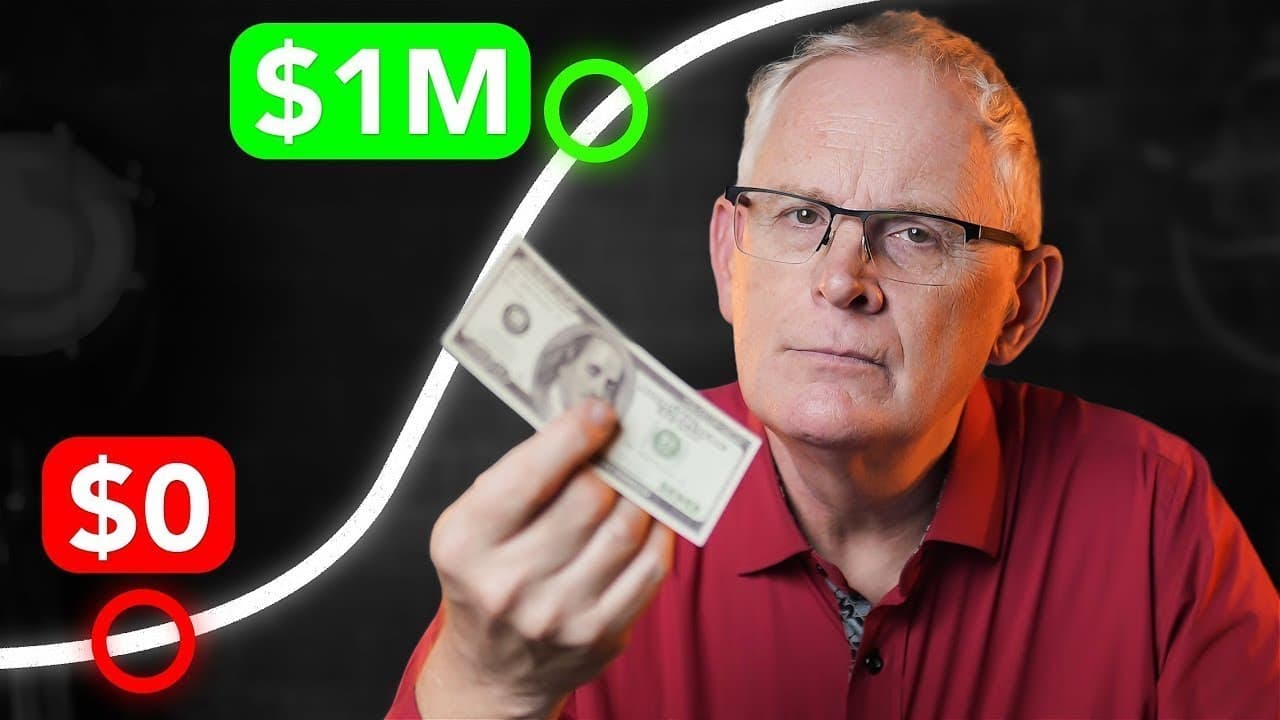
Build an emergency fund covering three to five months of living expenses, then open a tax-advantaged investment account and automate regular contributions to a broad index fund. The approach prioritizes diversification, automatic dividend reinvestment, and long holding periods, while recognizing that investments fluctuate and historical returns do not guarantee future results.
Transcript
- I want you to imagine for a moment that you started investing in 1985, for a couple of years, your money keeps going up and up, until... - [Announcer] Black Monday. - [Announcer 2] They're calling it the "Monday Massacre." - [Announcer 3] Wall Street had its biggest one day drop in history. - [Announcer 4] The results of the decline will hit mill... Read More
Key Insights
- An emergency fund is the recommended starting point before buying stocks. The guide advises keeping three to five months of living expenses available so that investing begins only after a basic financial buffer has been established.
- A tax-advantaged account is designed to reduce unnecessary taxes on investments. The examples provided are a stocks and shares ISA in the UK and a Roth IRA in America, although their stated contribution limits and withdrawal conditions differ.
- An index fund is a way to invest across many companies with a single purchase. The S&P 500 example covers around 500 large public companies in the United States, reducing dependence on the performance of any single business.
- Automated investing is a method for contributing consistently without repeatedly making manual decisions. The example invests five pounds into an S&P 500 fund every day, while the app demonstration shows how scheduled contributions can be configured through an AutoInvest feature.
- An accumulation fund is designed to reinvest dividends automatically. The creator prefers this option over distribution because it puts dividend payments back into the investment and reduces the number of ongoing decisions the investor must make.
- Long-term compounding is presented as the main source of substantial portfolio growth. The guide projects that investing 250 pounds monthly for 31 years could turn 94,000 pounds of contributions into 1.14 million, based on historical averages rather than guaranteed returns.
- Fundamental analysis is the creator's preferred method for assessing individual stocks. It involves examining income statements, balance sheets, cash flow statements, company leadership, and brand recognition, with an intended holding period of at least two to five years.
- A market order is an instruction to buy at the available price, while a limit order specifies the maximum price an investor is willing to pay. The guide says beginners only need to understand these basic order types before purchasing an individual stock.
Install to Summarize YouTube Videos and Get Transcripts
Explore YouTube Video Summarizer or Get YouTube Transcript Extractor
Questions & Answers
Q: How should a beginner start investing in stocks?
A beginner should first build an emergency fund covering three to five months of living expenses. Next, the guide recommends opening a tax-advantaged investment account, depositing an amount that feels comfortable, and choosing a diversified index fund. Regular contributions can then be automated so investing continues without requiring frequent manual purchases or attempts to time the market.
Q: Why are index funds suitable for beginner investors?
Index funds allow an investor to buy exposure to many companies through one investment. The guide uses the S&P 500, a list of around 500 large public companies in the United States, as its example. Because the money is spread across many businesses, poor performance by one company has less influence than it would in a concentrated portfolio.
Q: How does automated investing work?
Automated investing schedules recurring deposits and investment purchases according to instructions selected by the account holder. In the guide, the creator's son invests five pounds into an S&P 500 fund every day. The Trading 212 demonstration creates a pie, adds the selected fund, chooses AutoInvest, and sets the contribution schedule so purchases occur without repeated manual action.
Q: What is the difference between accumulation and distribution funds?
An accumulation fund automatically reinvests dividends into the investment. The creator selects accumulation because it reduces the amount of ongoing management and keeps dividend payments invested. The transcript identifies accumulation and distribution as labels investors should check when selecting a fund, but it does not provide further operational details about how a distribution fund handles payments.
Q: How can regular investing grow into a large portfolio?
Regular investing can grow through continued contributions and returns that compound over a long period. The guide estimates that investing 250 pounds per month for 31 years would involve 94,000 pounds of personal contributions and could produce a portfolio worth 1.14 million. Extending the same illustration to 40 years produces a projected value of 3.56 million, based on historical averages.
Q: Should beginners pick individual stocks?
The guide does not recommend that beginners focus on picking individual stocks because identifying winners is difficult and investments move both up and down. Its preferred approach is broad index investing. For people who still want individual shares, the creator recommends researching company fundamentals and committing to a holding period of at least two to five years.
Q: What financial information should investors examine before buying a stock?
Investors using fundamental analysis should examine a company's income statement, balance sheet, and cash flow statement. The guide also considers who leads the company and how well known its brand is. These factors are presented as tools for evaluating long-term business prospects, rather than relying mainly on short-term price charts and trading patterns.
Q: What is the difference between a market order and a limit order?
A market order buys a stock at the available market price, which the guide compares to paying the displayed price in a supermarket. A limit order lets the investor choose a price they are willing to pay. The purchase occurs only if the stock reaches that selected level. These are presented as the main order types a beginner needs to understand.
Summary & Key Takeaways
-
The guide begins with the importance of staying invested through severe market downturns. The creator says his investments survived Black Monday, the technology decline, later economic shocks, and the global contraction described in the transcript. He uses this history to illustrate how patience and compounding can reward consistent long-term investors.
-
Before investing, beginners are advised to establish an emergency fund covering three to five months of living expenses. The next steps are opening a tax-advantaged account, depositing an affordable amount, choosing an investment, and automating contributions. The guide names stocks and shares ISAs in the UK and Roth IRAs in America.
-
The preferred beginner strategy is buying a broad S&P 500 index fund instead of attempting to identify individual winners. Investors can select an accumulation fund to reinvest dividends automatically. Those who still choose individual stocks are encouraged to study company financials, leadership, and brand strength, then hold for two to five years.
Read in Other Languages (beta)
Share This Summary 📚
Summarize YouTube Videos and Get Video Transcripts with 1-Click
Try YouTube Summary with ChatGPT & Claude or YouTube Transcript Generator
Explore More Summaries from Mark Tilbury 📚




Summarize YouTube Videos and Get Video Transcripts with 1-Click
Try YouTube Summary with ChatGPT & Claude or YouTube Transcript Generator