How to Build Wealth Before Starting a Business
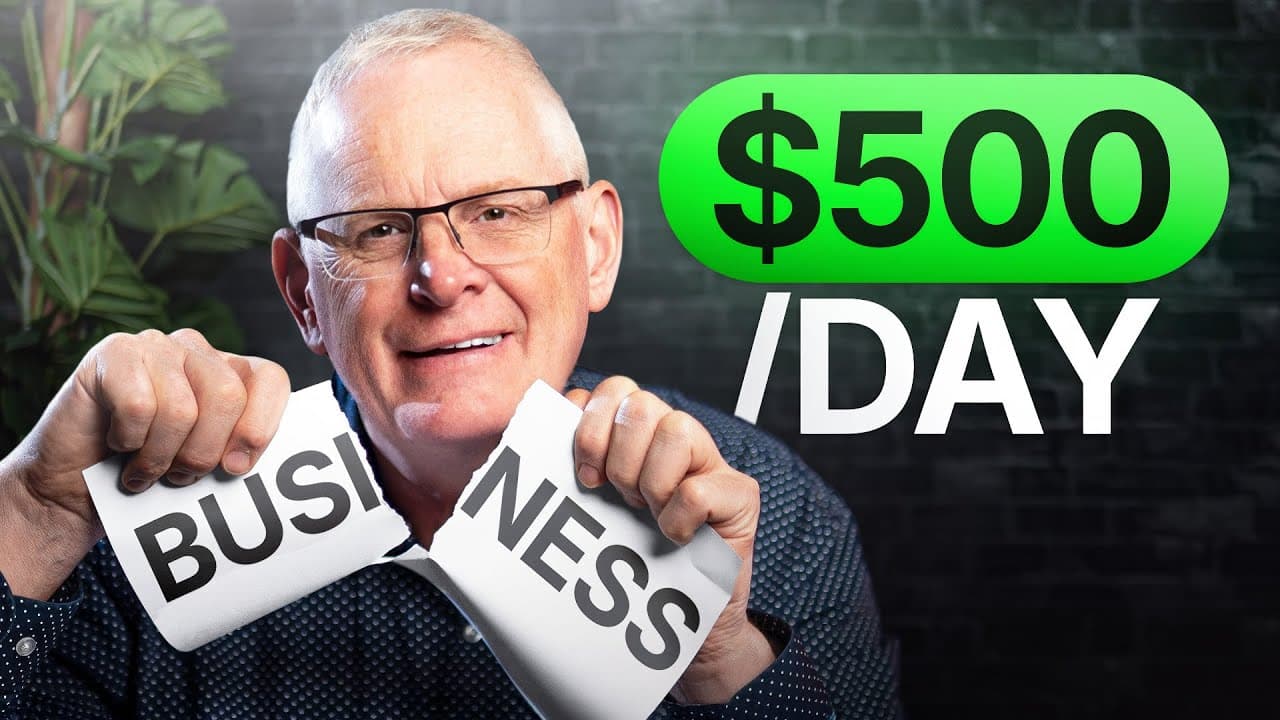
TL;DR
Build marketable skills, workplace knowledge, useful relationships, and evidence of demand before committing to a business. Treat employment as paid training, document operational problems and their solutions, then test proposed improvements through a measurable side hustle. Small-scale sales and customer behavior provide stronger validation than enthusiasm, assumptions, or general feedback.
Transcript
soon as I left school I started my first business which made me a multi-millionaire and gave me the life I'd always dreamed of this statement isn't just false it's pretty much impossible the trouble is many people that want to get rich are buying into this narrative as it's so widespread on the internet why because i... Read More
Key Insights
- Natural talent is a stronger starting point than passion when the immediate objective is making money. Identifying skills shared across several activities reveals potential earning strengths, and developing those existing abilities is easier than beginning from zero in a completely unfamiliar field.
- A job is a form of paid training when workers actively study how the organization functions. Even an unpleasant role can teach technical work, quoting, customer service, sales, communication, organization, manufacturing, and the reasoning behind operational decisions.
- Work habits are transferable because the way someone handles small responsibilities can shape how they approach larger opportunities. Doing the minimum at work may preserve energy temporarily, but it also reduces opportunities to practice discipline, curiosity, reliability, and commercially useful skills.
- A professional image is important because people form opinions quickly through personal meetings and social media. Demonstrating a genuine strength through memorable results gives contacts evidence of ability, while sincere interest in other people supports stronger business relationships and friendships.
- Business opportunities are often hidden inside existing operational problems. Employees can record customer demand gaps, poor locations, inexperienced staffing, management responses, and successful procedures, creating a practical knowledge base while being paid to observe how a company works.
- A side hustle is a lower-risk environment for testing proposed business improvements. Selling on a small scale helps determine whether customers will actually pay, reduces the danger of committing substantial time and money, and provides evidence before a full launch.
- Measurement is essential because tracked results reveal what should be managed and improved. A rough minimal viable product can develop through user feedback, repeated adjustments, and actual sales, while unmeasured opinions provide weaker guidance about commercial demand.
- Paying customers are the most relevant source of product feedback because purchasing behavior distinguishes interest from demand. Small-scale selling also helps identify the limited activities producing most results, allowing time, money, and attention to be concentrated more effectively.
Install to Summarize YouTube Videos and Get Transcripts
Explore YouTube Video Summarizer or Get YouTube Transcript Extractor
Questions & Answers
Q: How should someone prepare before starting a business?
Someone should first identify natural abilities that can generate income, develop those abilities through focused work, and use employment as paid training. They should observe how organizations operate, record effective practices and recurring problems, build a credible image, nurture useful relationships, and test proposed solutions through a measurable side hustle before accepting the greater risks of a full business.
Q: Why can natural talent be more useful than passion?
Natural talent can offer a practical route to earning because it begins with abilities a person already demonstrates. Passion may not generate income, may be financially unrealistic at the present time, or may not exist clearly. Finding common skills across successful activities allows someone to improve established strengths first, solve immediate money problems, and pursue other interests later when resources permit.
Q: How can a regular job help someone become an entrepreneur?
A regular job can provide paid access to technical knowledge, customer service, sales, quoting, communication, organization, manufacturing, and operational decision-making. By asking questions and examining why procedures exist, an employee can understand both effective systems and costly mistakes. That accumulated experience can later guide suppliers, staffing, product selection, customer service, and the structure of a new business.
Q: Why should workers avoid doing only the minimum at work?
Doing only the minimum limits opportunities to build discipline and acquire skills that may matter in a future venture. The transcript argues that behavior in small responsibilities can carry into larger ones. Even when a job is frustrating, consistent effort and curiosity can turn daily tasks into practice for customer relations, technical competence, organization, sales, and understanding how businesses actually function.
Q: How can someone build a memorable professional image?
A memorable professional image should be based on demonstrated strengths rather than repeated claims of greatness. A person can identify an ability, practice it, and present proof through distinctive work or accomplishments. Because opinions form quickly in person and online, presentation matters. Standing out through excellence should also be balanced with genuine interest in other people, which supports relationships and business contacts.
Q: What workplace information should an aspiring founder record?
An aspiring founder should record what the organization does well, what performs poorly, which problems recur, and how management resolves them. Useful observations may include unmet customer demand, weak locations, inexperienced staff, inefficient procedures, and effective operating choices. These notes create a practical reference for designing a better venture and provide knowledge similar to consulting while the employee continues receiving pay.
Q: How can a side hustle reduce the risk of starting a business?
A side hustle allows an idea to be tested with limited time, money, and inventory before a larger commitment. Small-scale selling shows whether customers will pay and reveals which products, messages, or processes work. Results can then be measured, customer reactions gathered, and the offer improved. This replaces assumptions with evidence and reduces the chance of investing heavily in unsupported demand.
Q: Why is customer purchasing behavior more valuable than general feedback?
Customer purchasing behavior provides direct evidence that an offer has commercial value, while general opinions may come from people who will never buy. Discussions in online communities can help improve an early idea, but small-scale sales reveal the customers whose views matter most. Measuring those transactions also shows which limited parts of the side hustle produce most of its useful results.
Summary & Key Takeaways
-
Natural talents provide a practical starting point for building wealth because existing strengths are easier to develop than entirely new abilities. The recommended approach is to identify common skills across activities you already perform well, focus intensely on improving them, and use their earning potential to address financial limitations before pursuing less practical passions.
-
Employment can function as paid business education when approached with curiosity and commitment. Technical work, quoting, customer service, sales, communication, organization, manufacturing processes, and operational decisions can all become preparation for ownership. Recording what a workplace does well, what fails, and how problems are resolved creates a valuable reference for future ventures.
-
A side hustle allows proposed business improvements to be tested before taking larger financial risks. Start with a small offer, measure actual behavior, prioritize feedback from paying customers, and refine a minimal viable product continuously. The strongest opportunities may emerge from the limited portion of activities producing most of the measurable results.
Read in Other Languages (beta)
Share This Summary 📚
Summarize YouTube Videos and Get Video Transcripts with 1-Click
Try YouTube Summary with ChatGPT & Claude or YouTube Transcript Generator
Explore More Summaries from Mark Tilbury 📚






Summarize YouTube Videos and Get Video Transcripts with 1-Click
Try YouTube Summary with ChatGPT & Claude or YouTube Transcript Generator