How Do Volvo, AG1, and iPod Ads Use Timeless Copywriting?
TL;DR
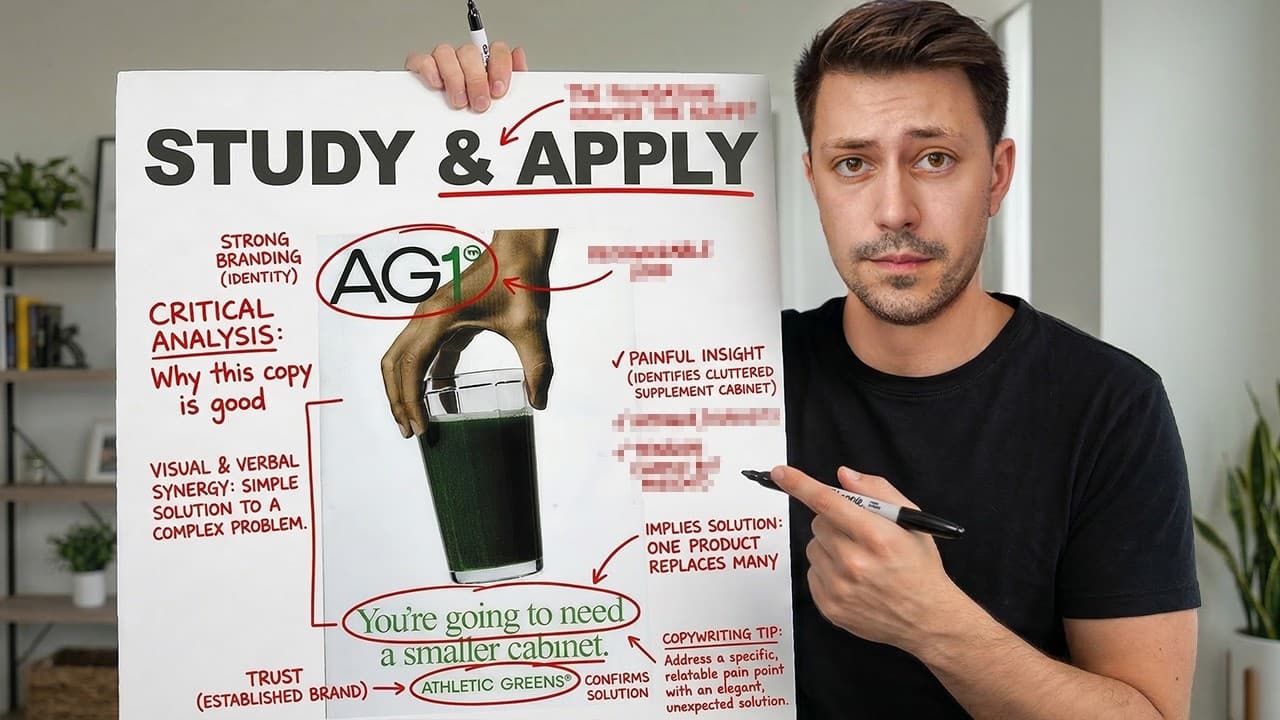
Impactful ads show a brand’s value instead of spelling out every claim, letting the audience reach the intended conclusion. Volvo demonstrated safety with a car supporting a six-ton truck, while AG1’s “you’re going to need a smaller cabinet” implied that one drink replaces numerous vitamins and pills. Read on to see how positioning, restrained claims, and layered headlines make advertising more persuasive and memorable.
Transcript
In this video, I wanted to review some ads from the golden days of advertising. Potentially break down some of these world-class ads to potentially give you some inspiration so you can make some of your own ads to also help you think deeper about copywriting, to help you think more about positioning, about storytelling, about showing rather than te... Read More
Key Insights
- Showing rather than telling reinforces brand positioning, making ads more impactful.
- A strong market position is crucial for brand differentiation and ad effectiveness.
- Great copy communicates more than it explicitly states, allowing audiences to draw their own conclusions.
- Over-communicating in ads can lead to skepticism and reduced effectiveness.
- Memorable ads often avoid making direct claims, reducing audience objections.
- Positioning is key; brands like Volvo focus on safety, while Corvette targets excitement.
- Successful ads stand the test of time by effectively communicating core brand values.
- The current marketing landscape offers opportunities for differentiation by focusing on clear communication.
Install to Summarize YouTube Videos and Get Transcripts
Explore YouTube Video Summarizer or Get YouTube Transcript Extractor
Questions & Answers
Q: How can you create more impactful ads with timeless copywriting?
Show the benefit through a clear fact, image, or story instead of explaining every intended conclusion. Reinforce a distinct market position, leave room for the audience to interpret the message, and avoid large claims that immediately invite objections.
Q: What does the Volvo ad demonstrate about showing rather than telling?
The ad shows a Volvo supporting the entire weight of a six-ton truck and says, “How well does your car stand up to heavy traffic?” It never directly claims that Volvo is exceptionally safe, yet the image and story lead the audience to that conclusion.
Q: How does the Volvo ad reinforce the brand’s positioning?
The speaker describes Volvo as the car for people who want to be safe. By depicting the vehicle beneath a six-ton truck, the ad reinforces that safety position without explicitly telling families that the car will keep them safe.
Q: Why can direct advertising claims create objections?
The transcript explains that objections arise as soon as an advertiser makes a claim. If Volvo directly declared that its car was safe, viewers might question whether the truck was fake, whereas presenting the scene as a fact lets them form the conclusion themselves.
Q: What makes the Volvo headline effective?
“How well does your car stand up to heavy traffic?” has a double meaning. “Heavy traffic” refers both to ordinary traffic jams and to the truck resting on the Volvo, connecting the headline directly to the visual.
Q: What does the AG1 ad communicate with “you’re going to need a smaller cabinet”?
The line implies that AG1 can replace the vitamins, pills, and other items occupying cabinet space. It communicates that idea without listing everything inside the drink or directly calling it an all-in-one vitamin.
Q: What does it mean for great copy to communicate more than it says?
A short line can imply several benefits while allowing the audience to connect the dots. The AG1 cabinet line suggests replacement, convenience, and reduced storage needs without explicitly detailing each point.
Q: What copywriting mistake does the speaker see most often?
The speaker says many copywriters overcommunicate, oversell, and make too many claims. This leaves no space for users to interpret the message and can trigger objections instead of strengthening the brand’s position.
Summary & Key Takeaways
-
Effective advertising relies on showing rather than telling, reinforcing a brand's market position. Brands like Volvo and Apple use storytelling to communicate their value, allowing audiences to draw conclusions without explicit claims. This approach reduces objections and enhances memorability.
-
Modern copywriting often fails by over-communicating and lacking clear positioning. Successful brands focus on what they stand for, letting audiences connect the dots. Memorable ads, like those from the golden era of advertising, communicate more than they say, making them timeless.
-
The marketing landscape offers opportunities for brands to differentiate by focusing on clear communication and strong positioning. By avoiding over-communication and letting audiences infer value, brands can create ads that are both memorable and effective in driving conversions.
Read in Other Languages (beta)
Share This Summary 📚
Summarize YouTube Videos and Get Video Transcripts with 1-Click
Try YouTube Summary with ChatGPT & Claude or YouTube Transcript Generator
Explore More Summaries from Spencer Pawliw 📚




Summarize YouTube Videos and Get Video Transcripts with 1-Click
Try YouTube Summary with ChatGPT & Claude or YouTube Transcript Generator