What Is the Anatomy of the Heart and Its Structures?
TL;DR
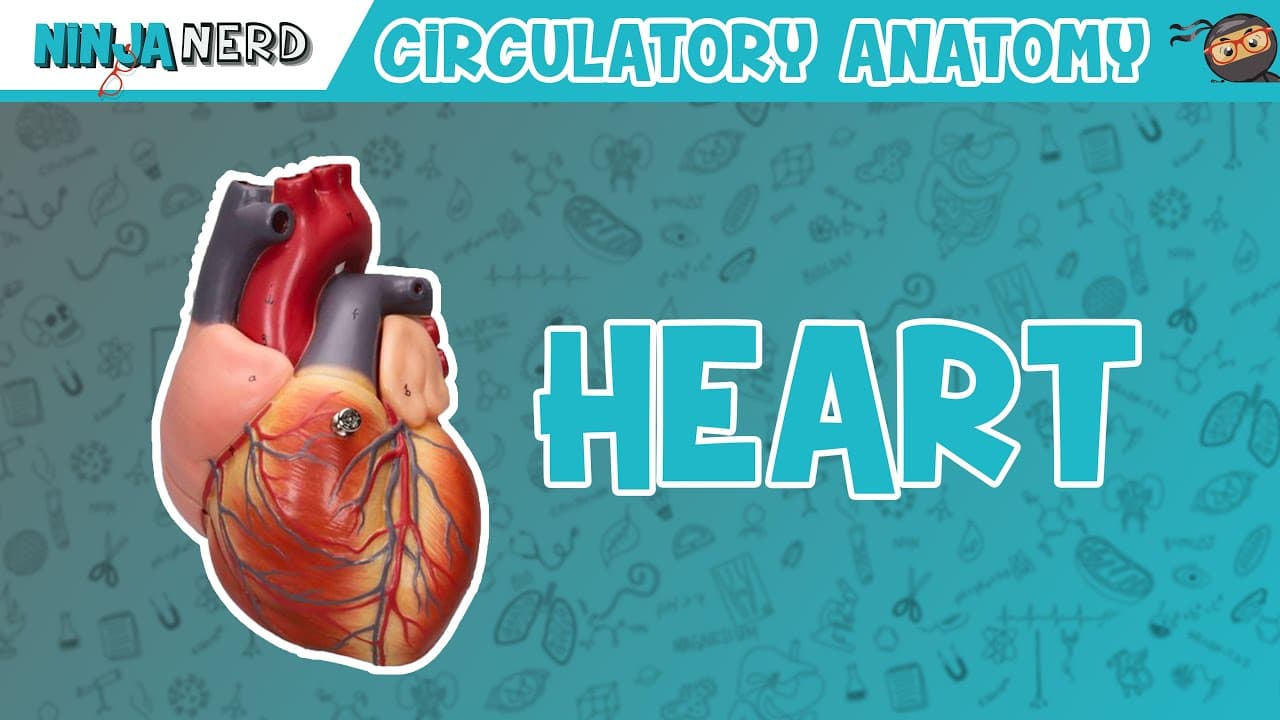
The anatomy of the heart includes four chambers: the right and left atria and ventricles, along with crucial vessels like the pulmonary trunk and aorta. Key structures include auricles that help funnel blood, coronary arteries supplying the heart muscle, and valves preventing backflow. Understanding these components is essential for grasping how the heart functions effectively in blood circulation.
Transcript
alright Ninja Nerds we're going to take a look here at the heart so if you look here at the heart this is the anterior surface of the heart this back here is the posterior surface of a heart inferior surface down here this is the apex of the heart and then up here is the superior surface or you know we actually say like that the base is going to be... Read More
Key Insights
- 🥰 The heart is a complex organ with various surfaces, structures, and chambers that work together for efficient blood circulation.
- 🥰 Arteries and veins play a crucial role in transporting blood to and from the heart, ensuring that oxygen is delivered to the tissues and waste products are removed.
- 🥰 The coronary circuit is essential for providing oxygenated blood to the heart muscle, allowing it to pump effectively.
- 🫀 Anatomical features such as the auricles, ventricles, valves, papillary muscles, and chordae tendineae all contribute to the coordinated contraction and blood flow within the heart.
- 💐 Anastomoses between different arteries provide alternative routes for blood flow in case of blockages or obstructions.
- 🥰 The layers of the heart, including the endocardium, myocardium, and epicardium, each have specific functions and contribute to the overall structure and function of the heart.
- 🥰 Understanding the anatomy of the heart is crucial for healthcare professionals to diagnose and treat various heart conditions effectively.
Install to Summarize YouTube Videos and Get Transcripts
Explore YouTube Video Summarizer or Get YouTube Transcript Extractor
Questions & Answers
Q: What is the purpose of the auricles?
The auricles are small, fatty pouches that assist in squeezing blood into the atria, allowing for efficient blood flow.
Q: What is the role of the pulmonary trunk?
The pulmonary trunk carries deoxygenated blood from the right ventricle to the lungs, where it is oxygenated.
Q: How does the aorta function in the circulatory system?
The aorta is the largest artery in the body and carries oxygenated blood from the left ventricle to the rest of the body.
Q: What is the significance of the coronary circuit?
The coronary circuit consists of the coronary arteries and veins, which supply oxygenated blood to the heart muscle. This ensures that the heart has a sufficient oxygen supply for proper functioning.
Key Insights:
- The heart is a complex organ with various surfaces, structures, and chambers that work together for efficient blood circulation.
- Arteries and veins play a crucial role in transporting blood to and from the heart, ensuring that oxygen is delivered to the tissues and waste products are removed.
- The coronary circuit is essential for providing oxygenated blood to the heart muscle, allowing it to pump effectively.
- Anatomical features such as the auricles, ventricles, valves, papillary muscles, and chordae tendineae all contribute to the coordinated contraction and blood flow within the heart.
- Anastomoses between different arteries provide alternative routes for blood flow in case of blockages or obstructions.
- The layers of the heart, including the endocardium, myocardium, and epicardium, each have specific functions and contribute to the overall structure and function of the heart.
- Understanding the anatomy of the heart is crucial for healthcare professionals to diagnose and treat various heart conditions effectively.
- Further study and exploration of the heart's anatomy are necessary for a comprehensive understanding of its structure and function.
Summary & Key Takeaways
-
The video provides a thorough examination of the surfaces and structures of the heart, including the anterior, posterior, inferior, and superior surfaces, as well as the apex and base.
-
Specific structures highlighted include the auricles, atria, ventricles, pulmonary trunk, aorta, coronary arteries, coronary veins, and coronary sinus.
-
The video also discusses the function and significance of various arteries and veins, such as the pulmonary arteries and veins, brachiocephalic artery, subclavian arteries, and vena cava.
Read in Other Languages (beta)
Share This Summary 📚
Summarize YouTube Videos and Get Video Transcripts with 1-Click
Try YouTube Summary with ChatGPT & Claude or YouTube Transcript Generator
Explore More Summaries from Ninja Nerd 📚





Summarize YouTube Videos and Get Video Transcripts with 1-Click
Try YouTube Summary with ChatGPT & Claude or YouTube Transcript Generator