How Is Perplexity CEO Aravind Srinivas Gunning for Google? | The Cognitive Revolution
TL;DR
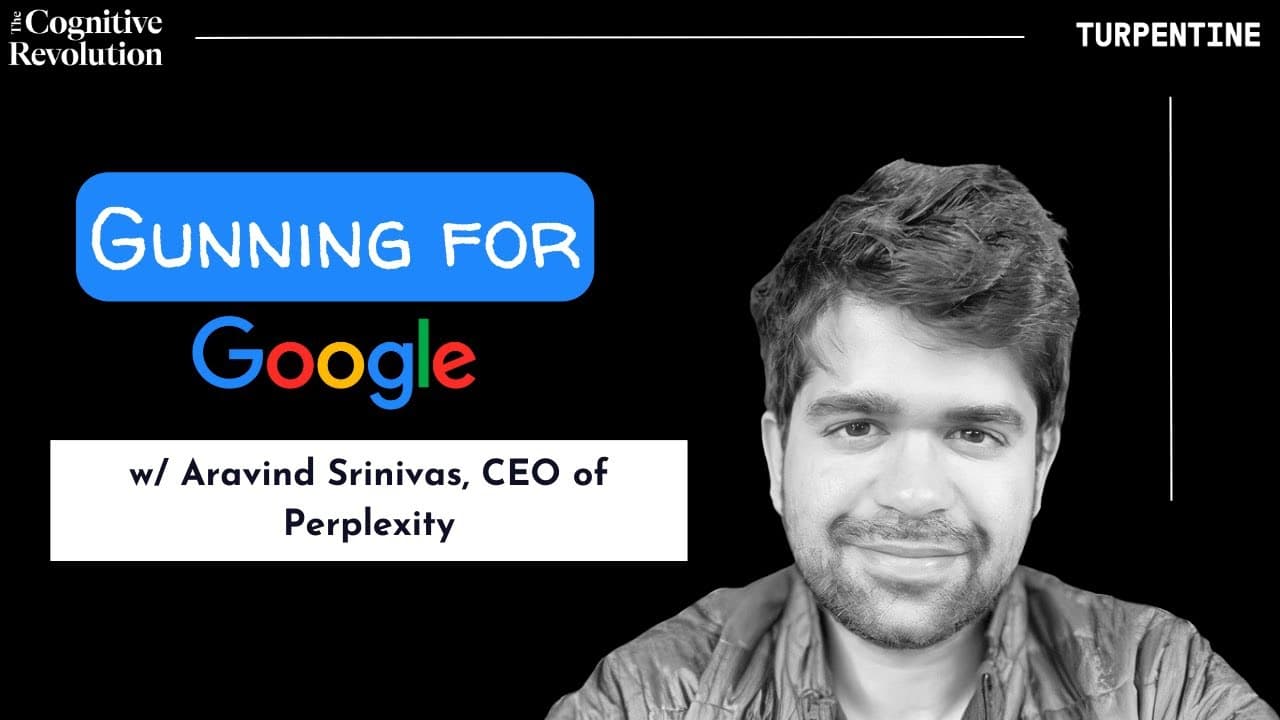
Perplexity CEO Aravind Srinivas is challenging Google by building a proprietary web crawler, search index, and LLMs while prioritizing the web pages most useful to knowledge workers, researchers, and curious minds. Although Perplexity was only about 1/1,000th the size of Google, it was already serving millions of queries per day. Read on to understand its strategy for data, growth, monetization, and technological self-sufficiency.
Transcript
we are building our own search index and so is open so is anthropic like everybody's building their index because I think in a world where large language models are commodity and the training recipe for them or the weights are just ring on in their open source The Edge goes to the data markets people who own the best data in the world and what what... Read More
Key Insights
- Perplexity AI is building its own search index to compete with Google and other tech giants.
- The company focuses on indexing the best web pages, not the most, to provide high-quality search results.
- Perplexity has grown significantly, now handling millions of queries per day.
- The company emphasizes retention and usage over immediate monetization, aiming for long-term user engagement.
- Perplexity's search strategy combines traditional indexing with real-time web queries for comprehensive results.
- CEO Aravind Srinivas believes in charging consumers directly rather than relying on advertising revenue.
- The company is investing heavily in infrastructure to scale efficiently and reduce dependency on external services.
- Perplexity aims to create an AI-first user experience, potentially redefining how users interact with search engines.
Install to Summarize YouTube Videos and Get Transcripts
Explore YouTube Video Summarizer or Get YouTube Transcript Extractor
Questions & Answers
Q: How is Perplexity AI challenging Google in search?
Perplexity is building its own web crawler, search index, and LLMs to reduce its dependence on search giants. Its strategy emphasizes indexing the best web pages for knowledge workers, researchers, and curious minds instead of maximizing the number of indexed pages.
Q: Why is Perplexity building its own search index?
Aravind Srinivas argues that when large language models become commodities, an advantage shifts to the data markets and the companies that own the best data. A proprietary index could also give Perplexity technological self-sufficiency if major technology companies restrict access to their search indexes.
Q: How large was Perplexity compared with Google?
The episode describes Perplexity as only about 1/1,000th the size of Google. Even at that relative size, the company was serving millions of queries per day.
Q: What web pages does Perplexity want to index?
Perplexity wants to index the web pages that matter most to knowledge workers, researchers, and curious minds. Srinivas says the goal is not sheer quantity: from roughly a trillion pages on the web, the company wants to capture the distribution of the best pages.
Q: Why does Aravind Srinivas describe search indexing as a chicken-and-egg problem?
A company needs a product to build the capacity required for an index, but it also needs some kind of index to create the product. Srinivas says Perplexity somehow broke that asymmetry and reached a point where it could aspire to become important.
Q: How does Perplexity plan to achieve technological self-sufficiency?
Perplexity is working to develop its own web crawler, search index, and LLMs. This approach is intended to help the company sustain product supremacy if large technology companies recognize the threat from generative AI startups and restrict access to their systems.
Q: What is Perplexity AI's growth strategy?
Perplexity emphasizes retention and usage rather than immediate monetization. It also invests heavily in infrastructure and proprietary technology so it can scale while reducing reliance on external services.
Q: How does Perplexity AI plan to make money?
Perplexity's stated approach is to charge consumers directly instead of relying on advertising revenue. This strategy accompanies its focus on engagement, retention, and a sustainable business model built around its search experience.
Summary & Key Takeaways
-
Perplexity AI is challenging Google by developing its own search index and focusing on high-quality, relevant web pages. The company has grown to handle millions of queries daily, emphasizing user retention and engagement over immediate monetization. By combining traditional indexing with real-time web queries, Perplexity aims to deliver comprehensive search results.
-
CEO Aravind Srinivas highlights the importance of building proprietary technology to achieve self-sufficiency and maintain product supremacy. The company invests heavily in infrastructure to scale efficiently and reduce dependency on external services. Perplexity envisions an AI-first user experience that could redefine search engine interactions.
-
Perplexity AI's strategy involves direct consumer charging rather than relying on advertising revenue. The company focuses on user engagement and retention, aiming to become a significant player in the AI search market. By innovating in data markets and search technologies, Perplexity seeks to compete effectively with tech giants like Google.
Read in Other Languages (beta)
Share This Summary 📚
Summarize YouTube Videos and Get Video Transcripts with 1-Click
Try YouTube Summary with ChatGPT & Claude or YouTube Transcript Generator
Explore More Summaries from Cognitive Revolution "How AI Changes Everything" 📚






Summarize YouTube Videos and Get Video Transcripts with 1-Click
Try YouTube Summary with ChatGPT & Claude or YouTube Transcript Generator