Is the Universe Finite or Infinite? Understanding Its Nature
TL;DR
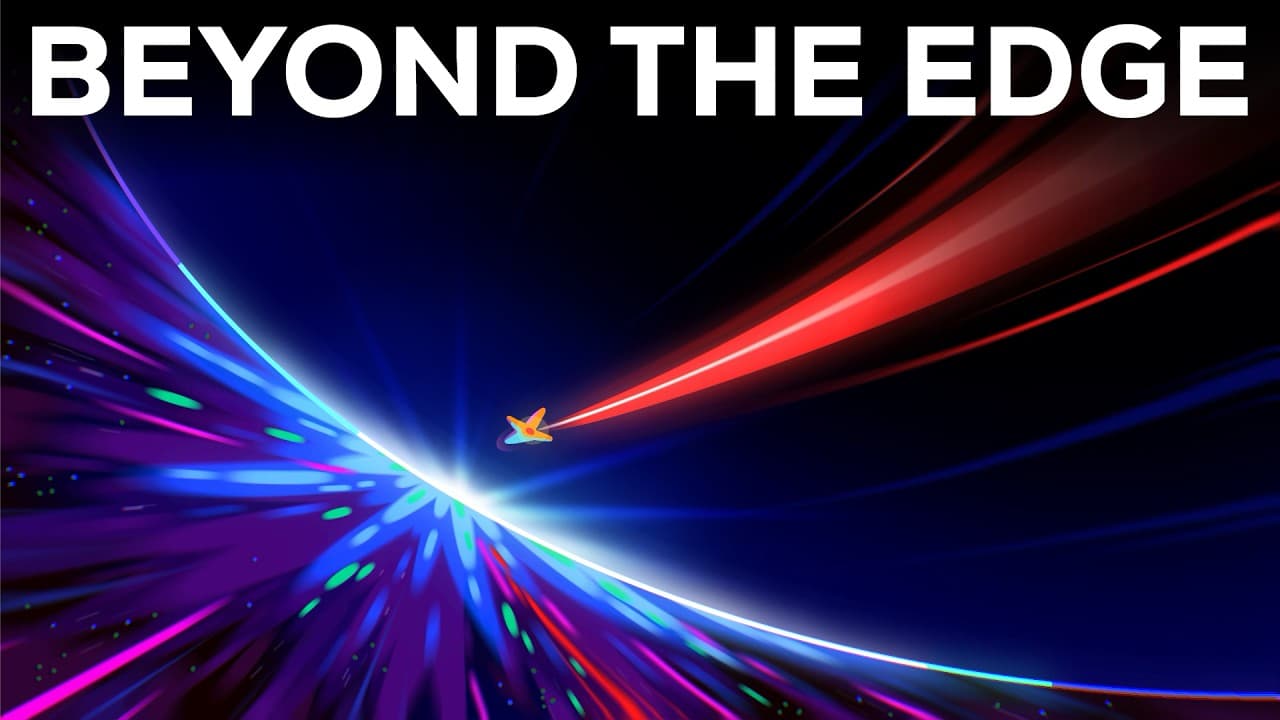
The universe is expanding and may be either finite or infinite. If finite, it could resemble a hypersphere or hyperdonut shape without edges, but if infinite, it goes on forever with endless possibilities. Both scenarios challenge our understanding of existence, but we can only interact with the finite observable universe, which is sufficient for our needs.
Transcript
Is the universe infinite? Does it have an edge? And if so, what would you see if you went there? Today we know that the universe had a beginning 14 billion years ago and that it's been expanding ever since. But something that's expanding should also have an edge, right? Well, it sort of does. Information can’t travel faster than light. That m... Read More
Key Insights
- 🫤 The universe had a beginning 14 billion years ago and has been expanding ever since.
- 🙂 The observable universe is a sphere with a radius of 45 billion light years, containing numerous galaxies and stars.
- 💠 The universe may be finite, resembling a hypersphere or hyperdonut shape without borders.
- ©️ Alternatively, the universe may be infinite, with no boundaries and the potential for repetition and exact copies of ourselves.
- 🤨 The concept of infinity raises questions about the origin and eternal nature of the universe.
- 👾 The paradoxes of infinity challenge our understanding of space, time, and the possibilities of existence.
- 💡 While these ideas are currently untestable and unprovable, the finite observable universe is more than sufficient for our dreams and aspirations.
Install to Summarize YouTube Videos and Get Transcripts
Explore YouTube Video Summarizer or Get YouTube Transcript Extractor
Questions & Answers
Q: Is the observable universe the same as the entire universe?
No, the observable universe is only a small portion of the entire universe. It is the sphere of space from which light has had enough time to reach us in the last 14 billion years.
Q: Does the concept of an edge in a finite universe make sense?
In a finite universe, there may be an edge, but the idea of something existing outside of everything that is "all there is" seems paradoxical. However, the concept of a hypersphere or hyperdonut shape allows for a continuous universe without borders.
Q: Can the universe be truly infinite?
The cosmological model used by most scientists suggests that the universe is infinite, with no borders anywhere. This brings up questions about the nature of eternity, the origin of the universe, and the potential for infinite repetition of patterns and copies of ourselves.
Q: What are the possibilities regarding the size of a hyperdonut universe?
A hyperdonut universe could be the smallest possible universe, just a few times bigger than the observable universe. However, it could also be much larger, with an unknown scale.
Summary & Key Takeaways
-
The observable universe is a sphere with a radius of 45 billion light years and contains around 200 billion galaxies.
-
The universe may be finite, resembling a hypersphere or hyperdonut shape, where 3D-space is curved on itself without any borders.
-
Alternatively, the universe may be infinite, with no boundaries and the potential for repetition and the existence of exact copies of ourselves.
Read in Other Languages (beta)
Share This Summary 📚
Summarize YouTube Videos and Get Video Transcripts with 1-Click
Try YouTube Summary with ChatGPT & Claude or YouTube Transcript Generator
Explore More Summaries from Kurzgesagt – In a Nutshell 📚


Summarize YouTube Videos and Get Video Transcripts with 1-Click
Try YouTube Summary with ChatGPT & Claude or YouTube Transcript Generator