What happened at Fauci Senate hearing and diary revelations
TL;DR
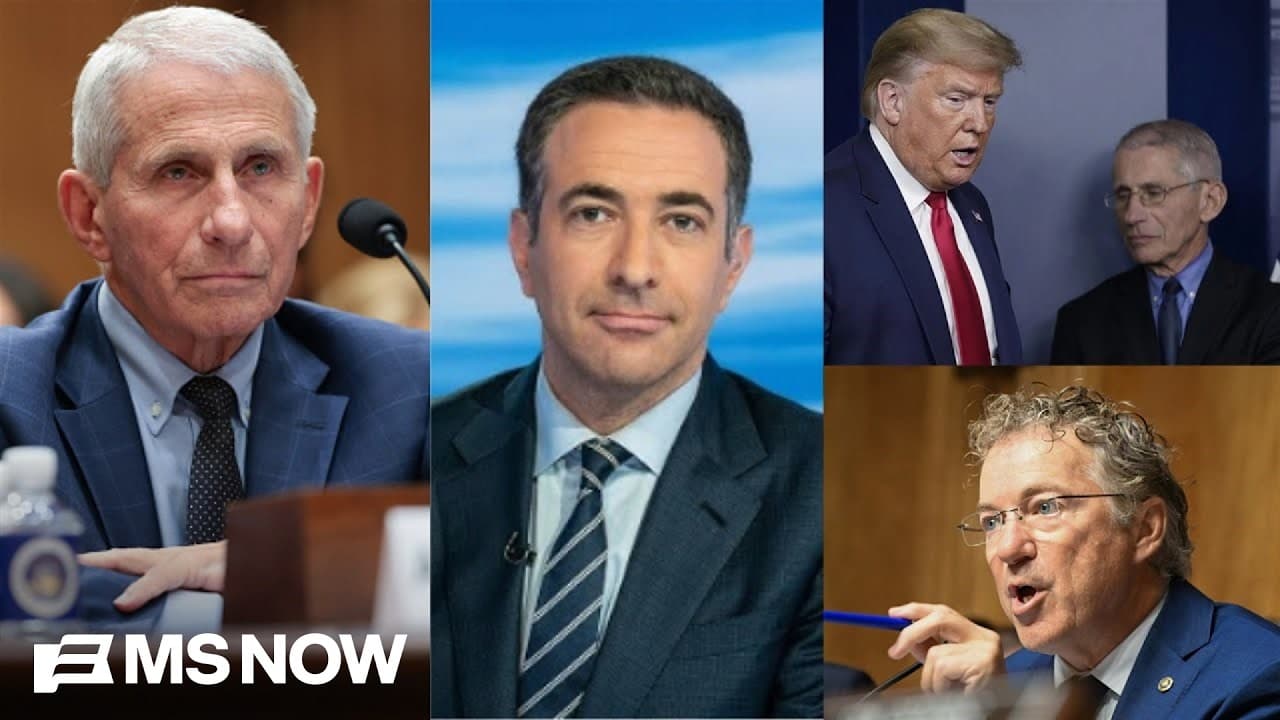
Fauci invoked the Fifth Amendment during a fiery Senate hearing over the COVID response. The event featured sharp exchanges with Republicans and a push to jail him, while the diary release added a new layer to the discussion. The episode also notes Biden’s pardon and highlights ongoing questions about government actions during the crisis.
Transcript
but we begin with the story out of Washington the Senate holding fiery and at times farcical hearings today questioning Dr. Anthony Fauci and he pled the fifth which itself is unusual for such a senior government official he hasn't done that of course in the past he's testified to many different Congresses under both parties he did it today... Read More
Key Insights
- Fauci invoked the Fifth Amendment during the Senate hearing, an unusual move for a federal official.
- The hearing featured aggressive Republican rhetoric and calls to jail Fauci for alleged misleadings.
- New diary writings are presented as evidence that could influence assessments of Fauci's approach and priorities.
- The coverage acknowledges valid questions about the government response to COVID alongside partisan critiques.
- Biden’s pardon is framed as an unprecedented act related to protecting public service from criminalization.
- Fauci is described as both a public health messenger and a science communicator who faced personal scrutiny.
- The diary passages emphasize Fauci’s rise to celebrity status and the intersection of fame with public duty.
- The report aims to balance political critique with primary source evidence to assess the record fairly.
- More videos from this channel:
- More from this channel: MS NOW
Install to Summarize YouTube Videos and Get Transcripts
Explore YouTube Video Summarizer or Get YouTube Transcript Extractor
Questions & Answers
Q: What happened at the Fauci Senate hearing involving the Fifth Amendment?
During the Senate hearing, Dr. Anthony Fauci invoked the Fifth Amendment, a move described as unusual for someone of his senior government position. The discussion centered on the handling of the COVID response and the pressure from some lawmakers who argued for consequences or jail for perceived missteps. The segment notes that Fauci and his team argued the hearing was rigged, aiming for a perjury trap, while he asserted his right not to incriminate himself. The exchange reflects a broader political context where quantum of accountability and public messaging intersect with partisan aims, and it situates the event within ongoing disagreements about policy and oversight.
Q: Why is the diary release mentioned in relation to Fauci?
The diary release is described as newly available writings from Fauci that are being reviewed to objectively assess the record of the pandemic period. The report suggests looking at primary source evidence to understand Fauci’s priorities, media interactions, and responses to data and conferences. This material is presented to complement or complicate existing public accounts by providing firsthand notes about his experiences, challenges, and perceived fame during the crisis.
Q: What political dynamics are highlighted in the hearing coverage?
The coverage highlights intense partisan theater, with Republicans pushing hard questions and calls for punitive actions, including jail, while Democrats and the pro-Fauci perspective emphasize the seriousness of the crisis and defend the integrity of public service. The piece also points to critiques about how COVID policy was formed, including debates over lockdowns and vaccine mandates, and notes how discussions evolved as new evidence from the diary emerged.
Q: How does the report describe Fauci’s public perception during the crisis?
The report describes Fauci as a central figure who was both widely praised and demonized, depending on the political angle. It notes his fame grew during the crisis, with media attention and cultural references, while also highlighting critiques from right leaning voices. The narrative presents him as a public health messenger whose profile became a focal point of media and political discourse.
Q: What role does Biden’s pardon play in the narrative?
The narrative describes Biden’s pardon as an unprecedented act during the crisis, framed as an effort to prevent criminalization of public service. It discusses how the pardon is invoked in relation to the ongoing scrutiny of Fauci and other government figures, suggesting that the political context includes concerns about legal actions that could set precedents for future governance and accountability.
Q: What do the diary excerpts suggest about Fauci’s view of fame?
The diary excerpts suggest that Fauci perceived significant fame during the crisis, with references to visits from celebrities and a sense of being the most talked about person, according to his notes. The text also indicates that he sometimes viewed this attention as a mix of public duty and personal star power, which the report considers in evaluating his approach to leadership and communication.
Q: How does the report address the media’s portrayal of Fauci?
The report notes that Fauci’s media portrayal oscillated between being celebrated as a hero of science and being criticized as a political target. It mentions mainstream and independent outlets discussing his star status and influence, and it emphasizes examining the evidence objectively rather than solely relying on political narratives to form conclusions about his actions and priorities.
Q: What are the broader implications discussed regarding the pandemic response?
The broader implication discussed is that valid questions about the government's COVID response exist alongside partisan critiques. The coverage suggests that new diary evidence might illuminate how decisions were made and how public messaging intersected with scientific data, while also acknowledging ongoing investigations and political disputes that shape public understanding of the crisis and the accountability mechanisms in place.
Summary & Key Takeaways
-
The report covers Fauci invoking the Fifth Amendment during a Senate hearing that featured intense partisan exchanges and claims of rigged proceedings. It also notes the release of Fauci’s diary and how it is being analyzed for its impact on public perception of the pandemic response. The piece situates the hearing within broader political reactions and ongoing investigations.
-
The diary excerpts describe Fauci as a national public figure who gained fame during the crisis, while the coverage discusses media attention and the interplay between public messaging and personal reputation. It also references political responses and the presidential pardon.
-
The program concludes by examining what the new diary material adds to the record and how it interacts with prior accounts of Fauci’s conduct and the government response during the pandemic.
Read in Other Languages (beta)
Share This Summary 📚
Summarize YouTube Videos and Get Video Transcripts with 1-Click
Try YouTube Summary with ChatGPT & Claude or YouTube Transcript Generator
Explore More Summaries from MS NOW 📚

Summarize YouTube Videos and Get Video Transcripts with 1-Click
Try YouTube Summary with ChatGPT & Claude or YouTube Transcript Generator