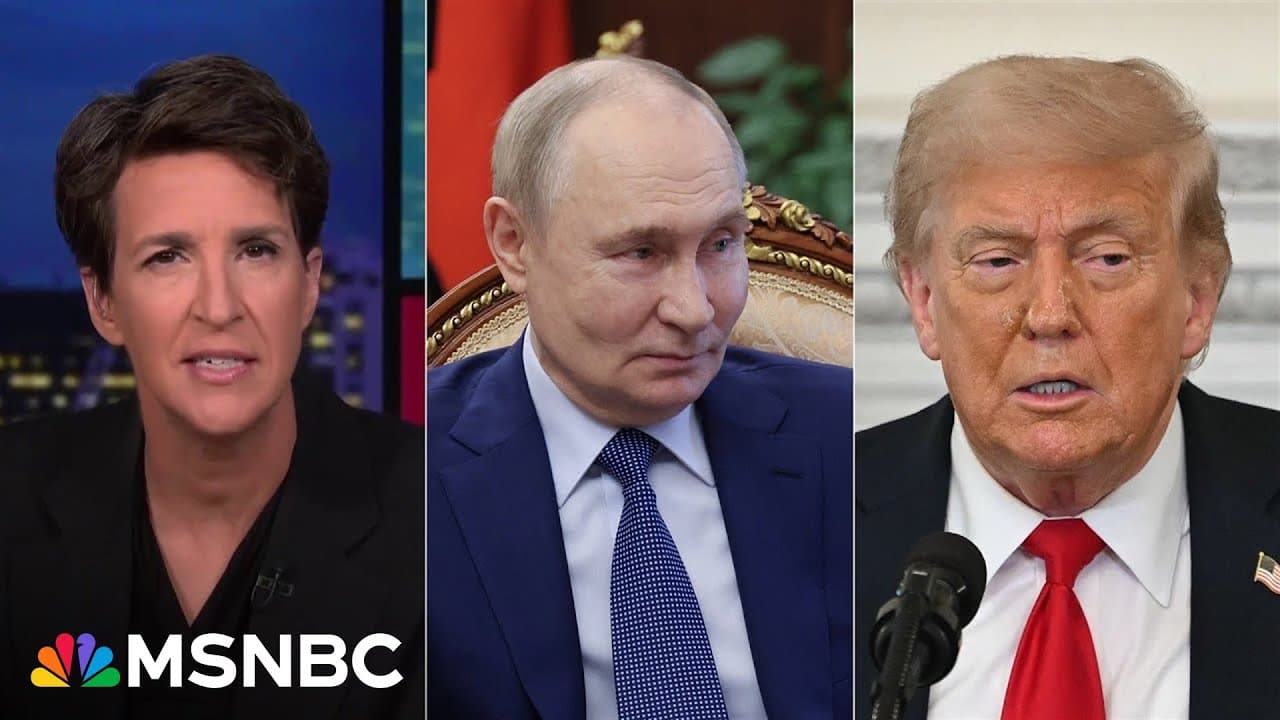
In Trump embarrassing himself again for Putin, CIA sees a president switching sides
TL;DR
Trump repeatedly threatens Russia but fails to act.
Transcript
Read and summarize the transcript of this video on Glasp Reader (beta).
Key Insights
- Trump has repeatedly threatened sanctions and tariffs on Russia if they do not end the war in Ukraine, but has consistently failed to follow through.
- Putin has ignored Trump's threats, continuing to escalate the conflict in Ukraine without facing any consequences from the U.S.
- Trump's lack of action has led to embarrassment and frustration among U.S. officials and the general public, questioning his stance on Russia.
- The CIA has been actively supporting Ukraine since Russia's annexation of Crimea, playing a crucial role in its survival against Russian aggression.
- The CIA's intelligence on Russia's war plans for Ukraine was initially met with skepticism but later galvanized NATO support for Ukraine.
- Trump's actions at the United Nations, voting with authoritarian nations, have been particularly troubling for CIA officers working against Russian interests.
- Tim Weiner's new book, "The Mission: The CIA in the 21st Century," explores the CIA's role and challenges in the modern geopolitical landscape.
- The ongoing situation highlights the tension between Trump's administration and U.S. intelligence agencies, especially regarding foreign policy with Russia.
Install to Summarize YouTube Videos and Get Transcripts
Explore YouTube Video Summarizer or Get YouTube Transcript Extractor
Questions & Answers
Q: Why did Trump repeatedly threaten sanctions on Russia?
Trump threatened sanctions and tariffs on Russia as a means to pressure them into ending their military actions in Ukraine. However, despite these threats, he failed to follow through with any meaningful actions, leading to criticism and questions about the effectiveness of his foreign policy.
Q: How did Putin respond to Trump's threats?
Putin largely ignored Trump's threats of sanctions and tariffs, continuing to escalate the conflict in Ukraine without any significant repercussions from the United States. This lack of response from Trump has been seen as a sign of weakness, undermining his credibility on the international stage.
Q: What role has the CIA played in Ukraine?
The CIA has been actively involved in supporting Ukraine since Russia's annexation of Crimea. They have provided crucial intelligence and support that has helped Ukraine withstand Russian aggression. Their efforts have been instrumental in galvanizing international support, particularly from NATO countries.
Q: What was the initial reaction to the CIA's intelligence on Russia's war plans?
Initially, NATO nations were skeptical of the CIA's intelligence on Russia's war plans for Ukraine, questioning its validity due to past intelligence failures. However, the intelligence proved accurate, leading to a significant increase in support for Ukraine from European nations.
Q: How has Trump's relationship with Russia affected U.S. intelligence agencies?
Trump's perceived alignment with Russia and authoritarian regimes has caused frustration and concern within U.S. intelligence agencies, particularly the CIA. His actions have been seen as undermining their efforts to counter Russian influence and support Ukraine, leading to tensions between the administration and intelligence community.
Q: What insights does Tim Weiner's book provide about the CIA?
Tim Weiner's book, "The Mission: The CIA in the 21st Century," provides a comprehensive look at the challenges faced by the CIA in the modern geopolitical landscape. It explores their role in supporting Ukraine, countering Russian aggression, and dealing with a U.S. administration that often appears to favor Russian interests.
Q: What impact has Trump's UN voting record had on perceptions of his foreign policy?
Trump's voting record at the United Nations, where he has aligned with authoritarian nations like Russia, North Korea, and Iran, has raised concerns about his foreign policy priorities. This alignment has been troubling for U.S. intelligence agencies and has contributed to perceptions of his administration as being sympathetic to authoritarian regimes.
Q: Why is Trump's stance on Russia and Ukraine particularly concerning for the CIA?
Trump's stance on Russia and Ukraine is concerning for the CIA because it contradicts their efforts to counter Russian influence and support Ukraine's sovereignty. His actions have been seen as undermining U.S. intelligence operations and aligning with authoritarian regimes, creating internal conflicts and frustrations within the agency.
Summary & Key Takeaways
-
Trump has made multiple threats of sanctions and tariffs against Russia if they do not cease their actions in Ukraine, yet has not taken any concrete steps to enforce these threats. This pattern has led to criticism and embarrassment for Trump as Putin continues to ignore him.
-
The CIA has been a key player in supporting Ukraine against Russian aggression since the annexation of Crimea. Their intelligence on Russia's plans helped galvanize NATO support, but Trump's perceived alignment with authoritarian regimes has caused frustration within the agency.
-
Tim Weiner discusses the challenges faced by the CIA in the 21st century, including dealing with a U.S. president whose actions often appear to favor Russian interests. His book provides an in-depth look at the agency's efforts to counter Russian influence and support Ukraine.
Read in Other Languages (beta)
Share This Summary 📚
Summarize YouTube Videos and Get Video Transcripts with 1-Click
Try YouTube Summary with ChatGPT & Claude or YouTube Transcript Generator
Explore More Summaries from MSNBC 📚

Summarize YouTube Videos and Get Video Transcripts with 1-Click
Try YouTube Summary with ChatGPT & Claude or YouTube Transcript Generator