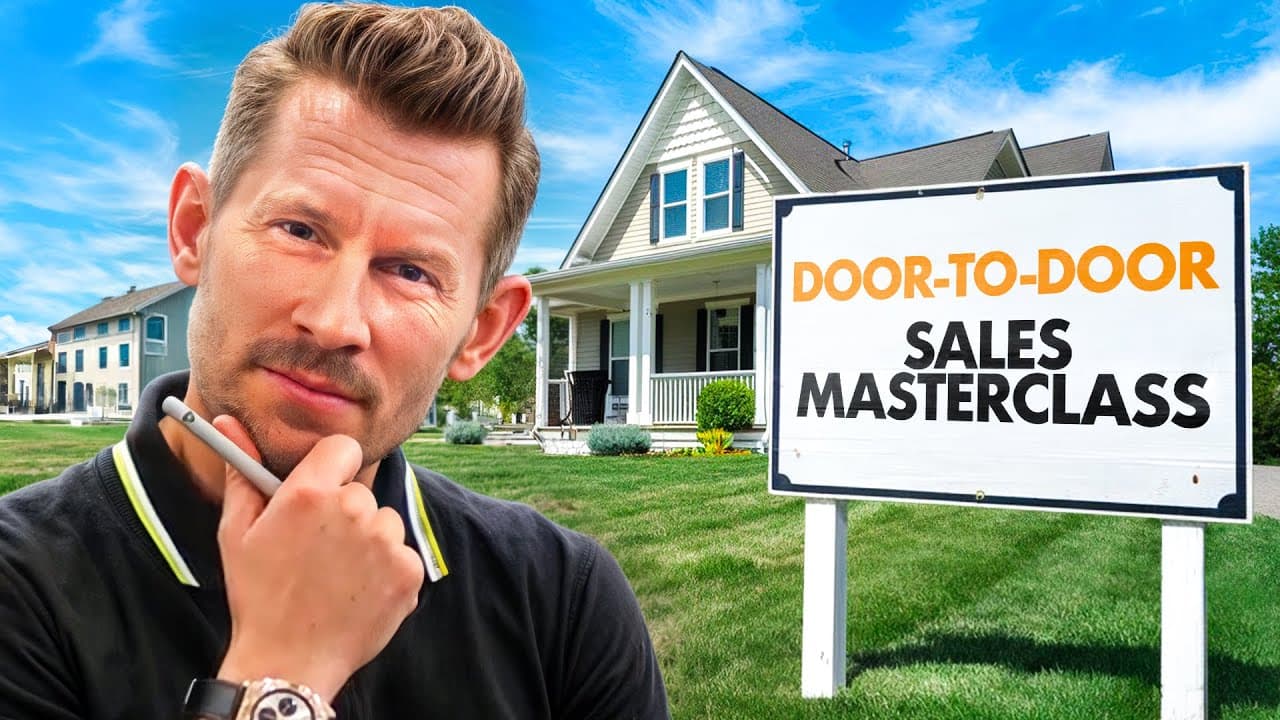
How to Lower Resistance in Door-to-Door Sales
TL;DR
Lower sales resistance by appearing neutral, calm, credible, and detached during the first 5–12 seconds at the door. Use nonthreatening positioning, simple work-oriented clothing, and curious or slightly confused tonality to interrupt the familiar salesperson pattern, lower the prospect’s guard, and create enough curiosity for a real conversation.
Transcript
do you notice when you knock on a door as a doored or salesperson and you start going into your pitch or ask them if they're the homeowner and then tell them why you're in the neighborhood then immediately the prospect says not interested or we're good or I don't need that or can you come back in a week a month a year later what is going on in thei... Read More
Key Insights
- Prospects evaluate social cues within the first 5–12 seconds after a salesperson knocks. Body language and vocal tone can determine whether the visitor appears safe and credible or triggers an immediate defensive response before the actual offer has been explained.
- Excessive enthusiasm, aggression, neediness, and attachment can activate sales resistance. When prospects feel they are being sold to, they may enter a fight-or-flight response and produce automatic objections such as not being interested, not needing the service, or asking the salesperson to return later.
- The salesperson’s first objective is to lower the prospect’s guard. Trust and credibility are initially absent at the door, so attempting to sell immediately forces the conversation against a wall of resistance instead of first creating openness and curiosity.
- A neutral and detached presence can make the salesperson sound more like an expert. Neutrality does not require being boring or passive, because the salesperson can remain assertive while communicating that the prospect’s situation must be understood before any solution can be considered.
- Appearance can function as a pattern interrupt during a doorstep interaction. Simple clothing, a small company logo, and practical items connected to the work can prevent the prospect from instantly placing the visitor into the familiar category of an obvious salesperson.
- Doorway positioning is intended to reduce the visitor’s perceived threat. The recommended approach is to stand to the side rather than directly in front of the door, favor the prospect’s less dominant side when possible, and maintain approximately 6–8 feet of distance when the surroundings allow it.
- NEPQ connection questions rely on deliberate vocal delivery. The five tones identified are curious, confused, challenging, concerned or empathetic, and playful, with each tone serving a different purpose in guiding how the prospect interprets a question.
- A slightly confused ownership question can create curiosity without sounding incompetent. The salesperson can look at a feature relevant to the service, lean in slightly, and ask whether the residents are the property owners as though verifying that the correct people have been reached.
Install to Summarize YouTube Videos and Get Transcripts
Explore YouTube Video Summarizer or Get YouTube Transcript Extractor
Questions & Answers
Q: How can door-to-door salespeople reduce immediate resistance?
Door-to-door salespeople can reduce immediate resistance by controlling the social cues prospects receive during the first 5–12 seconds. They should avoid appearing overly excited, aggressive, needy, or attached to an outcome. A neutral, collected, assertive, and expert-like manner can lower the prospect’s guard, create curiosity, and make the person more willing to hear why the salesperson is there.
Q: Why do prospects immediately say they are not interested?
Prospects may immediately say they are not interested because the salesperson’s appearance, body language, words, or tone makes them feel that a sales pitch is beginning. According to the presentation, this recognition activates defensive mechanisms and a fight-or-flight response. Automatic objections then help the prospect end the interaction before evaluating whether the product or service could actually be relevant.
Q: What should a salesperson accomplish before presenting an offer?
A salesperson should first lower the prospect’s guard because trust and credibility are effectively absent when the door opens. Presenting the offer before establishing openness means selling against continuing resistance. The initial interaction should instead make the salesperson seem neutral, safe, and credible, giving the prospect enough curiosity to listen before the conversation moves toward the service or its possible benefits.
Q: How should a door-to-door salesperson dress?
A door-to-door salesperson should use simple clothing and avoid accessories that instantly reinforce the familiar salesperson pattern. The examples include a shirt with a small company logo, shorts, basic shoes, and an inexpensive watch. Practical items such as a tape measure, construction vest, gloves, or metal clipboard can support a work-oriented appearance when they fit the industry and the actual visit.
Q: Where should a salesperson stand after knocking on a door?
A salesperson should stand to the side instead of directly in front of the doorway, ideally on the prospect’s less dominant side when that can be reasonably inferred. The presentation recommends starting on the left because it states that about 91 percent of people encountered are right-handed. Approximately 6–8 feet of distance is suggested when the property and surrounding traffic make that position safe.
Q: What tones should door-to-door salespeople master?
The five tones identified in the presentation are curious, confused, challenging, concerned or empathetic, and playful. These tones help shape how prospects interpret questions beyond the literal words being spoken. The opening example emphasizes a slightly confused tone, meaning the salesperson sounds uncertain about whether the correct property owners have been reached, not generally disoriented or incapable of conducting the conversation.
Q: How does a pattern interrupt work in door-to-door sales?
A pattern interrupt works by preventing the prospect from immediately matching the visitor to an expected image of a salesperson. Clothing, practical equipment, body position, visual attention, and vocal tone can all alter that first impression. When the visitor resembles someone inspecting or addressing a property-related issue, the prospect may lower their guard enough to become curious about the purpose of the visit.
Q: How should a salesperson ask whether someone owns the property?
The salesperson should first look at something relevant to the service, such as the roof for roofing or solar, cobwebs or ant mounds for pest control, or bushes for lawn care. As the resident answers, the salesperson can lean in slightly and ask whether they are the property owners using a curious, mildly confused tone that suggests simple verification rather than an immediate pitch.
Summary & Key Takeaways
-
Prospects assess a door-to-door salesperson through social cues within the first 5–12 seconds. Excessive excitement, aggression, neediness, or attachment can activate defensive reactions and immediate objections. A neutral, collected, assertive, and expert-like presence is intended to reduce resistance before the salesperson begins discussing any product or service.
-
Appearance can interrupt the prospect’s expectation that every visitor wearing a prominent badge, formal company shirt, or flashy accessory is trying to sell something. The recommended presentation uses simple clothing and practical work items, such as a tape measure, construction vest, gloves, or metal clipboard, when those items genuinely fit the salesperson’s industry.
-
Physical positioning and vocal delivery shape the opening interaction. The salesperson should stand to the side, remain roughly 6–8 feet away when conditions permit, observe something relevant to the service, and open with a curious or slightly confused ownership question. This combination is designed to appear less threatening and encourage engagement.
Read in Other Languages (beta)
Share This Summary 📚
Summarize YouTube Videos and Get Video Transcripts with 1-Click
Try YouTube Summary with ChatGPT & Claude or YouTube Transcript Generator
Explore More Summaries from Jeremy Miner 📚

Summarize YouTube Videos and Get Video Transcripts with 1-Click
Try YouTube Summary with ChatGPT & Claude or YouTube Transcript Generator