How to Turn Free Tree Waste Into Barbecue Wood
TL;DR
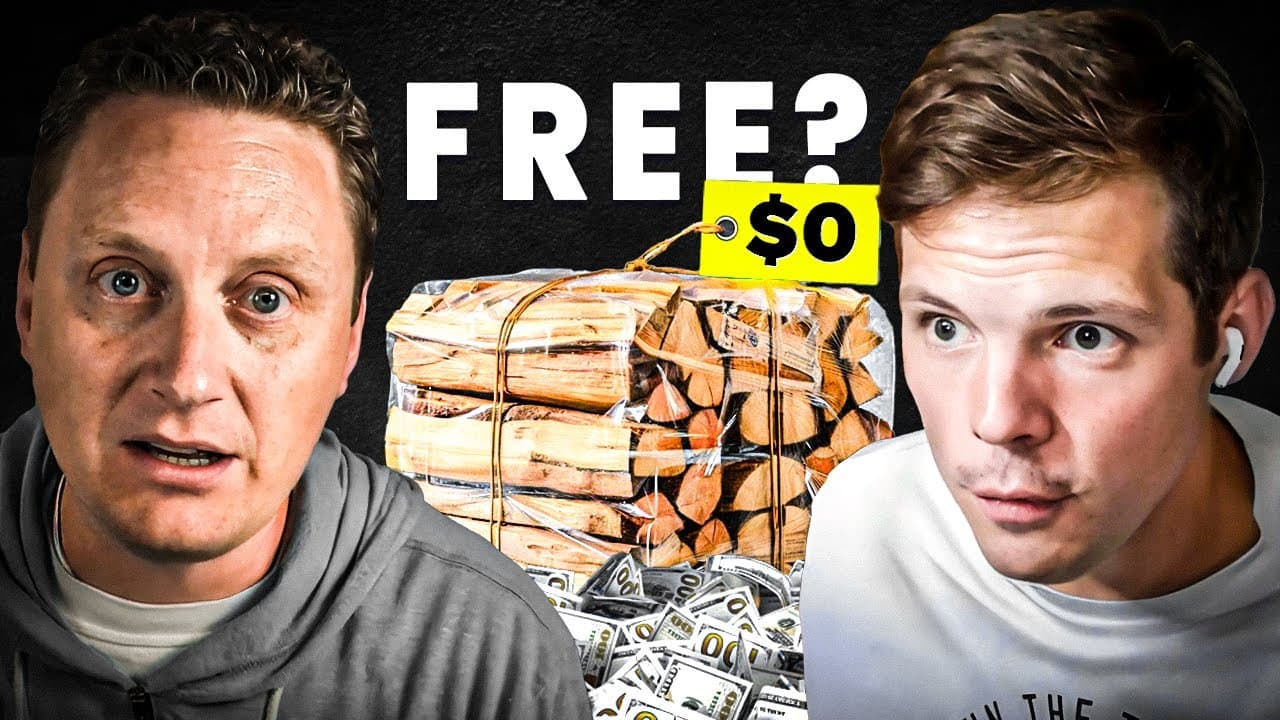
Tree trimmings can become a profitable input because tree services need to remove branches while barbecue businesses value seasoned smoking wood. The opportunity is to collect suitable wood at no charge, let it dry, and sell it, while using free disposal as an easy pitch to tree trimmers. Validate demand first, then build the consistent operations required for lasting profitability.
Transcript
and so I think there is a world where you could this is an even much easier sale than the stump grinding you call up all the tree trimmers and say hey today's your lucky day I'm going to come get all your wood for free you let me know where you'll be I got it you don't even have to pay me welcome to the ker office the only podcast where we discuss ... Read More
Key Insights
- Tree waste is a potentially valuable raw material because tree-trimming companies already incur effort to chip, haul, and dump removed branches. Collecting appropriate wood for free can solve their disposal problem while supplying inventory for a separate barbecue-wood business.
- The proposed sales pitch is simple: offer tree trimmers free pickup of suitable wood wherever they are working. This reduces friction for the contractor because the collector handles removal without charging, making the offer easier to understand than a complicated service arrangement.
- Barbecue smoking wood requires seasoning before sale, which means collected material must sit and dry. The business therefore needs space and patience between acquisition and revenue, even though the initial wood may be obtained without paying a purchase price.
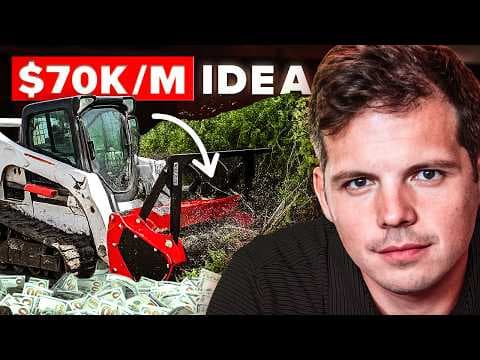
- A stump-grinding launch demonstrated the value of immediate action when a listener rented a trailer and grinder, repeatedly texted tree-trimming owners, and made $9,000 in 15 days. The method avoided buying equipment before testing whether customers would respond.
- Repeated outreach is a practical customer-acquisition strategy because the stump-grinding operator stayed top of mind by asking tree-service owners whether they had work available. Consistent contact can capture jobs when the need arises instead of relying on a single introductory message.
- The first dollar is an important validation milestone because it proves that a customer will pay for the offer. Early revenue can give an entrepreneur confidence to continue through the harder work of creating processes, maintaining consistency, and improving the operation.
- Optimism can create a bias for action by preventing excessive research from stopping a launch. The hosts argue that overthinking can become a coping mechanism for avoiding execution, although successful businesses still require learning and sustained effort after the initial test.
- Back-of-the-envelope estimates are starting points rather than investment guarantees. The discussion acknowledges that informal projections can be inaccurate, so entrepreneurs should use simple ideas to motivate validation while conducting their own detailed research before committing substantial resources.
Install to Summarize YouTube Videos and Get Transcripts
Explore YouTube Video Summarizer or Get YouTube Transcript Extractor
Questions & Answers
Q: How can free tree trimmings become a profitable product?
Tree trimmings can become a profitable product when an operator collects suitable wood that tree services would otherwise chip, haul, or dump. The collector solves a disposal problem without charging the tree trimmer, then seasons the wood by letting it sit and dry. Once prepared, the wood can be sold to barbecue restaurants or to distributors serving those restaurants.
Q: How should you pitch free wood removal to tree trimmers?
The pitch should focus on convenience and cost: tell tree trimmers that you will collect their suitable wood for free and ask them to share where they will be working. They do not have to pay for the pickup, and they avoid part of the hauling or dumping burden. The simple offer makes the operational benefit immediately clear.
Q: Why can barbecue wood have a negative input cost?
The input can effectively cost less than nothing when another business benefits from having the material removed. Tree trimmers must spend labor and transportation capacity getting branches off a job site and to a dump. If a collector takes suitable wood for free, the collector receives inventory while also delivering a disposal service that has value to the tree company.
Q: What must happen before collected wood can be sold for barbecue smoking?
Collected smoking wood must be seasoned, meaning it needs to sit and dry before use. This requirement creates a delay between obtaining the branches and selling the finished wood. An operator therefore needs an appropriate place to hold the material and must account for the waiting period when planning inventory, operations, and the timing of revenue.
Q: How did the listener validate the stump-grinding business idea?
The listener validated the idea by renting a trailer and a stump grinder instead of immediately purchasing equipment. He then texted tree-trimming owners with the suggested pitch and continued contacting them to stay top of mind. That action produced $9,000 during his first 15 days, showing that local contractors would outsource at least some stump-grinding work.
Q: Why is repeated outreach useful in a local service business?
Repeated outreach keeps the service provider visible when a customer suddenly has work available. In the stump-grinding example, the operator regularly asked tree-trimming owners whether they had anything for him that day. The approach matches the timing of demand more effectively than sending one message and assuming that silence means the market has rejected the offer.
Q: Why should entrepreneurs focus on earning the first dollar?
The first dollar provides direct evidence that someone values the offer enough to pay for it. That proof can reduce uncertainty and motivate the entrepreneur to endure the less exciting work that follows, including staying consistent, solving operational problems, and building systems. Early validation does not guarantee lasting success, but it turns an abstract idea into observed customer behavior.
Q: How much research should happen before launching a business idea?
Research should be sufficient to identify plausible demand and major constraints, but it should not become a reason to avoid testing the offer. The hosts describe excessive research as something that can talk entrepreneurs out of action. They favor a small launch that seeks real customer feedback, followed by deeper learning, improved systems, and sustained execution if the market responds.
Summary & Key Takeaways
-
The featured business model connects two needs within the same local market. Tree-trimming companies must chip, haul, or dump removed branches, while barbecue restaurants and wood distributors need smoking wood. An operator can collect suitable tree waste for free, season it, and turn a disposal burden into a saleable product.
-
The discussion builds on a stump-grinding example in which a listener rented equipment, contacted tree-trimming owners with a direct pitch, and earned $9,000 in his first 15 days. The result supports a practical launch method: start with rented assets, approach existing businesses repeatedly, and seek the first paying customer before building extensive systems.
-
The hosts distinguish idea validation from long-term execution. A simple pitch can help an entrepreneur earn the first dollar, but a durable company still requires consistency, perseverance, operating systems, and work through difficult periods. Back-of-the-envelope estimates can inspire testing, but they should not replace careful research before making a major investment.
Read in Other Languages (beta)
Share This Summary 📚
Summarize YouTube Videos and Get Video Transcripts with 1-Click
Try YouTube Summary with ChatGPT & Claude or YouTube Transcript Generator
Explore More Summaries from Chris Koerner on The Koerner Office Podcast 📚





Summarize YouTube Videos and Get Video Transcripts with 1-Click
Try YouTube Summary with ChatGPT & Claude or YouTube Transcript Generator