How to Sell AI Agents to Local Businesses Now
TL;DR
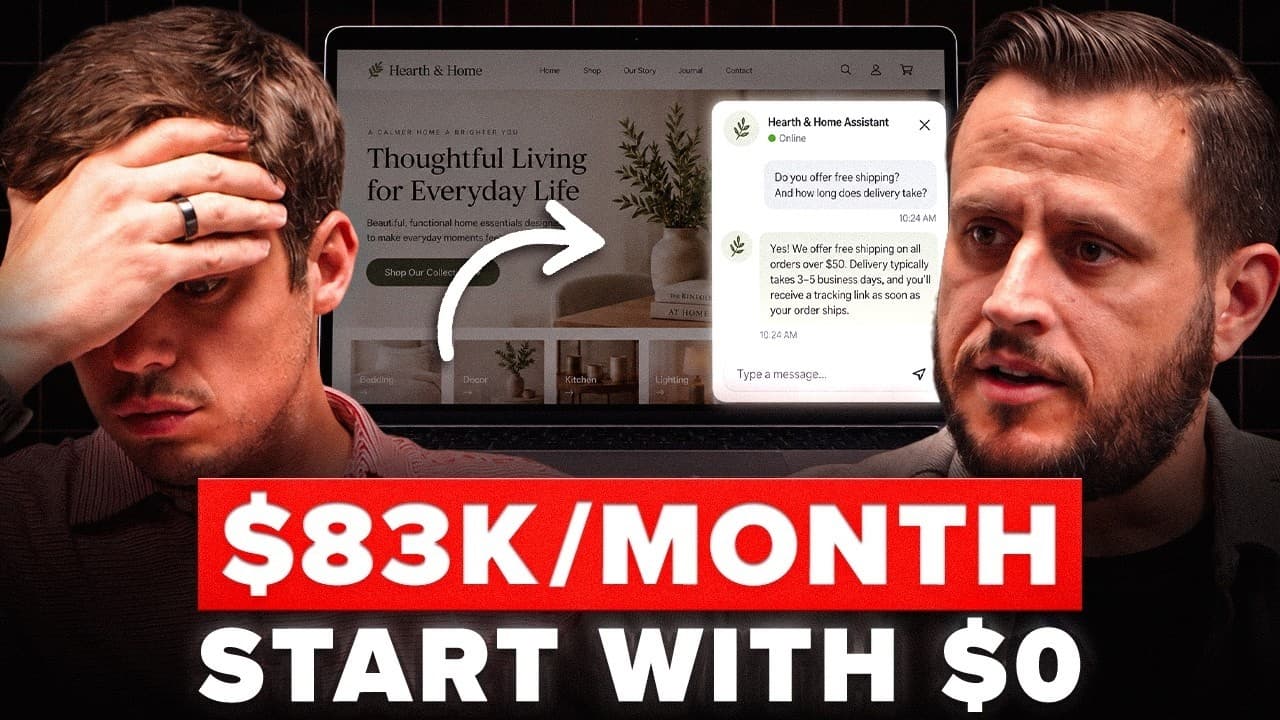
The core idea is to sell AI agents to local businesses by charging an upfront setup fee of about 2,000 to 3,000 and a monthly recurring fee around 500. Automate most of the process so the seller does not need coding skills, making it scalable and profitable.
Transcript
hit more than a million dollars by this year. So, super exciting. Yeah. Around a $2,000 setup fee, it's already built. You're just selling it to them. Now, it's finally become possible for normal people who aren't technical. You can automate all this process. You can and you should. And then the monthly retainer that you charge them on top... Read More
Key Insights
- AI agents for customer support can handle a majority of inquiries, reducing the need for large live support teams and enabling 24/7 service at scale.
- The key to rapid revenue is a clear upfront setup fee combined with ongoing monthly retainers, creating predictable recurring income.
- Starting with a real customer, like the founder did with WPMU Dev, can validate the concept and justify moving from a side project to a full time business.
- Targeting businesses rather than consumers reduces budget constraints and shortens sales cycles, allowing faster monetization of AI services.
- An effective MVP benefits from direct feedback loops such as waitlists and surveys to capture customer needs and prioritize features.
- Pricing strategy evolves from low entry plans to higher enterprise pricing as credibility and case studies grow, enabling larger contracts.
- Automation is central to profit in this model, with the product often handling most client work and reports, minimizing ongoing manual labor.
- Finding a repeatable niche in AI applications, such as customer support agents, increases the odds of creating a scalable, high value service that customers are willing to pay for.
Install to Summarize YouTube Videos and Get Transcripts
Explore YouTube Video Summarizer or Get YouTube Transcript Extractor
Questions & Answers
Q: How can a non technical person start selling AI agents to local businesses?
A non technical person can start by identifying a high value use case like AI powered customer support, then validate with a small experiment, and use a simple setup process to deploy a bot for a client. The key is to package a clear upfront setup offering and a recurring monthly fee, starting with a low cost but scalable solution. This approach enables rapid revenue generation without deep coding knowledge, while learning and adapting based on client feedback.
Q: What was the first successful product idea that led to the million dollar business?
The journey began with multiple experiments, including an AI profile picture service that generated some revenue but didn’t scale long term. The turning point came when the founder pivoted to AI agents for customer support after realizing the potential of automated ticket handling. This shift created a repeatable, scalable business model with predictable revenue.
Q: Why is customer support a strong use case for AI agents?
Customer support creates a high volume of repetitive questions that AI agents can answer efficiently, reducing the need for large live support teams. This leads to faster response times, 24/7 availability, and lower operating costs for businesses, while still maintaining quality. The use case aligns well with a service that can be automated and scaled across many clients.
Q: How did the founder determine pricing for early customers like their employer?
Pricing started with a low entry level around 20 to 50 dollars per month and a higher tier up to around 100 dollars per month, with enterprise pricing discussed for larger contracts. The founder learned to price more aggressively than they initially thought, guided by advice from entrepreneurial networks, while also building enterprise options for bigger clients.
Q: What role did a waitlist and surveys play in product development?
A waitlist sign up form and a short survey helped collect input from potential customers about core features they needed. This provided a validated MVP blueprint, ensuring the product addressed real demand. The approach allowed rapid feedback, shaping the product roadmap and reducing time to market.
Q: How did the founder approach landing larger clients like Sony?
The founder surfaced enterprise level pricing and reached out to potential large clients by presenting scalable capabilities and a clear value proposition. By offering a business ready solution and collecting feedback from early adopters, they built credibility, which helped in negotiating larger contracts and expanding beyond smaller customers.
Q: What is the role of automation in the business model?
Automation is central to delivering the service with minimal manual effort. The AI agents handle most client interactions, and monthly reports are generated automatically. This enables the company to operate with a small team and low overhead while maintaining high value for clients and scalable growth.
Q: What advice does the episode give for someone starting now?
Start by validating a simple, high value use case with a minimal viable product, use waitlists and surveys to guide development, and price with a mix of upfront setup fees and recurring monthly revenue. Build credibility with early customers, aim for enterprise level opportunities, and progressively automate processes to scale without heavy coding requirements.
Summary & Key Takeaways
-
The episode showcases a founder who pivoted through eight ideas before building a successful AI agent business that serves local businesses. It emphasizes a simple, repeatable sales model and a lean startup approach with a high value proposition.
-
The model relies on delivering AI powered customer support with automation and monthly reports, enabling the business to run with a small team and minimal office space while achieving substantial revenue.
-
The narrative highlights learning from early consumer oriented attempts, recognizing the importance of targeting business clients, validating the MVP with a waitlist, and using enterprise style pricing to land larger clients like Sony, with a focus on practical, scalable execution.
Read in Other Languages (beta)
Share This Summary 📚
Summarize YouTube Videos and Get Video Transcripts with 1-Click
Try YouTube Summary with ChatGPT & Claude or YouTube Transcript Generator
Explore More Summaries from Chris Koerner on The Koerner Office Podcast 📚






Summarize YouTube Videos and Get Video Transcripts with 1-Click
Try YouTube Summary with ChatGPT & Claude or YouTube Transcript Generator