How to Build an LLM Wiki With Claude Code
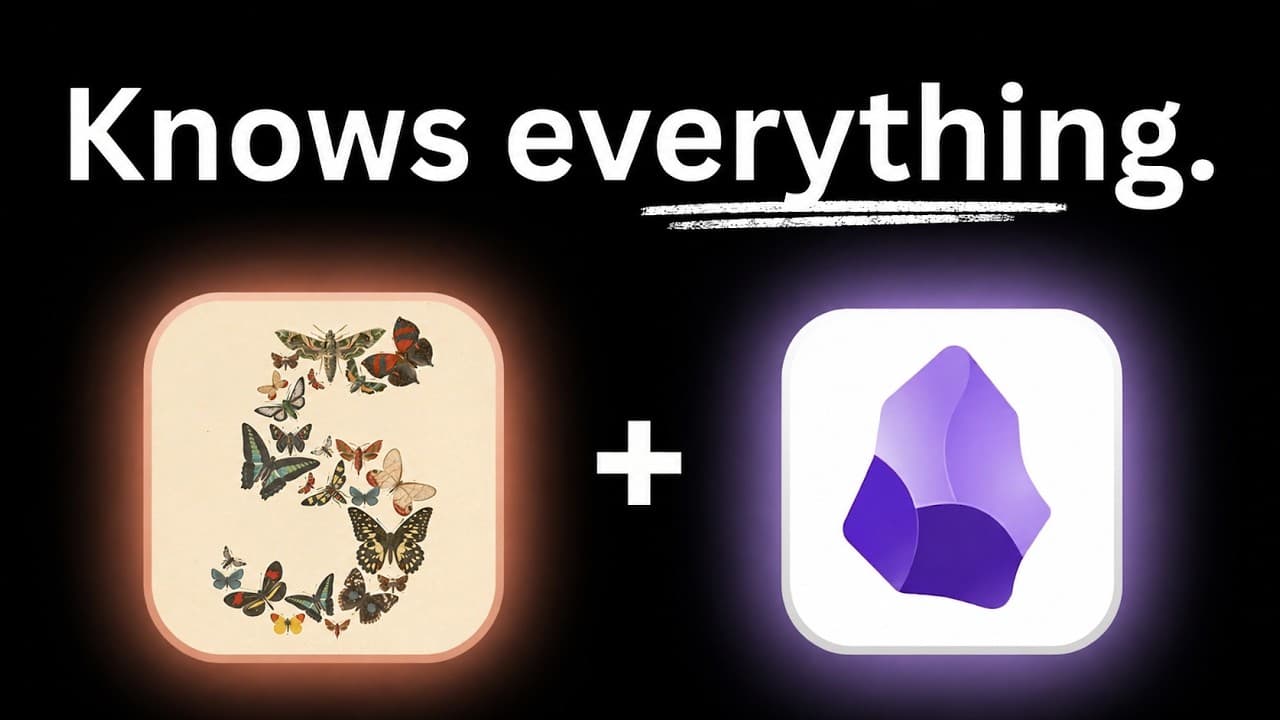
TL;DR
Create a connected knowledge base by opening an Obsidian vault in VS Code, giving Claude Code the LLM wiki instructions, and defining schemas, indexes, logs, folders, and ingestion rules. As sources are added, the system turns them into linked pages that AI tools can navigate, summarize, and reuse when creating resources, analyzing a business, or tracing relationships among ideas.
Transcript
What you're looking at right over here are a bunch of my YouTube videos being ingested into an LLM wiki. This LLM wiki, as you can see, if I zoom in, are different YouTube videos, and what's connecting them are different relations. So, we're starting to see this actual kind of like second brain of all of my YouTube videos and how they relate to eac... Read More
Key Insights
- An LLM wiki is a collection of cross-linked pages generated from source material such as YouTube transcripts, meeting recordings, PDFs, and URLs. Its links and backlinks allow people and AI systems to move between related videos, tools, techniques, and concepts without manually connecting every relationship.
- The value of an LLM wiki is not limited to source ingestion. Once relevant data is organized and routed correctly, an AI system can reuse it to create beginner-friendly interfaces, community posts, LinkedIn posts, emails, visual business reviews, and other resources that reflect accumulated context.
- Obsidian provides the front end for browsing the knowledge base. A user can open a concept such as GitHub, see information about it, find where it appeared in source videos, follow its relationship to another tool, and continue navigating through backlinks until reaching the needed context.
- Claude Code can initialize the wiki from instructions placed inside an Obsidian vault. The demonstrated prompt assigns it the role of LLM wiki agent and requests a CLAUDE.md schema, complete rules, an index, a log, folder conventions, step-by-step guidance, and a first ingestion example.
- Fable is presented as more useful after a substantial body of data has been assembled. The creator says Fable is probably excessive for routine ingestion and suggests that Opus may be a better choice for ingesting current and future documents, while Fable handles later interpretation and presentation.
- Clear audience-oriented prompting can shape how stored knowledge is presented. The creator asked for a simple resource that beginners could click through without feeling overwhelmed, and Fable produced an interactive HTML view connecting agentic workflows, routines, automation approaches, tools, models, and inputs.
- Separate wikis can organize distinct knowledge domains inside a larger AI operating system. The creator maintains one wiki for YouTube transcripts and another for meeting recordings, allowing the system to track how concepts evolve while still making those knowledge collections available to the broader project.
- Correct routing is essential because adding more data alone does not guarantee useful results. The creator attributes the system's usefulness to separating information by topic, defining organizational rules, and giving the AI access to sources it can locate quickly when producing analysis or new content.
Install to Summarize YouTube Videos and Get Transcripts
Explore YouTube Video Summarizer or Get YouTube Transcript Extractor
Questions & Answers
Q: How do you build an LLM wiki with Claude Code and Obsidian?
Install Obsidian, create a new vault, and choose where its files will be stored. Open that vault in VS Code, launch Claude Code from the terminal, and provide Karpathy's LLM wiki gist as the governing idea. Then instruct the agent to create the CLAUDE.md schema, indexes, logs, folder conventions, operating rules, and a first ingestion example. Future interactions should follow that schema.
Q: What information can an LLM wiki extract from YouTube videos?
An LLM wiki can turn YouTube transcripts into individual pages containing summaries, key takeaways, mentioned tools, discussed techniques, and connections to other concepts. It can also record which videos support a particular concept and expose backlinks between related pages. In the demonstration, these relationships connect topics such as GitHub, Vercel, Claude Code, agentic workflows, routines, and automation approaches.
Q: Why are backlinks useful in an AI knowledge base?
Backlinks reveal where a concept appears and how it relates to other stored ideas. A user can open a page about GitHub, inspect references to it, follow a connection to Vercel, and then move from Vercel to Claude Code. This creates a navigable path through the source material and helps the AI retrieve connected context instead of treating every document as an isolated item.
Q: What can Fable create from an existing LLM wiki?
Fable can use the wiki's stored context to generate new presentations of the same knowledge. In one prompt, it transformed a dense collection of transcript relationships into a simpler interactive HTML resource designed for beginners. It also created a visual account of six months of business activity, incorporating available images, branding, subscriber growth, revenue information, strategic changes, churn, conversion, and the business funnel.
Q: Should Fable be used to ingest every source into the wiki?
Fable is not presented as necessary for routine ingestion. The creator describes it as probably excessive for that stage and suggests switching to Opus to ingest current and future documents. Fable's stronger role in the demonstrated workflow comes after the knowledge base has accumulated data, when the system needs to interpret that context and turn it into accessible interfaces, stories, or business resources.
Q: How should multiple LLM wikis be organized inside an AI operating system?
Separate wikis can be maintained for different subject areas and placed inside the larger AI operating system project. The creator uses one wiki for YouTube transcripts and another for internal and external meeting recordings. This separation keeps topic-specific collections organized while allowing the broader project to examine them, trace how ideas developed, and apply relevant context to posts, emails, scripts, and other work.
Q: Why does routing matter when adding data to an LLM wiki?
Routing determines whether an AI system can locate and apply the right context when it receives a request. The creator emphasizes that more data improves a project only when that information is routed correctly. Topic separation, schemas, indexes, logs, folder conventions, and links provide this structure, helping the system find relevant sources quickly and relate them to the task it is performing.
Q: How can prompting make an LLM wiki easier for beginners to use?
The prompt should specify the audience and the desired emotional experience, not only the required data. The creator asked for a simple resource that people could click through, understand, and explore without becoming overwhelmed. Fable responded with a cleaner interactive presentation of connected ideas. The example shows that instructions about clarity, simplicity, and beginner accessibility can influence the interface produced from the same database.
Summary & Key Takeaways
-
The creator stores YouTube transcripts in an LLM wiki that connects videos, tools, techniques, and ideas through linked pages and backlinks. Each page can contain a summary, key takeaways, mentioned tools, related techniques, and source references, creating a growing second brain that his AI operating system can navigate and use.
-
Fable demonstrates what an AI system can produce after receiving well-routed contextual data. From the same underlying database, it generated a simpler interactive HTML resource than the creator obtained after extensive work with Opus, and it also built a branded visual account of six months of business activity from stored materials.
-
The setup begins with a new Obsidian vault opened in VS Code, followed by launching Claude Code and supplying Karpathy's LLM wiki gist. A setup prompt asks the agent to create the CLAUDE.md schema, index, log, folder conventions, and first ingestion example. The structure can then evolve as more sources arrive.
Read in Other Languages (beta)
Share This Summary 📚
Summarize YouTube Videos and Get Video Transcripts with 1-Click
Try YouTube Summary with ChatGPT & Claude or YouTube Transcript Generator
Explore More Summaries from Nate Herk | AI Automation 📚



Summarize YouTube Videos and Get Video Transcripts with 1-Click
Try YouTube Summary with ChatGPT & Claude or YouTube Transcript Generator