How to Turn Claude Skills Into an AI Career
TL;DR
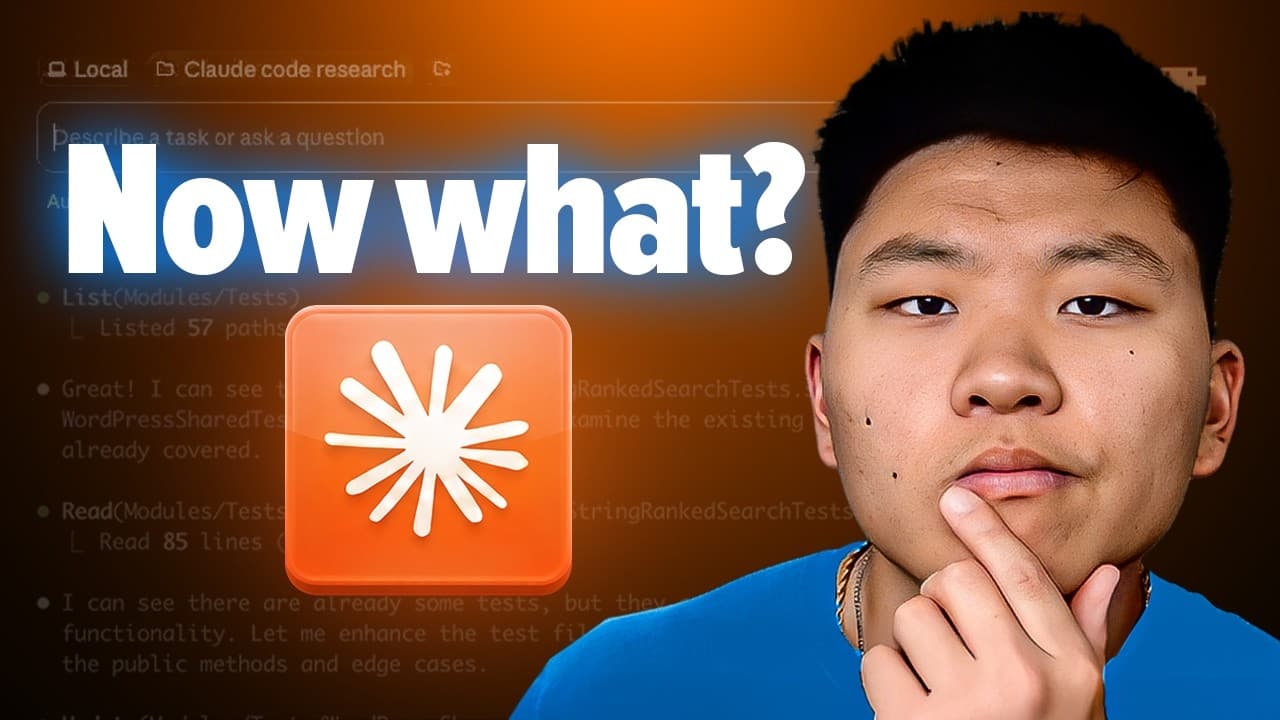
Turn Claude expertise into career value by becoming the person who diagnoses business problems, selects appropriate AI solutions, and proves measurable results. Choose independent consulting if you want autonomy, variety, and client acquisition, or pursue an in-house role if you prefer stability, deeper knowledge of one company, and a steady paycheck.
Transcript
So, you've learned everything you can about Claude. You can build agents, automations, and complex systems, but what do you do now? Do you start an AI agency? Do you sell automations, or do you build software for work companies? There are so many different options out there, but 90% of those options aren't relevant to the average viewer of this cha... Read More
Key Insights
- Claude expertise is not a durable advantage by itself because AI tools and preferred business models keep changing. The transferable advantage is understanding what the technology can accomplish, identifying where it creates value for people, and applying that judgment as new tools and phases emerge.
- Early AI opportunities progressed from simple automations and chatbots to productized systems, AI automation agencies, agent builders, and agentic AI. Each shift rewarded people who recognized the new source of value early, while crowded older markets became harder places in which to compete.
- The current opportunity is created by weak execution rather than low AI adoption. The transcript cites McKinsey as finding that about 88% of organizations use AI somewhere, but only around one-third have converted that usage into real projects.
- An AI consultant is the person who determines what is actually wrong, identifies an appropriate AI response, and checks whether the intervention worked. This role becomes more valuable as building gets easier because technical execution alone no longer resolves uncertainty about what should be built.
- The doctor and pharmacist comparison distinguishes consulting from order-taking. Builders may deliver exactly what a client requests, while consultants investigate the underlying pain and prescribe what the client actually needs, since clients often recognize symptoms without knowing the correct technical solution.
- Independent AI consulting is suited to people who want control over their time, enjoy varied work, and accept responsibility for sales calls and client acquisition. The consultant serves multiple businesses as a long-term problem-solving partner rather than merely selling isolated automations.
- In-house AI consulting is suited to people who value stability, a steady paycheck, and the chance to understand one organization deeply. The role can begin inside a current employer by becoming the person who identifies useful AI initiatives and guides their implementation.
- Both consulting paths use the same core process: diagnose the business problem, prescribe an AI solution, and prove that it produced a useful result. The meaningful difference is whether that process serves several external clients or one employer from within the organization.
Install to Summarize YouTube Videos and Get Transcripts
Explore YouTube Video Summarizer or Get YouTube Transcript Extractor
Questions & Answers
Q: How can Claude skills help advance an existing career?
Claude skills can support career advancement when they are used to solve meaningful problems inside an employer rather than treated as an isolated technical specialty. The practical goal is to become the organization’s go-to AI person: identify inefficient or repetitive work, determine what solution is appropriate, help implement it, and demonstrate that the intervention produced a useful result.
Q: What does an AI consultant actually do?
An AI consultant identifies what is genuinely wrong in a business, determines whether and how AI should address it, and verifies whether the proposed solution worked. The role is broader than building whatever someone requests. It requires diagnosing the underlying pain, prescribing an appropriate response, supporting implementation, and connecting the finished system to a real business result.
Q: Why are transferable AI skills more valuable than mastering Claude alone?
Transferable skills remain useful when specific tools and market trends change. The transcript argues that Claude mastery alone means little over the long term because the AI space continually moves through new tools and commercial phases. Understanding capabilities, diagnosing problems, choosing worthwhile projects, and evaluating results can be applied again when the preferred platform or delivery model changes.
Q: What is the difference between an AI consultant and an AI builder?
An AI builder primarily executes a requested system, while an AI consultant first determines whether that request addresses the real problem. The transcript compares builders with pharmacists who provide what was requested and consultants with doctors who diagnose what is needed. Consulting therefore includes problem definition, solution selection, implementation guidance, and proof that the work produced value.
Q: Should I become an independent or in-house AI consultant?
Choose independent consulting if you want ownership of your time, exposure to varied businesses, and are comfortable finding clients and conducting sales calls. Choose the in-house path if you prefer employment stability, a steady paycheck, and deeper work within one organization. Neither path is presented as universally better, since the choice depends on personal goals, experience, and preferred working style.
Q: How can an employee become the in-house AI person?
An employee can move toward an in-house AI role by researching AI, identifying relevant problems within the company, proposing useful initiatives, and becoming a reliable resource for implementation. The objective is not merely to demonstrate a tool. It is to diagnose organizational needs, recommend appropriate solutions, work through company constraints, and show whether each project delivered a meaningful result.
Q: Why is AI consulting presented as a growing opportunity?
The opportunity comes from the gap between widespread interest in AI and limited success with real implementation. The transcript cites roughly 88% of organizations as using AI somewhere, while only about one-third have turned that activity into real projects. It also states that roughly 30% of company AI projects are abandoned and only about 6% of companies using AI are good at it.
Q: What evidence suggests companies are creating internal AI leadership roles?
The transcript cites an IBM 2026 CEO study reporting that 76% of surveyed organizations had someone in a chief AI officer type of role, compared with 26% two years earlier. It also cautions that the study covered about 2,000 CEOs at very large companies, with median revenue near $5.8 billion and almost four out of five respondents representing publicly traded businesses.
Summary & Key Takeaways
-
Claude proficiency has limited long-term value by itself because AI tools and market opportunities continually change. Durable value comes from understanding the capabilities beneath a tool, connecting those capabilities to real human or business problems, and transferring that judgment to each new phase of AI rather than remaining attached to one platform or service model.
-
The opportunity described is a gap between widespread AI experimentation and successful implementation. The transcript cites McKinsey as finding that roughly 88% of organizations use AI somewhere, while only about one-third have converted that activity into real projects. Consultants can address this gap by deciding what deserves to be built and evaluating whether it works.
-
Two career paths apply the same consulting process. Independent consultants diagnose and solve problems across several client organizations while managing sales and client acquisition. In-house consultants become the AI resource within one employer, gaining stability and organizational depth. Both paths require diagnosing problems, prescribing solutions, implementing them, and demonstrating useful results.
Read in Other Languages (beta)
Share This Summary 📚
Summarize YouTube Videos and Get Video Transcripts with 1-Click
Try YouTube Summary with ChatGPT & Claude or YouTube Transcript Generator
Explore More Summaries from Nate Herk | AI Automation 📚





Summarize YouTube Videos and Get Video Transcripts with 1-Click
Try YouTube Summary with ChatGPT & Claude or YouTube Transcript Generator