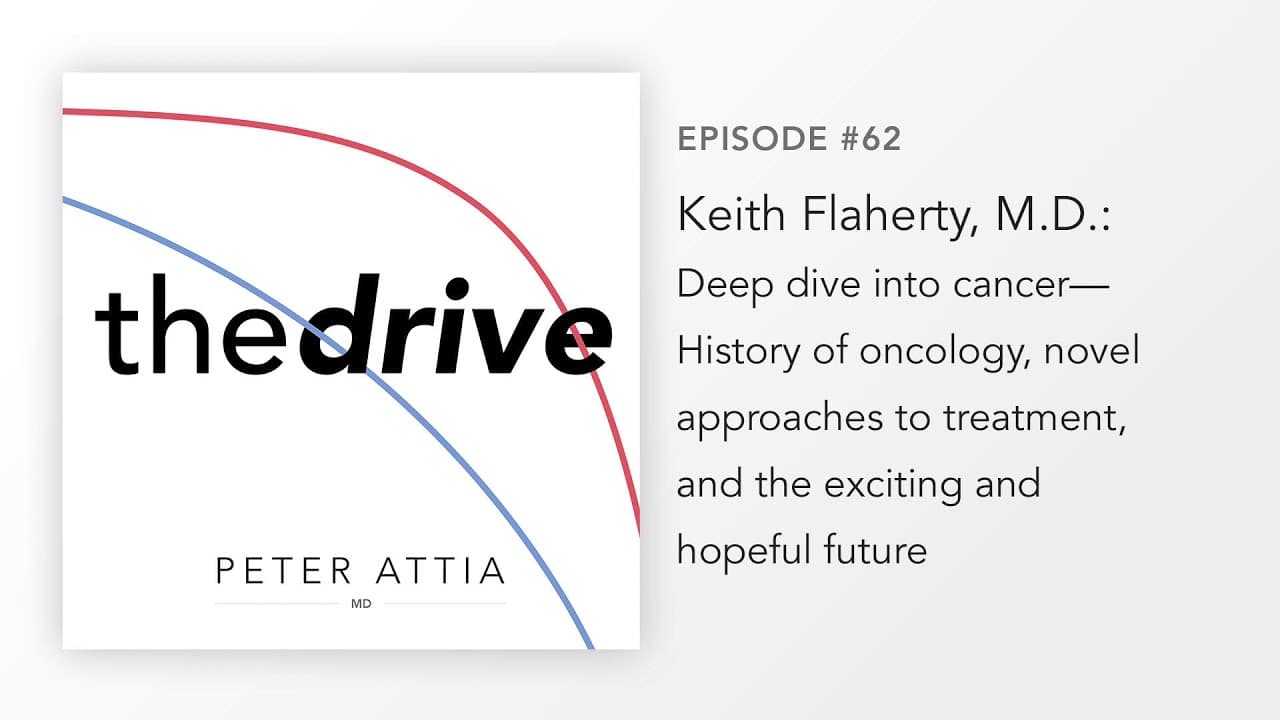
How Have Cancer Treatments Evolved Over Time?
TL;DR
Cancer treatment has expanded beyond surgery, radiation, and chemotherapy to include targeted therapies and immunotherapy, with biomarkers helping researchers study response and resistance. The discussion traces progress from the War on Cancer through human genome sequencing, then examines liquid biopsies, CRISPR, stem cell therapy, and a strategy aimed at multiple pillars of cancer growth and survival.
Transcript
Hey, everyone. Welcome to the Peter Attia Drive. I'm your host, Peter Attia. The Drive is a result of my hunger for optimizing performance, health, longevity, critical thinking, along with a few other obsessions along the way. I've spent the last several years working with some of the most successful top-performing individuals in the world, and thi... Read More
Key Insights
- Chemotherapy, radiation, and surgery are the historical foundations of cancer treatment, but the conversation examines where progress with each approach appeared to level off. That history helps explain the search for treatments based on cancer biology, biomarkers, and more precise therapeutic targets.
- The War on Cancer provides a starting point for evaluating decades of oncology research. The discussion contrasts the limited advances following its declaration in the 1970s with the new possibilities that emerged around human genome sequencing and during the two decades that followed.
- Targeted cancer therapy is designed around identifiable biological features that can be attacked with novel treatments. Flaherty's research focuses on understanding these therapies and developing response and predictive biomarkers that clarify mechanisms of action and reveal how treatment resistance develops.
- Predictive biomarkers are tools for defining which biological characteristics may correspond with treatment response. The discussion connects biomarker development with the study of novel therapies, their mechanisms of action, and the processes through which cancers resist treatments that initially appear effective.
- Immunotherapy is presented as one of the most exciting recent developments in cancer therapy. The conversation specifically addresses checkpoint inhibitors and places immune-based treatment within the broader progression from conventional chemotherapy, radiation, and surgery toward biologically informed approaches.
- A different approach to cancer can attack multiple essential pillars of tumor growth and survival. Rather than framing cancer as a problem with only one therapeutic target, the proposed strategy considers several dependencies that allow cancer to persist and resist treatment.
- Liquid biopsies are discussed as part of the changing approach to cancer evaluation. The episode places them alongside targeted therapies, predictive biomarkers, and research on resistance, while avoiding the assumption that every new technology has already established its full clinical value.
- CRISPR and stem cell therapy require careful evaluation in the cancer setting because emerging approaches can be overhyped. The discussion treats their possible roles with caution and also examines common cancer-related questions about vitamin D, sun exposure, and melanoma.
Install to Summarize YouTube Videos and Get Transcripts
Explore YouTube Video Summarizer or Get YouTube Transcript Extractor
Questions & Answers
Q: How have cancer treatments evolved over time?
Cancer treatment developed around surgery, radiation, and chemotherapy, each of which produced successes but also reached points where progress appeared to level off. The conversation then traces the field from the War on Cancer in the 1970s through human genome sequencing and into targeted therapies, predictive biomarkers, immunotherapy, liquid biopsies, and strategies addressing several pillars of cancer growth and survival.
Q: What is targeted therapy in cancer treatment?
Targeted therapy is presented as a biologically informed approach to treating cancer with novel therapies directed at relevant targets. Keith Flaherty's work centers on understanding these treatments and developing response and predictive biomarkers. Those biomarkers help researchers define mechanisms of action, identify characteristics associated with response, and investigate how cancers develop resistance to treatment.
Q: Why are predictive biomarkers important in cancer research?
Predictive biomarkers help researchers connect biological characteristics with responses to novel cancer therapies. In Flaherty's research, they are part of an effort to define how a treatment acts and why resistance develops. This makes biomarker research central to understanding targeted therapies, evaluating treatment response, and investigating why an initially useful approach may stop controlling cancer.
Q: How does immunotherapy fit into modern cancer treatment?
Immunotherapy is described as one of the most exciting recent developments in cancer therapy and as a major focus of the conversation. The episode discusses immune-based treatments, including checkpoint inhibitors, within the wider history of oncology. It presents immunotherapy as part of the move beyond exclusive reliance on chemotherapy, radiation, and surgery toward novel biological approaches.
Q: What changed after the human genome was sequenced?
Human genome sequencing serves as a major point in the episode's timeline of cancer research. The discussion compares the period following the War on Cancer in the 1970s with developments around genome sequencing and the two subsequent decades. It connects that later period with growing attention to targeted therapies, biomarkers, mechanisms of action, treatment response, and resistance.
Q: What is the proposed different approach to treating cancer?
The proposed approach seeks to attack all the essential pillars that support cancer growth and survival. The discussion frames this as a different way to think about cancer rather than relying on a single method or target. It belongs to a broader examination of targeted treatment, biomarkers, response mechanisms, and the biological routes through which cancer survives or becomes resistant.
Q: What role do liquid biopsies play in the cancer discussion?
Liquid biopsies are included among the newer subjects considered in the conversation about changing cancer research and treatment. The provided material does not specify their exact procedure or proven clinical scope. Instead, it places them alongside targeted therapies, predictive biomarkers, immunotherapy, and research into treatment resistance as part of a broader examination of novel approaches.
Q: Are CRISPR and stem cell therapy established cancer treatments?
The discussion considers the potential roles of CRISPR and stem cell therapy in cancer while explicitly raising the possibility that such approaches may be overhyped. The provided material does not present either one as an established answer for cancer treatment. Their inclusion emphasizes the need to evaluate emerging technologies carefully rather than assuming that novelty guarantees clinical value.
Summary & Key Takeaways
-
Keith Flaherty traces the history of cancer treatment through chemotherapy, radiation, and surgery, examining the successes of these established methods and the points at which their progress appeared to level off. The discussion provides historical context for understanding why researchers began seeking different ways to classify, monitor, and attack cancer.
-
The conversation follows cancer research from the War on Cancer in the 1970s through the sequencing of the entire human genome and subsequent developments. It emphasizes targeted therapies, predictive biomarkers, and research into the mechanisms that determine whether patients respond to novel treatments or eventually develop resistance to them.
-
Immunotherapy is presented as an especially exciting recent development, while liquid biopsies and strategies targeting multiple pillars of cancer growth receive careful attention. The discussion also considers whether CRISPR and stem cell therapy may be overhyped in cancer, then addresses practical questions involving vitamin D, sun exposure, and melanoma.
Read in Other Languages (beta)
Share This Summary 📚
Summarize YouTube Videos and Get Video Transcripts with 1-Click
Try YouTube Summary with ChatGPT & Claude or YouTube Transcript Generator
Explore More Summaries from Peter Attia MD 📚


Summarize YouTube Videos and Get Video Transcripts with 1-Click
Try YouTube Summary with ChatGPT & Claude or YouTube Transcript Generator