How to Build Lasting Competitive Advantage
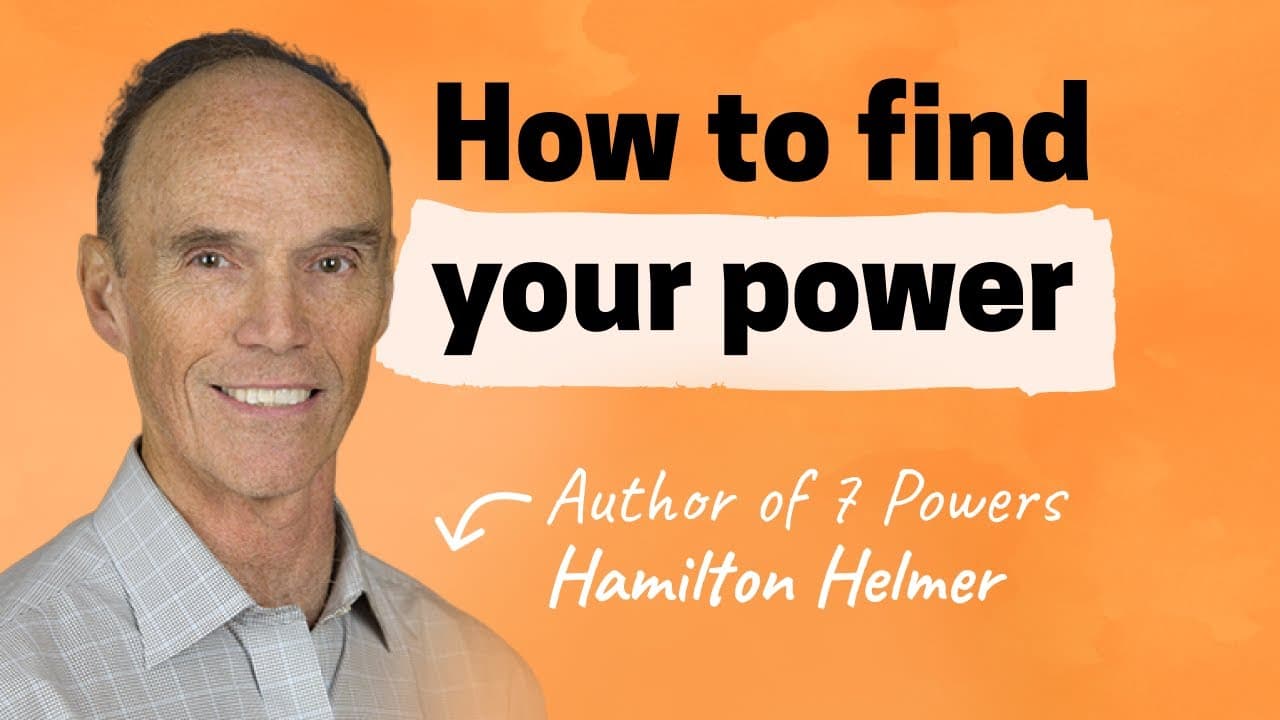
TL;DR
Sustainable competitive advantage requires both a meaningful economic benefit and a barrier that prevents competitors from copying or neutralizing it. Founders should consider potential sources of power before product-market fit, identify and establish them afterward, and understand how to defend them as the business matures or pursues additional acts.
Transcript
Warren Buffett famously said, in business. I look for economic castles protected by unbreachable moats. Power requires a benefit and a barrier, so he's taking care of the benefit part by saying a castle, you have to have a pretty good understanding of why it's a castle and not a shack. So in a lot of decks it's like, "Oh, we have the most am... Read More
Key Insights
- Power is an economic structure that provides durable refuge from competition by combining a benefit with a barrier. The benefit creates an advantage, such as lower cost or greater pricing ability, while the barrier prevents competitors from eliminating that advantage through imitation or arbitrage.
- Operational excellence is not necessarily a source of power because competitors can often mimic the practices that produce it. A company may need to keep improving simply to remain competitive, creating a treadmill where stopping leads to rapid deterioration rather than preserving durable returns.
- Strategy is most useful when defined as attention to the fundamental determinants of business value. This narrower definition separates strategy from every important annual priority and directs leaders toward the decisions and economic conditions that shape expected cash flow over a long horizon.
- Strategy is inherently long term because business value depends on the net present value of expected future cash flow. A short-term tactical victory can therefore be a strategic failure if it undermines the organization’s position or creates damaging consequences over time.
- Founders should think about power before achieving product-market fit, although they should not attempt detailed strategic planning at that stage. They can instead examine whether the underlying characteristics of possible business propositions increase or decrease the probability of developing durable competitive advantages.
- Early strategic thinking is a process of tilting probabilities rather than predicting outcomes with certainty. Before product-market fit, founders have many degrees of freedom, so they can use power-related characteristics to guide exploration without assuming they already know their competitors, pricing, or final market position.
- Companies should identify and establish their source of power after product-market fit because their competitive position then becomes a practical concern. In a stable phase, leaders must also understand the source clearly enough to protect it against rivals and changing market conditions.
- Iconic businesses often pursue additional acts that differ from their original business. Examples cited include Amazon developing AWS, Intel entering CPUs, and Apple entering iPhones. Each new act restarts the process of exploring product-market fit, strategy, power, and competitive position.
Install to Summarize YouTube Videos and Get Transcripts
Explore YouTube Video Summarizer or Get YouTube Transcript Extractor
Questions & Answers
Q: What is power in business strategy?
Power is an economic structure that allows a business to sustain attractive returns despite competitive pressure. It requires both a benefit and a barrier. The benefit gives the company a cost or price advantage, while the barrier keeps competitors from copying, neutralizing, or arbitraging that advantage away. A benefit without protection does not create durable power.
Q: When should founders start thinking about competitive power?
Founders should think about power from the earliest stage, including before product-market fit. Early consideration does not mean producing a detailed strategic plan with fixed competitors, prices, and responses. It means evaluating whether the underlying characteristics of each possible business proposition make a durable advantage more or less likely, thereby tilting probabilities during exploration.
Q: How should strategy change after product-market fit?
After product-market fit, a company must understand its potential source of power and work to establish the resulting competitive position. Strategic thinking becomes more concrete because the business has found something customers want and now faces the challenge of protecting value from competition. Later, during stability, the company must know how to defend that power.
Q: Why is operational excellence not always a competitive power?
Operational excellence is not automatically power because the practices behind speed, execution, or team performance may be copied by competitors. These capabilities can still be essential, but they may place the company on a treadmill that requires constant effort merely to avoid falling behind. Durable power needs a barrier that prevents rivals from neutralizing its benefit.
Q: What is the difference between strategy and tactics?
Strategy concerns the long-term determinants of business value, while tactics concern shorter-term actions and outcomes. The Pearl Harbor example illustrates the distinction: the attack was described as a major tactical success for Japan but a disastrous strategic move because it helped unite the United States behind entering the conflict, where its industrial capacity and population mattered over time.
Q: How does Hamilton Helmer define business strategy?
Hamilton Helmer narrows business strategy to a focus on the fundamental determinants of business value. Since value can be understood through the net present value of expected cash flow, this definition makes strategy a long-horizon discipline. It excludes the idea that strategy simply means every important item that reaches the top of an annual priority list.
Q: How can startups evaluate potential sources of power?
Startups can examine the economic characteristics of the business propositions they are considering. The useful question is whether those characteristics might support both a meaningful benefit and a defensible barrier. The analysis cannot determine the future with certainty, especially before product-market fit, but it can guide founders toward opportunities with better probabilities of developing durable competitive positions.
Q: Why must mature companies continue thinking about power?
Mature companies need to understand power so they can defend the economic structure supporting their competitive position. They must also retain this knowledge when pursuing another stage of growth. Iconic businesses often develop second, third, or later acts, and each new act can restart the process of finding product-market fit, establishing power, and building a defensible position.
Summary & Key Takeaways
-
Hamilton Helmer defines strategy as attention to the fundamental determinants of long-term business value. Because business value reflects expected future cash flow, strategy must look far beyond immediate priorities. Tactical success can still produce strategic failure when a short-term achievement damages the organization’s enduring competitive position or future economic prospects.
-
Power provides durable protection from competitive pressure by combining an economic benefit with a barrier. The benefit creates a cost or price advantage, while the barrier prevents rivals from freely copying or neutralizing it. Operational strengths such as moving quickly or having a strong team are valuable, but competitors may imitate them.
-
Founders should think about power throughout a company’s development. Before product-market fit, they can favor business propositions whose underlying characteristics make power more likely. After finding demand, they must identify and establish their competitive position. Mature companies must defend existing power while remaining prepared for second, third, or later acts.
Read in Other Languages (beta)
Share This Summary 📚
Summarize YouTube Videos and Get Video Transcripts with 1-Click
Try YouTube Summary with ChatGPT & Claude or YouTube Transcript Generator
Explore More Summaries from Lenny's Podcast 📚
Summarize YouTube Videos and Get Video Transcripts with 1-Click
Try YouTube Summary with ChatGPT & Claude or YouTube Transcript Generator