Flashing Light Prize 2018 - Sunscreen, UV, and neon
TL;DR
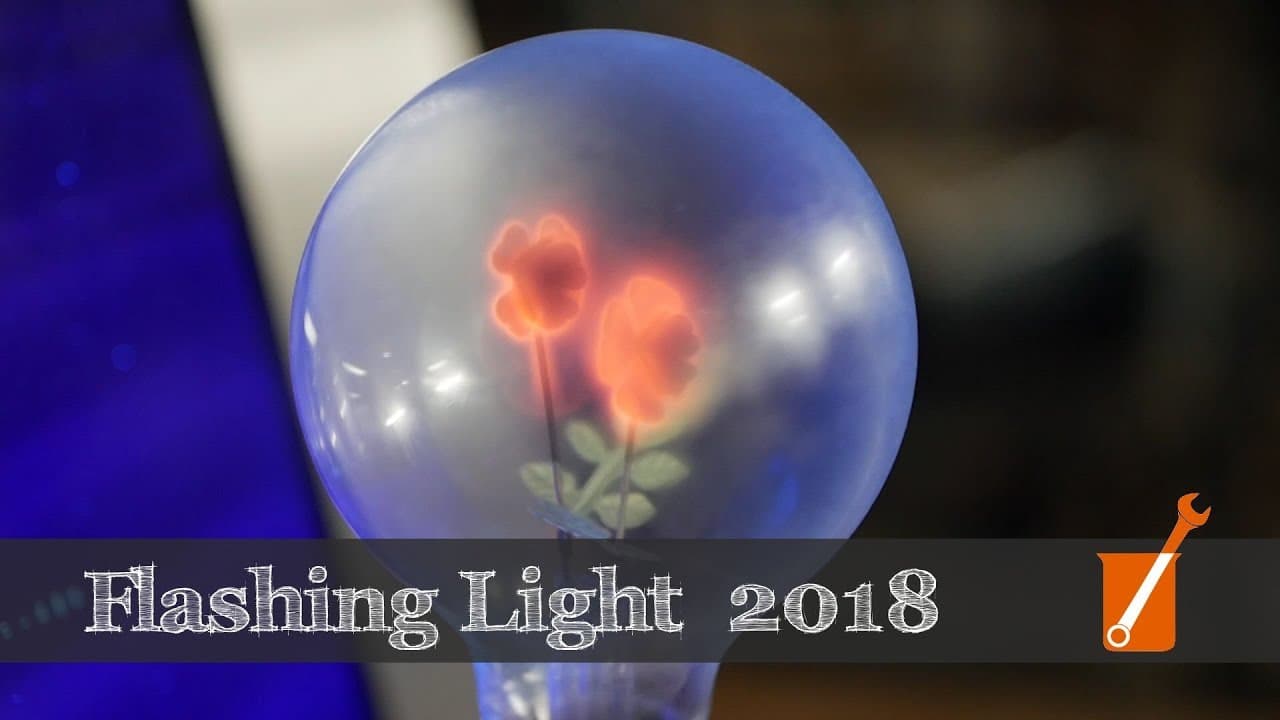
This video showcases an entry for the 2018 flashing light prize, demonstrating how a neon light bulb can be turned on and off using the photoelectric effect and ultraviolet light.
Transcript
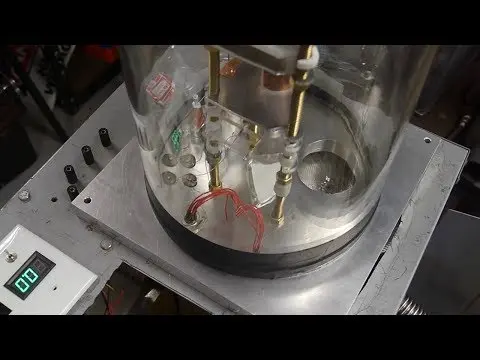
today on Applied Science I'd like to show you my entry for the 2018 flashing light prize so first off you can see we've got an arrow Lux neon light bulb with the cool flowers and even green leaves inside it and as it twirls around you can see that it's turning on and off of course because it's the flashing light prize however if I take a clear piec... Read More
Key Insights
- 🔦 The flashing light prize entry demonstrates the photoelectric effect in action, where photons with sufficient energy can create electron exchanges.
- 💡 Ultraviolet light and sunscreen are used to control the activation of the neon light bulb.
- ✋ Red photons, despite a high quantity, cannot produce the same effect as high-energy photons in the photoelectric effect.
- 🩵 A blue laser pointer with a 405 nanometer light wavelength can be used to activate specific areas of the neon light bulb.
- 💚 The green leaves in the bulb have a zinc sulphide coating to achieve their color.
- ⚡ The voltage adjustment for the neon light bulb's activation is highly sensitive, requiring fine-tuning.
- ⚡ The variac is necessary to provide the appropriate voltage for the bulb to almost start, with the ultraviolet light pushing it over the edge.
Install to Summarize YouTube Videos and Get Transcripts
Explore YouTube Video Summarizer or Get YouTube Transcript Extractor
Questions & Answers
Q: How is the neon light bulb turned on and off in the flashing light prize entry?
The neon light bulb is turned on and off using the photoelectric effect. By spraying the bulb with sunscreen, it prevents ultraviolet light from reaching the bulb, thus controlling its activation.
Q: What role does the ultraviolet light play in the flashing light prize entry?
Ultraviolet light plays a crucial role in the flashing light prize entry. It only activates the neon light bulb when combined with the appropriate voltage. The ultraviolet light is blocked by sunscreen, creating a controlled flashing effect.
Q: Can red photons activate the neon light bulb in the flashing light prize entry?
No, red photons cannot activate the neon light bulb. The photoelectric effect requires high-energy photons, such as ultraviolet light, to produce the necessary electron exchange that leads to the bulb's activation.
Q: How can a blue laser pointer be used to activate specific parts of the neon light bulb in the flashing light prize entry?
By reducing the voltage to the point where the neon light bulb is almost on, a 405 nanometer blue laser pointer can be used to activate specific parts of the bulb. The higher energy of the laser pointer's light triggers the photoelectric effect.
Summary & Key Takeaways
-
The video demonstrates an arrow Lux neon light bulb with spinning flowers and green leaves that turn on and off.
-
A clear piece of plastic is used to show that the bulb doesn't flash when a barrier is placed between the light source and the bulb.
-
The bulb is turned on and off using the photoelectric effect with the help of ultraviolet light and sunscreen.
Read in Other Languages (beta)
Share This Summary 📚
Summarize YouTube Videos and Get Video Transcripts with 1-Click
Try YouTube Summary with ChatGPT & Claude or YouTube Transcript Generator
Explore More Summaries from Applied Science 📚

Summarize YouTube Videos and Get Video Transcripts with 1-Click
Try YouTube Summary with ChatGPT & Claude or YouTube Transcript Generator