Is the EU Democratic? Does Your Vote Matter?
TL;DR
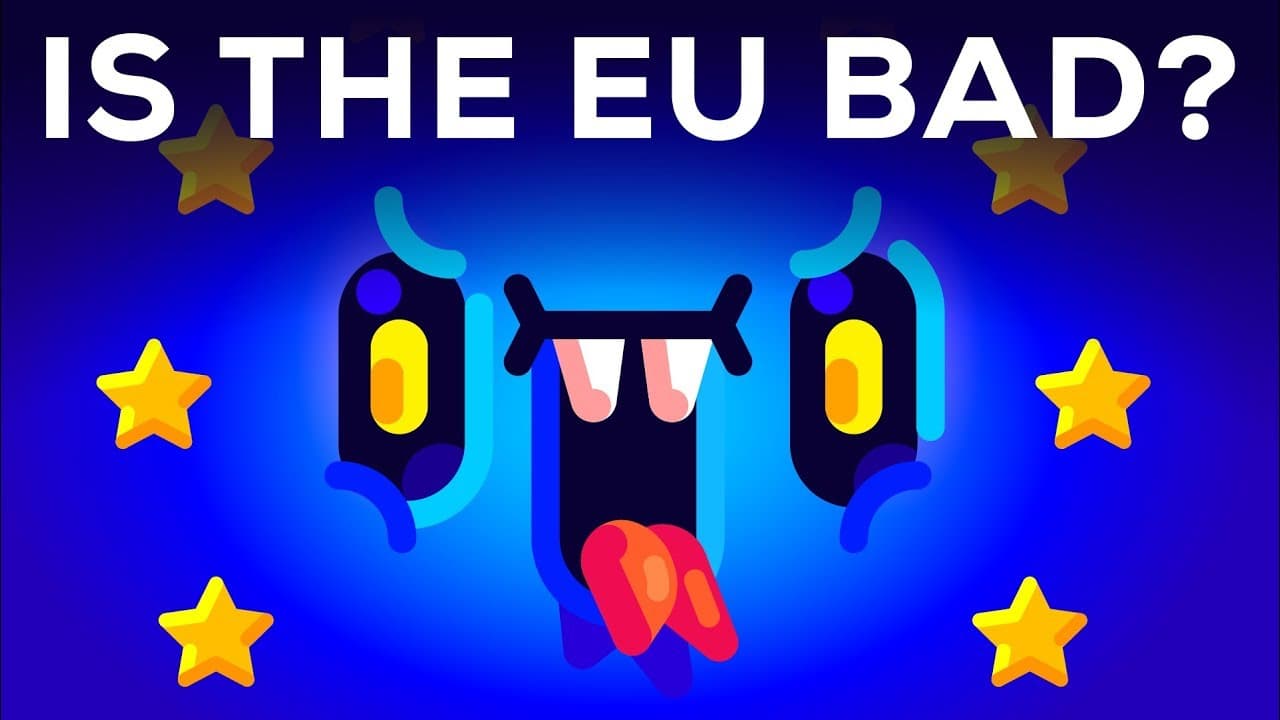
The EU is democratic, though not as democratic as most of its member states, and your vote influences both its policies and future structure. The European Parliament is directly elected, approves new laws, EU spending, and international treaties, but cannot officially propose laws on its own. National votes also indirectly shape other EU institutions. Read on to understand where democratic power sits and how citizens can change it.
Transcript
Being a citizen of the European Union means that many aspects of our lives are regulated by a weird entity. It feels like a huge bureaucracy is making decisions over our heads. Many Europeans think that their vote in the EU elections doesn't count, and that the EU is not democratic. How democratic is the EU really? And, does your vote actual... Read More
Key Insights
- 🥹 The EU's democratic structure incorporates various institutions, with the European Parliament holding considerable power.
- 🌍 Balancing national interests and EU integration poses challenges to democratic governance within the Union.
- 🖐️ Citizen voting in EU elections plays a crucial role in determining the direction and development of the Union.
- 🏤 The EU's complex decision-making processes highlight the importance of citizen engagement in shaping European politics.
- ✊ Struggles over power distribution between member states and EU institutions impact the democratic evolution of the Union.
- 🇪🇺 The European Parliament's increasing influence underscores the significance of citizen participation in EU decision-making.
- 🌍 Challenges in enhancing democratic legitimacy within the EU require a delicate balance between national sovereignty and supranational governance.
Install to Summarize YouTube Videos and Get Transcripts
Explore YouTube Video Summarizer or Get YouTube Transcript Extractor
Questions & Answers
Q: Is the EU democratic, and does your vote matter?
The EU is democratic, although not as democratic as most of its member states. Your vote matters directly through European Parliament elections and indirectly through national governments that help shape other EU institutions.
Q: Which part of the EU is directly elected by citizens?
The European Parliament is the only part of the EU directly elected by citizens in European elections. The other main institutions originate from citizens’ votes more indirectly, particularly through member-state governments.
Q: What powers does the European Parliament have?
The European Parliament must approve new laws that can bind member countries. It also votes on EU budget spending and international treaties, giving citizens’ votes influence at both European and international levels.
Q: Can the European Parliament propose new laws?
The European Parliament officially cannot propose new laws on its own. This missing power is central to arguments that the EU is not democratic enough and that Parliament should have greater influence.
Q: How do national elections influence the EU?
Citizens elect national representatives and help form national governments whose leaders sit in the European Council. Those leaders choose the European Commission president and commissioners, who are then confirmed and overseen by the European Parliament.
Q: What are the EU’s four main political institutions?
The four institutions discussed are the European Council, the Council of the EU, the European Commission, and the European Parliament. The Commission acts as the EU’s de facto government and has one commissioner from each member state.
Q: Why not simply give the European Parliament more power?
Giving Parliament more power would make the EU as a whole more democratic, but it would also transfer power away from member states. The transcript concludes that it is unclear which balance is better and that member states and citizens must decide how the Union develops.
Q: How can citizens respond to EU decisions they oppose?
Citizens can check how their representatives voted on decisions, including measures involving copyright, and vote them out. They can also support parties and politicians seeking to strengthen, preserve, or reduce the European Parliament’s power.
Summary & Key Takeaways
-
The EU faces challenges regarding its democratic nature, with different institutions and processes influencing citizen participation.
-
Citizen voting power is significant in the EU, mainly through elections for the European Parliament.
-
Balancing power between member states and EU institutions remains a key issue for democratic development.
Read in Other Languages (beta)
Share This Summary 📚
Summarize YouTube Videos and Get Video Transcripts with 1-Click
Try YouTube Summary with ChatGPT & Claude or YouTube Transcript Generator
Explore More Summaries from Kurzgesagt – In a Nutshell 📚





Summarize YouTube Videos and Get Video Transcripts with 1-Click
Try YouTube Summary with ChatGPT & Claude or YouTube Transcript Generator