ChatGPT 5.3 and 5.4 vs Claude 4: Which Is Better in OpenAI’s Latest Update Test?
TL;DR
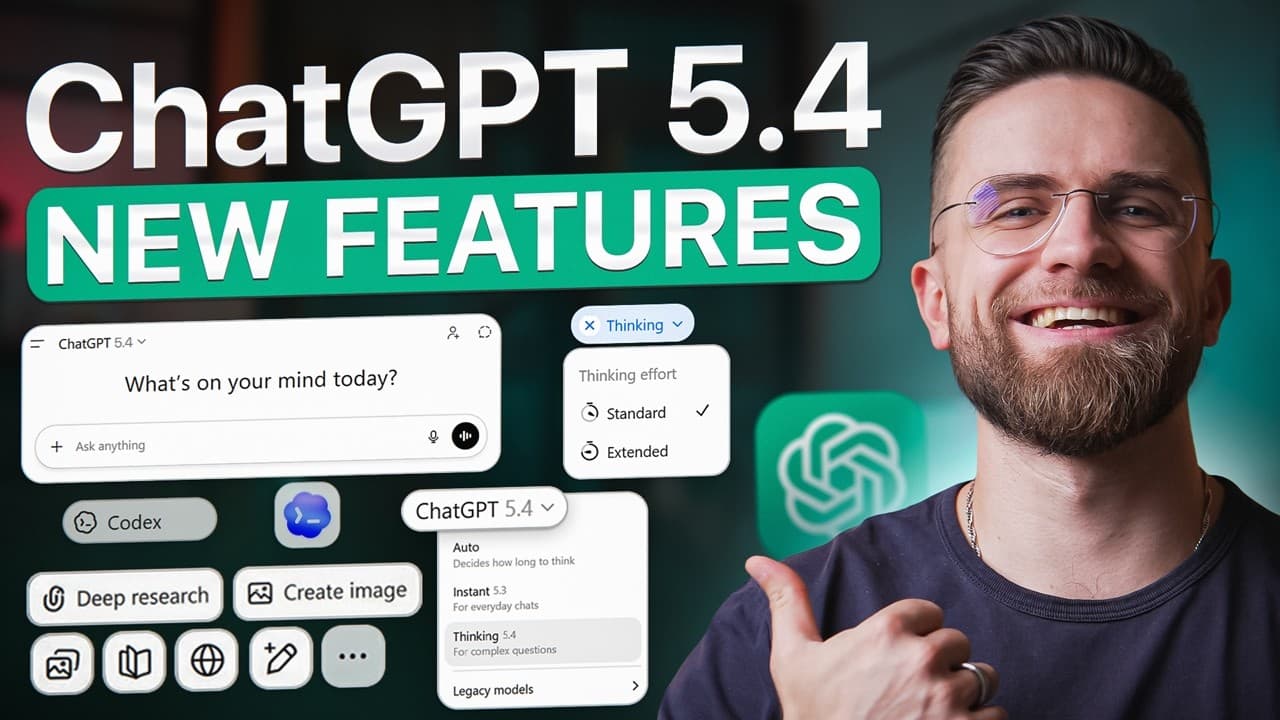
Claude 4 performed better overall in the presented creativity, factual-accuracy, long-document retrieval, and speed tests, while GPT 5.4 stood out for computer use and stateful memory. Claude retrieved a caching decision from page 32 and completed the SQL task in under 40 seconds, compared with GPT 5.4’s 128 seconds. Read on to compare the models’ reliability, automation strengths, memory, and privacy tradeoffs.
Transcript
Today I tested both chat GPT 5.3 and 5.4 against Clawude 4 real tasks specific prompts and the answer is brutal. Should you switch back to open AI? Let's find out. Chat GBT 5.3 internal code name project garlic named because it kills the rot. Open AAI stripped out the preachy language. No more as an AI language model. No disclaimers, just blunt dir... Read More
Key Insights
- Claude 4 produced more creative marketing angles in the presented brainstorming test, including positioning a productivity app as an anti-productivity tool and framing it as a response to hustle culture for burned-out high performers.
- GPT 5.3 confidently invented information when asked about a nonexistent 2024 AI Safety Summit in Geneva, while Claude 4 questioned the premise, acknowledged uncertainty, suggested related real events, and invited clarification.
- Claude 4 retrieved the exact caching decision from page 32 of a 50-page technical specification: Redis with a 60-second TTL for GET requests and cache invalidation after POST, PUT, and DELETE operations.
- GPT 5.3 missed the requested detail in the long-document test and returned a generic summary, leading the presenter to argue that its claimed 400,000-token context window did not translate into dependable retrieval across lengthy prompts.
- GPT 5.4 took 128 seconds while displaying its reasoning for a basic SQL task, whereas Claude 4 produced the correct query in under 40 seconds by identifying and executing a direct solution.
- GPT 5.4's computer-use capability works through visible interfaces, including buttons, fields, menus, and browser steps, which can help with legacy accounting software, internal dashboards, and desktop applications that lack modern API integrations.
- GPT 5.4's stateful memory recalled a transcription project from February 24, 2026, including its cleanup purpose, opening line, and themes, demonstrating persistent context that may support large, long-running workflows.
- Persistent memory and computer use create privacy concerns because the model may encounter visible emails, messages, financial information, and prior work history. The presenter contrasts this with Claude projects, where memory is described as requiring explicit setup and user control.
Install to Summarize YouTube Videos and Get Transcripts
Explore YouTube Video Summarizer or Get YouTube Transcript Extractor
Questions & Answers
Q: Which performed better, ChatGPT 5.4 or Claude 4?
Claude 4 performed better in the presented tests of creativity, factual caution, long-document retrieval, and speed. GPT 5.4’s strengths were computer use and stateful memory, making it potentially useful for interface-based automation and long-running projects.
Q: Why did Claude 4 perform better in the creativity test?
Claude 4 proposed nuanced, contrarian marketing angles, including positioning the productivity app as an anti-productivity tool and a rebellion against hustle culture. ChatGPT 5.3 instead produced familiar ideas about saving time, boosting workflows, and increasing efficiency.
Q: How did ChatGPT 5.3 and Claude 4 answer the false AI Safety Summit question?
ChatGPT 5.3 confidently invented details about a nonexistent 2024 AI Safety Summit in Geneva. Claude 4 questioned the premise, acknowledged uncertainty, suggested that the user might mean another AI-related event, and asked for clarification.
Q: How did the models perform on the 50-page document test?
ChatGPT 5.3 returned a generic summary and missed the caching decision on page 32. Claude 4 located section 4.3 and reported Redis with a 60-second TTL for GET requests and cache invalidation after POST, PUT, and DELETE operations.
Q: How fast were GPT 5.4 and Claude 4 on the SQL task?
GPT 5.4 displayed its reasoning for 128 seconds while working through the SQL task. Claude 4 produced the correct query in under 40 seconds by moving more directly to the solution.
Q: What is GPT 5.4 computer use good for?
GPT 5.4 can operate software through visible interface elements such as buttons, fields, menus, and browser steps. The page identifies legacy accounting software, internal dashboards, and older desktop applications without modern API integrations as potential use cases.
Q: What privacy concerns come with GPT 5.4 computer use?
Computer use may expose information visible on the screen, including emails, messages, financial information, and other sensitive content. The presenter also raises concerns about automatically indexed work history, making privacy an important tradeoff for professional workflows.
Q: What does GPT 5.4’s stateful memory remember?
GPT 5.4 can retain project context across weeks without requiring the user to repeat all the background. In the presented test, it recalled a transcription project from February 24, 2026, including its cleanup purpose, opening line, and themes.
Summary & Key Takeaways
-
The comparison tests ChatGPT 5.3, GPT 5.4 Thinking, and Claude 4 on practical prompts involving creativity, factual accuracy, long documents, SQL, and software operation. Claude produced more nuanced ideas, challenged a false premise, retrieved a detail from page 32, and completed the demonstrated query faster than GPT 5.4.
-
ChatGPT 5.3 was characterized as fast and direct but unreliable for serious work in the presented tests. It generated generic marketing ideas, confidently fabricated details about a nonexistent 2024 Geneva AI Safety Summit, and missed a caching decision buried in a 50-page technical specification despite its claimed 400,000-token context window.
-
GPT 5.4's strongest features were computer use and stateful memory. It can navigate visible software interfaces and remember earlier project details across weeks, making it potentially valuable for legacy systems and long-term workflows. However, the presenter raises concerns about slow visible reasoning, access to sensitive screen content, and automatically indexed work history.
Read in Other Languages (beta)
Share This Summary 📚
Summarize YouTube Videos and Get Video Transcripts with 1-Click
Try YouTube Summary with ChatGPT & Claude or YouTube Transcript Generator
Explore More Summaries from AI Master 📚





Summarize YouTube Videos and Get Video Transcripts with 1-Click
Try YouTube Summary with ChatGPT & Claude or YouTube Transcript Generator