How to Grow a Habit Tracker App to $15K MRR
TL;DR
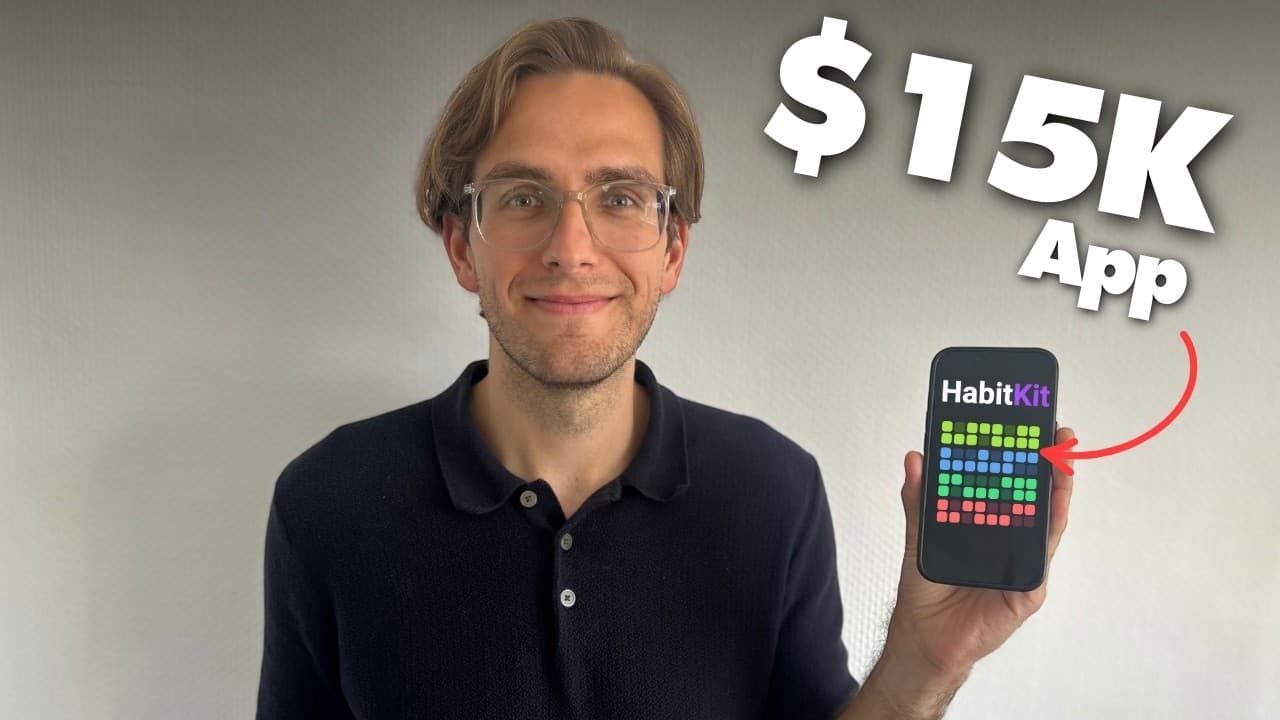
A simple habit-tracking app can reach $15,000 in monthly recurring revenue by combining focused product design, building in public, and app store optimization. Sebastian Röhl built HabitKit with Flutter in two months, prioritized privacy and simplicity, gathered reviews after users completed their first habit, and secured top-five rankings that generated organic downloads without a large marketing budget.
Transcript
i turned a simple habit tracker into a 15K MR business sebastian Ro always wanted to build his own apps so he decided to quit his job and give himself 12 months to figure it out no plan no idea just a dream to build i quit my job with no idea just 12 months of runway but 6 months in he had less than a dozen downloads on his app and he was faced wit... Read More
Key Insights
- HabitKit is a visually simple mobile app that helps users build and maintain daily habits. Its distinguishing features include a tile-based progress chart, a clean interface, local data storage, and no requirement for sign-in or authentication.
- Sebastian Röhl built HabitKit's minimum viable product in two months using Flutter. The cross-platform framework allowed him to release the app for iOS and Android from one codebase while concentrating the initial product on basic habit tracking and progress visualization.
- HabitKit reached roughly 300,000 combined downloads across the App Store and Google Play. It also accumulated more than 2,000 reviews and ratings while ranking among the top five results for important habit-tracking keywords in multiple countries.
- Building in public was an important early growth channel for HabitKit. Sebastian shared wins, failures, screenshots, and development progress on X, LinkedIn, Blue Sky, and Threads, which created connections with developers and led to podcast appearances and video features.
- App store optimization works by improving listing metadata and presentation to rank for relevant searches. Sebastian adjusted the app name, subtitle, keywords, and screenshots, placing "habit tracker" near the beginning of the app name because it was his primary target keyword.
- The timing of review requests can increase app ratings. HabitKit displays the native review prompt immediately after a user checks off a first habit, connecting the request to the user's first successful experience and helping the app gather numerous positive ratings.
- Sebastian's product validation method is to solve his own problems. By acting as the first customer, he believes he can understand the product requirements, determine what users need, and evaluate which features work without relying on a lengthy validation process.
- HabitKit's operating expenses are low because Sebastian runs the business alone without employees. RevenueCat is his largest expense because it takes 1% of revenue, while his remaining tools and services together cost roughly $200 to $300 per month.
Install to Summarize YouTube Videos and Get Transcripts
Explore YouTube Video Summarizer or Get YouTube Transcript Extractor
Questions & Answers
Q: How did HabitKit grow to $15,000 in monthly recurring revenue?
HabitKit grew through a combination of building in public, app store optimization, user reviews, and a small Apple Search Ads campaign. Sebastian shared authentic progress across several social platforms, optimized the store listing around the keyword "habit tracker," and requested reviews after a user's first completed habit. Strong rankings then generated substantial organic traffic without requiring a large marketing budget.
Q: How was the first version of HabitKit built?
Sebastian built HabitKit's first version with Flutter, which let him target iOS and Android from a single codebase. He completed the minimum viable product in two months by focusing on basic habit tracking and a tile-based grid that visualized progress. The interface remained clean and simple, and all user data was stored locally on the device.
Q: Why does HabitKit store user data locally?
HabitKit stores data locally to give users control over their information and support a privacy-focused experience. The app does not require sign-in, authentication, or an account. This design also fits the product's emphasis on simplicity because users can begin tracking habits without completing an account setup process or sending their habit information to an external service.
Q: How did building in public help market HabitKit?
Building in public helped Sebastian attract attention and relationships while HabitKit was still developing. He posted screenshots, wins, failures, successes, and development updates on X, LinkedIn, Blue Sky, and Threads. Positive reactions encouraged him to launch quickly, while continued sharing produced unexpected opportunities such as podcast appearances, video features, and connections with other app developers.
Q: How did Sebastian use app store optimization for HabitKit?
Sebastian optimized HabitKit's app name, subtitle, keywords, and screenshots to improve its position in relevant searches. He focused particularly on the phrase "habit tracker" and placed it at the beginning of the app name. This approach helped HabitKit reach top-five positions for important keywords in multiple countries, producing organic traffic and allowing it to compete with larger companies.
Q: When does HabitKit ask users to leave a review?
HabitKit asks for a review immediately after a user checks off a habit for the first time. Sebastian chose that moment because it represents the user's first successful interaction with the product. The app displays the native review dialog while satisfaction is likely high, and many users respond with five-star ratings, supporting the app's visibility and store ranking.
Q: How does Sebastian find and validate mobile app ideas?
Sebastian recommends starting by building something, even when the first idea is not clearly exceptional. He found that actively creating products naturally produced more ideas for later projects. For validation, he builds apps that solve problems he personally experiences. Acting as the first customer helps him identify requirements and judge what works inside the finished product.
Q: What tools and costs are involved in running HabitKit?
Sebastian uses Flutter for cross-platform development, Cursor as an AI-powered development environment, Astro for keyword research and app store optimization, Appfigures for analytics and marketing, and RevenueCat for subscriptions and purchases. RevenueCat is the largest expense at 1% of revenue. His other operating expenses total roughly $200 to $300 per month, and he has no employees.
Summary & Key Takeaways
-
Sebastian Röhl quit his corporate programming job with savings and a 12-month deadline to establish an independent app business. His first six months produced little revenue, and he eventually returned to his former job while developing apps on the side. He later quit again after HabitKit gained meaningful recurring revenue.
-
HabitKit began as a simple solution to Sebastian's own habit-tracking needs. He built the initial Flutter app in two months, using one codebase for iOS and Android. Its core experience combined basic tracking with a tile-based progress chart, while local data storage eliminated accounts, authentication, and external control of user information.
-
Growth came primarily from building in public, app store optimization, reviews, and a small Apple Search Ads campaign. Sebastian shared authentic development updates across several social platforms, targeted the keyword "habit tracker" in his listing, and requested ratings immediately after a user's first completed habit, when satisfaction was likely highest.
Read in Other Languages (beta)
Share This Summary 📚
Summarize YouTube Videos and Get Video Transcripts with 1-Click
Try YouTube Summary with ChatGPT & Claude or YouTube Transcript Generator
Explore More Summaries from Starter Story 📚


Summarize YouTube Videos and Get Video Transcripts with 1-Click
Try YouTube Summary with ChatGPT & Claude or YouTube Transcript Generator