Peltier cooling with a 4xTEC12706 block and water cooling
TL;DR
A detailed walkthrough of creating an advanced thermoelectric cooling system for efficiency and effectiveness.
Transcript
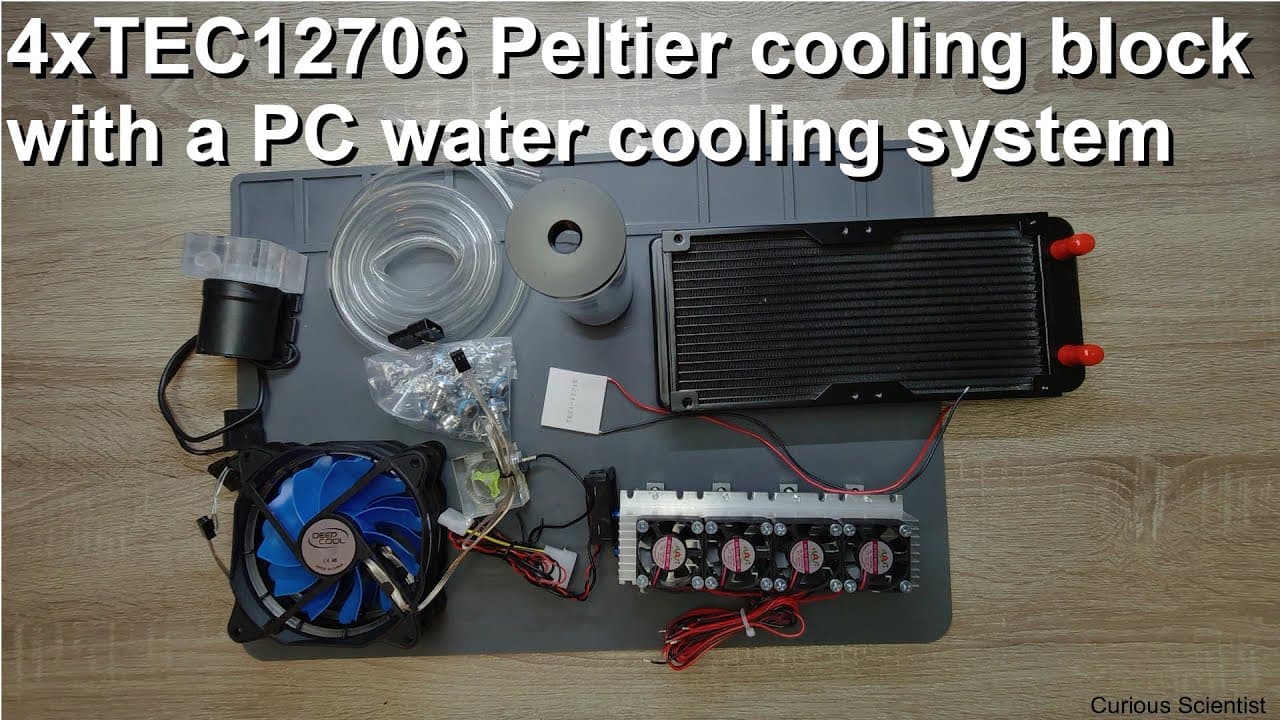
welcome everyone in this video I'm going to show you some advanced Pangaea cooling or thermoelectric cooling so as you can see I have a lot of stuff here on the desk and I will show you what is what so let's start from here we have a huge radiator here it's 12 by 24 centimeters surface area roughly and then obviously two fans belongs to it and thes... Read More
Key Insights
- 😎 The cooling system leverages the principles of thermoelectric cooling, which provides a compact and effective method for temperature management.
- ❓ Proper assembly and connection of electrical components are crucial to prevent damage and ensure the system's functionality.
- 🥵 Cooling efficiency can be affected by heat leakage; thus, insulation is essential during design and operation phases.
- 😘 The experiment demonstrated that substantial drops in temperature could be achieved with optimal power usage, reaching as low as -10 degrees Celsius.
- 🤽 Temperature sensors play a fundamental role in real-time monitoring and ensuring efficient performance across different water and air temperatures.
- 😎 This setup emphasizes the balance between energy consumption and cooling output, with significant power requirements for effective thermoelectric performance.
- 😎 Continuous improvements can be made by analyzing thermal performance and optimizing design features to enhance cooling efficiency.
Install to Summarize YouTube Videos and Get Transcripts
Explore YouTube Video Summarizer or Get YouTube Transcript Extractor
Questions & Answers
Q: What components are essential for the thermoelectric cooling system?
The key components include a large radiator, fans capable of PWM operation, a water tank, a pump, PVC tubes for water circulation, temperature sensors, and a thermoelectric cooler unit. The radiator dissipates heat, while the pump circulates water to transfer heat away from the cooling unit to maintain low temperatures.
Q: How does the temperature control mechanism work in this system?
Temperature control is achieved through thermoelectric units, which utilize electricity to create a temperature differential between their hot and cold sides. By monitoring temperatures with sensors, adjustments can be made to the system to maintain desired temperatures, effectively cooling the output side while managing the temperature of circulating water.
Q: What were some challenges encountered during the assembly process?
One significant challenge was the incorrect voltage assignments during wiring, leading to damage and the need for custom connections. Additionally, managing heat leakage posed a problem, as exposed components can absorb unwanted heat from the environment, reducing overall cooling efficiency.
Q: Can this cooling system be effectively used as a refrigerator?
Yes, the system demonstrates the potential to be used as a refrigerator. The setup includes a styrofoam box designed to insulate and maintain cool temperatures, which allows for practical tests and calculations on how rapidly it can lower temperatures and maintain cold conditions for various objects.
Summary & Key Takeaways
-
The video explores the assembly and functionality of an advanced thermoelectric cooling system, utilizing components like radiators, fans, and temperature sensors.
-
It discusses the thermoelectric cooler's operation, including temperature modulation on the cold and hot sides and the power requirements for effective cooling.
-
Challenges encountered during assembly, including electrical miswiring and heat leakage, are addressed, highlighting the importance of proper setup for optimal performance.
Read in Other Languages (beta)
Share This Summary 📚
Summarize YouTube Videos and Get Video Transcripts with 1-Click
Try YouTube Summary with ChatGPT & Claude or YouTube Transcript Generator
Explore More Summaries from Curious Scientist 📚
![Building a coil winder [Part 6] - A few improvements thumbnail](/_next/image?url=https%3A%2F%2Fi.ytimg.com%2Fvi%2F3eyxG_g2iUA%2Fhqdefault.jpg&w=750&q=75)

![Building a Peltier cooler-based cooling box - First iteration, improvements [Part 2/6] thumbnail](/_next/image?url=https%3A%2F%2Fi.ytimg.com%2Fvi%2F0YlNw0EGnzI%2Fhqdefault.jpg&w=750&q=75)

Summarize YouTube Videos and Get Video Transcripts with 1-Click
Try YouTube Summary with ChatGPT & Claude or YouTube Transcript Generator