How to run AI ads with Astra for higher conversions
TL;DR
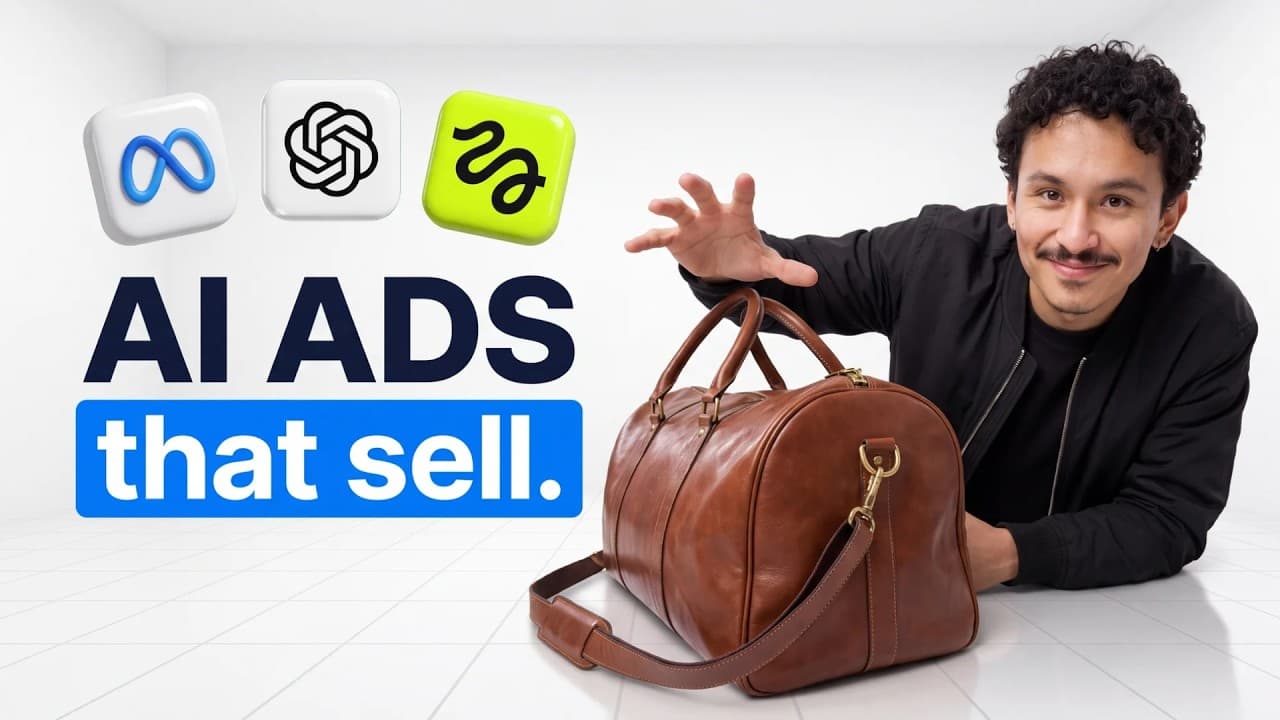
The video reveals a five part PROOF framework for ecommerce ads and a QUEST framework for services, derived from analyzing 10,000 ads. It shows how to test AI generated visuals, convert organic reels into leads, and find clients using the Meta Ad Library. Budget guidance and templates are shared for rapid results.
Transcript
I spent weeks analyzing 10,000 ads for products and services with GPT-6 [music] Astra and finally figured out what the highest converting ones have in common. So, put those patterns to the test, [music] created my own ads, got my first three leads, and today I'm sharing the whole experiment with you. Stick around because I'm also showing you how to... Read More
Key Insights
- The key insight is that studying 10,000 ads allows extraction of winning copy and format patterns that repeat across niches. This research underpins the PROOF framework used for both ecommerce and services.
- The PROOF framework is a five part structure that guides ad copy and visuals, with emphasis on clarity, relevance, and visible benefits to the viewer.
- Meta Ad Library data is leveraged to determine which ads are reaching audiences longest and with the most impact, guiding the creation of new creatives.
- Three static ad formats are identified as effective: the callout diagram, the review card, and the offer card, each illustrating different value propositions.
- The video shows how the same three formats can be extended into video ads by deepening the storytelling and demonstrating product use, not just features.
- Turning product visuals into UGC style video ads can increase viewer engagement and lower CPA by appearing more native and less promotional.
- Organic testing through Instagram Reels is recommended to gauge interest before investing paid traffic, enabling low risk idea validation.
- For services, the QUEST framework is used to build quizzes, case studies, or direct offers, with niching down allowing higher price points and clearer targets.
Install to Summarize YouTube Videos and Get Transcripts
Explore YouTube Video Summarizer or Get YouTube Transcript Extractor
Questions & Answers
Q: What is the PROOF framework and how is it used in ad creation?
The PROOF framework is a five part approach to ad copy and visuals designed to create clear, relevant messages that show viewer benefits. It is applied to both ecommerce and service ads, and is used after researching ads in Meta Ad Library to identify patterns that tend to convert. The framework guides transitions from feature explanations to real life outcomes, ensuring the ad communicates tangible value.
Q: How can Meta Ad Library data influence new ad creative?
Meta Ad Library data lets advertisers see how many people an ad reaches and how long it runs, providing insight into which ads perform best. This information helps in selecting angles and simplifying visuals for new creatives, reducing guesswork and increasing the odds of replicating successful patterns across campaigns.
Q: What are the three static ad formats mentioned, and what does each emphasize?
The three static formats are the callout diagram, which highlights feature benefits in everyday use; the review card, which uses a real customer quote and rating to establish credibility; and the offer card, which presents a clear value proposition or deal to the viewer.
Q: How does turning static formats into video ads affect performance?
Turning the three static formats into video ads deepens the narrative, showing the product in action and using user generated style footage. This makes the content feel more like authentic everyday content and can improve engagement, which in turn can lower cost per lead and increase conversions.
Q: What role do organic Reels play in testing ad ideas?
Posting ads as organic Reels allows quick, low cost testing of different ideas to see which ones generate interest or inquiries. This approach helps identify stronger concepts before scaling with paid traffic, enabling efficient use of a small budget and directing production toward ideas with proven resonance.
Q: What is the QUEST framework used for services, and what formats does it include?
The QUEST framework for services includes three formats: a quiz, a case study told as a story, and a direct offer backed by a guarantee. It focuses on niching down to a specific client segment, which makes the offers more compelling and allows higher pricing tied to outcomes and exclusivity.
Q: How should creators approach pricing and offers when using these ad methods?
Pricing should reflect the perceived value and the specificity of the target audience. The video suggests targeting a single segment to raise the average order value, and using clearly defined offers such as recurring services or guaranteed outcomes to justify higher prices and encourage client uptake.
Q: What is the recommended workflow for landing clients with AI ad services?
The recommended workflow starts with researching competitor ads in Meta Ad Library, then creating a set of optimized creatives using the PROOF framework. Prospective clients are reached by presenting a concise brief and proposed improvements, with a simple service package and template to convert interest into paying engagements.
Summary & Key Takeaways
-
The video distills ad patterns from tens of thousands of ads into a practical workflow, emphasizing simplicity and direct messaging to improve conversion rates.
-
It demonstrates how to create static and video ads using AI tools, and how to adapt campaigns for stories and reels to maximize reach without heavy production.
-
It also covers client acquisition strategies by using the Meta Ad Library, organic testing, and a simple pricing approach to land paying customers.
Read in Other Languages (beta)
Share This Summary 📚
Summarize YouTube Videos and Get Video Transcripts with 1-Click
Try YouTube Summary with ChatGPT & Claude or YouTube Transcript Generator
Explore More Summaries from Higgsfield AI 📚


Summarize YouTube Videos and Get Video Transcripts with 1-Click
Try YouTube Summary with ChatGPT & Claude or YouTube Transcript Generator