How to Protect AI from OWASP Top 10 Threats
TL;DR
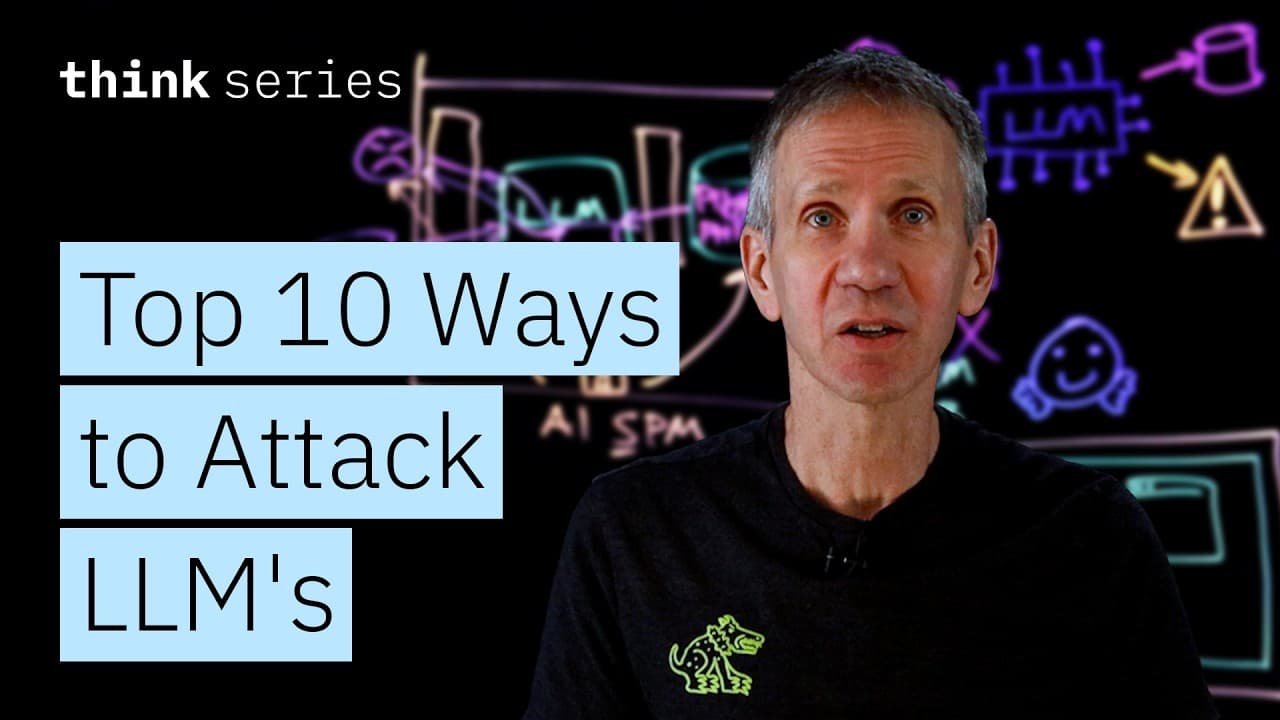
OWASP's updated Top 10 list highlights vulnerabilities in AI Large Language Models (LLMs), emphasizing prompt injection and data leaks as significant risks. Protecting AI systems requires implementing firewalls, access controls, and regular security assessments to prevent unauthorized access and data breaches. These measures help safeguard AI models from becoming security incidents.
Transcript
You know what's catching a lot of teams off guard right now? How easy it is for an LLM to leak something that it shouldn't, or be steered into doing something you never intended. One clever prompt, one exposed training file, one sketchy plug-in, and suddenly your helpful AI assistant becomes a security incident just waiting to happen. That's why th... Read More
Key Insights
- Prompt injection remains a significant threat, allowing attackers to manipulate AI behavior by injecting harmful commands.
- Sensitive information disclosure has increased in prominence, risking exposure of personal and proprietary data through LLMs.
- Supply chain vulnerabilities highlight the risk of integrating unverified data and models from open-source platforms.
- Data and model poisoning can subtly degrade AI accuracy, introducing errors and biases that affect decision-making.
- Improper output handling can lead to vulnerabilities like cross-site scripting and SQL injections if LLM outputs are not verified.
- Excessive agency in AI systems poses risks when LLMs have too much control over external applications and systems.
- System prompt leakage can expose sensitive information embedded in system prompts, risking unauthorized access.
- Misinformation and unbounded consumption can lead to denial of service, affecting AI availability and reliability.
Install to Summarize YouTube Videos and Get Transcripts
Explore YouTube Video Summarizer or Get YouTube Transcript Extractor
Questions & Answers
Q: How to prevent prompt injection in AI systems?
Preventing prompt injection involves implementing strong system prompts and using AI firewalls to examine and block malicious inputs. Regular security assessments and penetration testing can identify vulnerabilities, ensuring that AI systems do not execute unintended commands or leak sensitive information.
Q: What are the risks of sensitive information disclosure in LLMs?
Sensitive information disclosure risks include exposure of personal and proprietary data through AI models. Without proper controls, attackers can extract confidential information, leading to data breaches. Implementing access controls and data sanitization can mitigate these risks and protect sensitive data.
Q: How do supply chain vulnerabilities affect AI security?
Supply chain vulnerabilities arise from integrating unverified data and models from open-source platforms into AI systems. These can introduce security risks if the data or models are compromised. Vetting data sources, verifying model provenance, and scanning for vulnerabilities can help secure the AI supply chain.
Q: What is data and model poisoning in AI systems?
Data and model poisoning involves introducing incorrect or biased information into AI training data or models, affecting accuracy and decision-making. This can lead to errors and biases in AI outputs. Ensuring data integrity and implementing access controls can prevent such poisoning attacks.
Q: How can improper output handling lead to security vulnerabilities?
Improper output handling can lead to vulnerabilities like cross-site scripting and SQL injections if AI outputs are not verified. These vulnerabilities occur when AI-generated outputs are executed in other environments without proper validation. Examining outputs and implementing security checks can prevent such issues.
Q: What is excessive agency in AI systems, and why is it risky?
Excessive agency refers to AI systems having too much control over external applications and systems, which can be risky if the AI is manipulated or hallucinates incorrect actions. Limiting AI capabilities and implementing strict access controls can prevent unauthorized actions and maintain system security.
Q: What is system prompt leakage, and how can it be prevented?
System prompt leakage occurs when sensitive information in system prompts is exposed through AI outputs. This can be prevented by minimizing sensitive data in prompts, implementing access controls, and ensuring that AI systems do not inadvertently disclose such information in responses.
Q: How does misinformation affect AI reliability?
Misinformation affects AI reliability by causing AI systems to provide incorrect or misleading outputs. This can lead to poor decision-making and loss of trust in AI systems. Implementing critical thinking, cross-referencing AI outputs, and verifying against reliable sources can mitigate misinformation risks.
Summary & Key Takeaways
-
OWASP's updated Top 10 list for LLMs reveals vulnerabilities like prompt injection and sensitive information disclosure. Prompt injection allows attackers to manipulate AI outputs, while data leaks expose sensitive information. Implementing firewalls and access controls can mitigate these risks.
-
Supply chain vulnerabilities and data poisoning are significant threats, as unverified models and data can introduce errors and biases. Proper vetting and scanning of data sources, along with access controls, are crucial in maintaining AI integrity.
-
Excessive agency and misinformation in AI systems can cause security issues. Ensuring AI outputs are verified and controlling system access can prevent unauthorized actions and maintain reliable AI performance.
Read in Other Languages (beta)
Share This Summary 📚
Summarize YouTube Videos and Get Video Transcripts with 1-Click
Try YouTube Summary with ChatGPT & Claude or YouTube Transcript Generator
Explore More Summaries from IBM Technology 📚





Summarize YouTube Videos and Get Video Transcripts with 1-Click
Try YouTube Summary with ChatGPT & Claude or YouTube Transcript Generator