How to Increase Your Luck in Life: Learn Three Types
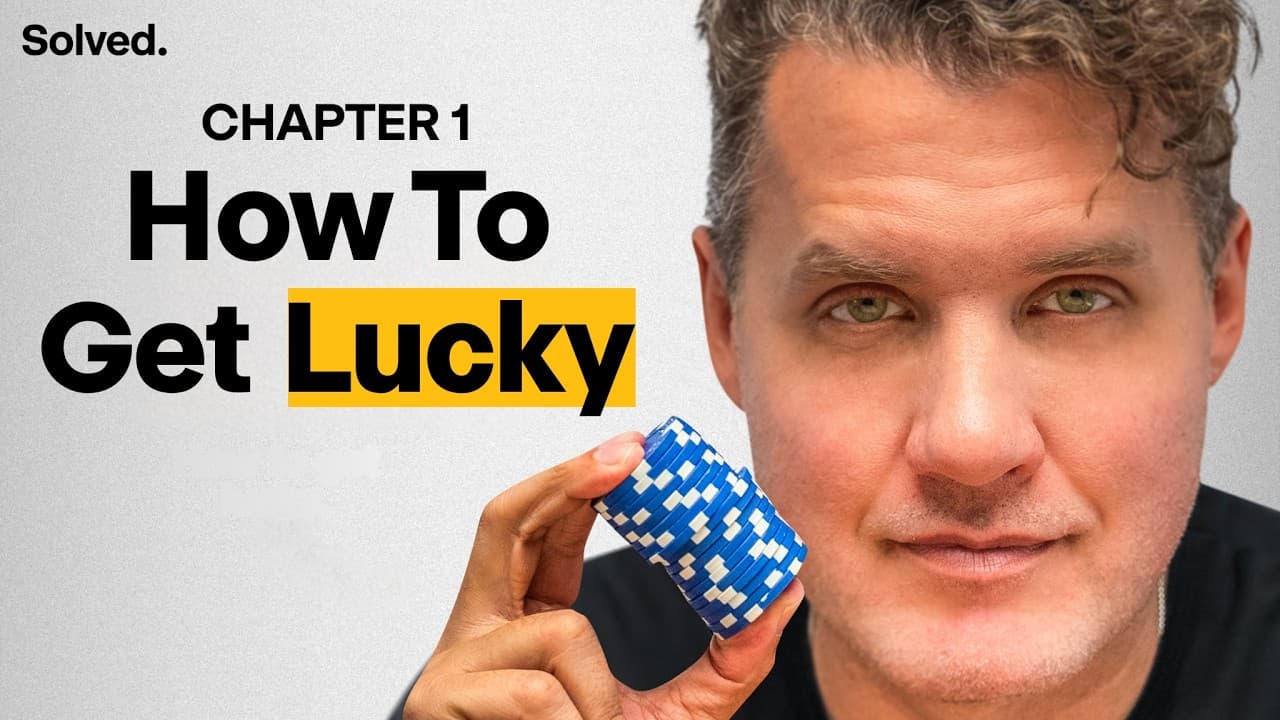
TL;DR
Luck is a skill you can cultivate by changing how you see opportunities and by adopting specific habits. The episode explains that there are three types of luck, two of which you can deliberately create, and shows how perception shapes outcomes through examples and research. By accepting controllable luck and improving what you can influence, you tilt odds in your favor.
Transcript
So, a lot of people don't know this, but I co-authored Will Smith's memoir with him. And I spent roughly two or three years with Will. Got to know him really well. Got to know his family, learned all about his career, everything. And there was one story from his entire life that is my favorite story that I love. In fact, I loved it so much. It was ... Read More
Key Insights
- Luck comes in three forces, and two can be built on purpose.
- Believing you are lucky increases opportunity spotting and initiative, boosting outcomes.
- Perception of luck is a modifiable skill supported by research and training.
- There are random events outside control, but perception can shape response to them.
- Historical references illustrate how mindset affects decisions and risk-taking.
- The episode argues that focusing on controllable luck reduces guilt over outcomes.
- Ancient frameworks help identify which lever to pull to influence luck.
- Practical steps can start immediately to tilt the odds in your favor.
Install to Summarize YouTube Videos and Get Transcripts
Explore YouTube Video Summarizer or Get YouTube Transcript Extractor
Questions & Answers
Q: What is the core idea about luck presented in the episode
The core idea is that luck is not just random chance but a mix of factors that can be influenced. It emphasizes that there are three forces of luck, two of which you can deliberately create through habits and mindset. This reframes luck from a passive occurrence to an actionable skill you can develop to improve life outcomes.
Q: How did Will Smith and his father illustrate luck in the episode
The episode recounts a late night call from Will Smiths father after Independence Day box office numbers came out, highlighting a moment where luck and preparation intersect. The story is used to illustrate how the perception of luck can be shaped by circumstances and the interpretation of those events, reinforcing the idea that luck involves both chance and readiness.
Q: What does Napoleon’s test reveal about luck according to the discussion
Napoleon’s test asked generals whether they believed they were lucky or not, and the discussion uses this to argue that belief about luck reflects character traits. The implication is that believing you are lucky tends to correlate with spotting opportunities, taking initiative, and achieving better outcomes, linking mindset to result.
Q: What are the two types of luck you can create, as mentioned in the episode
The episode introduces three types of luck and states that two of them can be created through deliberate actions. While the exact types are labeled Sansai, the key takeaway is that these two forms of luck arise from choices, environment, and behaviors that anyone can cultivate to increase favorable outcomes.
Q: How does perception influence lucky outcomes according to the research cited
Research cited shows that people who view themselves as luckier are more likely to notice hidden opportunities, initiate conversations, and engage with others, leading to more positive outcomes. This demonstrates that perception drives behavior which, in turn, influences results, creating a feedback loop that reinforces a lucky experience.
Q: What role does environment play in shaping luck
Environment is described as a conduit for luck, referred to as one of the controllable forces that can be optimized. By choosing surroundings and contexts that increase opportunities and reduce friction, a person can tilt the odds toward more favorable outcomes, illustrating how practical changes support luck.
Q: What does the episode say about accepting luck you cannot control
The episode argues for accepting the luck you cannot control while maximizing the luck you can influence. This means recognizing external randomness but focusing energy on actions and habits that create more favorable conditions, thereby reducing guilt and increasing productive use of effort.
Q: How can someone start improving their luck today according to the discussion
The discussion suggests beginning with mindset shifts that foster a belief in luck, which makes individuals more likely to spot opportunities and take action. It also recommends cultivating the two types of controllable luck through habits, environment optimization, and proactive decision making so that favorable outcomes become more likely over time.
Summary & Key Takeaways
-
Luck has three forces that shape outcomes, with two you can intentionally grow through daily habits and choices.
-
Perception of luck affects how many opportunities you notice and act on, influencing future results.
-
Understanding the framework for luck helps you allocate energy to what actually moves the needle in life.
Read in Other Languages (beta)
Share This Summary 📚
Summarize YouTube Videos and Get Video Transcripts with 1-Click
Try YouTube Summary with ChatGPT & Claude or YouTube Transcript Generator
Explore More Summaries from Mark Manson 📚
Summarize YouTube Videos and Get Video Transcripts with 1-Click
Try YouTube Summary with ChatGPT & Claude or YouTube Transcript Generator