How to Process Emotional Numbness and Dissociation
TL;DR
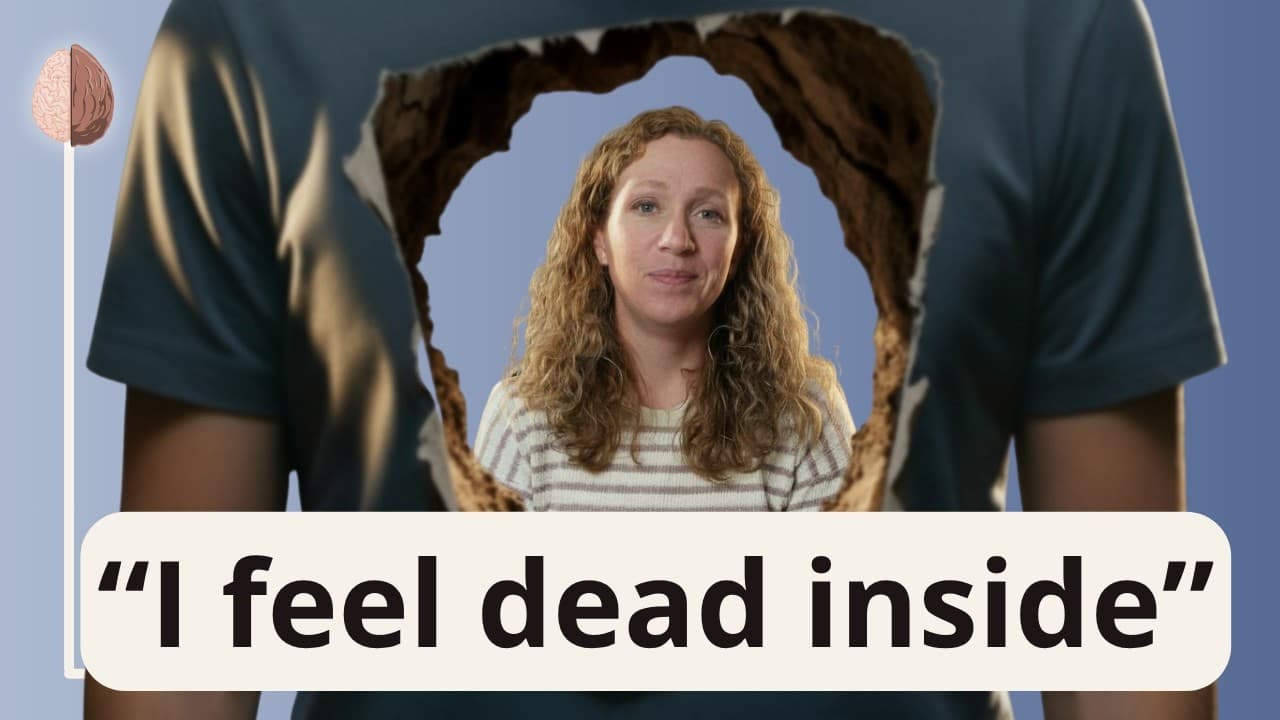
To process emotional numbness and dissociation, gently notice the numbness, reconnect through bodily sensations, restore safety, explore what the numbness protects, and express the hidden emotion through writing or dramatization. Numbness is a protective dorsal vagal response that can follow trauma, grief, chronic stress, depression, or learned childhood coping. Read on for five grounded practices and signs that medical or therapeutic support may help.
Transcript
The other day in my live call with my members, a member asked this question. "How do I recognize my emotions when I feel blank? I don't see where I fit on the emotions wheel." Now, most people know that naming an emotion is the first step to working through it. But what if you just feel empty? Like you just can't cry or maybe you feel flat or n... Read More
Key Insights
- Emotional numbness is the dorsal vagal response, the third stage of the nervous system's threat sequence. It activates after the system scans for help and after fight or flight fails to remove the danger, leaving shutdown as the remaining protective option.
- Freezing and going numb is a survival strategy shared with animals. It protects a creature from being seen, from making noise, and from feeling pain, which can help it survive a threat from a bigger, stronger aggressor.
- Going numb is not a conscious choice. The nervous system makes the decision on its own, which is why self-blame is misplaced and why willpower-based attempts to snap out of it tend not to work.
- Grief does not always look like tears, sadness, or anger. It is very common for grieving people to feel flat or to feel nothing at all, which can be mistaken for not caring about the loss.
- Chronic stress and burnout deplete the body's capacity for activation. Constant stress floods the body with stress hormones until resources run out, and the nervous system, tired of trying, numbs out. Some people call this adrenal fatigue.
- Numbing learned in childhood becomes a habitual defense mechanism in adulthood. A child who could not escape abuse or constant criticism may have responded with 'Fine, I don't care' until pretending not to care became real, later morphing into alcoholism, workaholism, screen addiction, or dissociation.
- Forcing yourself to feel and thinking your way out both backfire. Forcing adds stress and pushes you further into the dorsal vagal response, while analyzing is intellectualization, another subtle attempt to avoid actual feelings by getting up in your head.
- Not feeling anything is itself a kind of feeling. Mindfulness expert Thomas McConkie describes staying with 'I don't really feel anything' and discovering roughly 20 layers within it, which yields deeper access to actual experience and amazing insight.
- Numbness functions as a protector part that can be addressed directly. You can thank it for protecting you, ask what it is protecting you from, reassure it that you are not a little kid anymore, and ask whether it would step aside so you can see what is behind it.
- Chronic numbing and dissociation are often best worked on with a therapist. Removing internal defense mechanisms can leave a person overwhelmed by big traumas, so professional support during that process leads to better outcomes.
Install to Summarize YouTube Videos and Get Transcripts
Explore YouTube Video Summarizer or Get YouTube Transcript Extractor
Questions & Answers
Q: How can I process emotional numbness and dissociation?
Start by noticing numbness with curiosity and kindness instead of fighting it. Then use body-based grounding, restore safety through connection, ask what the numbness is protecting you from, and express the hidden emotion through writing or dramatization. Chronic numbness and dissociation are often best addressed with a therapist because removing protective defenses can uncover overwhelming trauma.
Q: What does emotional numbness feel like?
Emotional numbness can feel like physical and emotional flatness, emptiness, or being shut down. You may lose motivation or interest in things that once brought joy, feel neither happiness nor sadness, or feel detached as though you are watching your life from outside. These experiences reflect a nervous system response rather than proof that you are broken.
Q: Why can trauma make me feel emotionally numb?
Numbness is often a response to overwhelming stress or trauma and is a hallmark symptom of PTSD. The nervous system first scans for help, then activates fight or flight, and may enter the dorsal vagal state when fighting or escaping does not work. This freeze or shutdown response can produce numbness, detachment, emptiness, or feeling spaced out.
Q: What is the dorsal vagal response?
The dorsal vagal response is the third stage of the nervous system’s threat sequence, also called freeze or shutdown. It follows scanning for support and the activation of fight or flight when those responses cannot resolve the danger. Like animals that freeze to avoid being seen, making noise, or feeling pain, humans may unconsciously go numb for protection.
Q: What can cause emotional numbness besides trauma?
Other causes discussed include grief or loss, chronic stress and burnout, depression, and emotional shutdown learned as a childhood survival strategy. Numbness may also be associated with schizophrenia, borderline or bipolar disorder, exhaustion, chronic illness, or medication side effects. If a biological or medical cause seems possible, it is worth talking with a doctor.
Q: Why can forcing myself to feel make numbness worse?
Forcing emotion adds stress to an already overwhelmed system and can push it further into the dorsal vagal response. Trying to think your way out can also become intellectualization, which keeps you in your head instead of experiencing feelings. A gentler, body-based approach is more appropriate because numbness is presented as a nervous system state, not merely a thinking problem.
Q: How can grounding help me reconnect with my body?
Use sensory experiences to reconnect with the present moment, such as touching something textured, noticing a color, or listening closely to music. Peter Levine’s shower exercise involves letting water touch different parts of your body while looking at and mindfully noticing each sensation. The aim is to reawaken bodily awareness without demanding that an emotion appear.
Q: How can I explore what my numbness is protecting me from?
Treat numbness as a protective part rather than an enemy. Thank it for protecting you, ask what it is shielding you from, remind it that you are no longer a little child, and ask whether it can step aside so you can see what is behind it. Because this process may expose major trauma, working with a therapist can lead to better outcomes.
Summary & Key Takeaways
-
Emotional numbness looks like feeling flat physically and emotionally, losing motivation or interest in things that once brought joy, feeling neither happiness nor sadness, and feeling detached as if watching your life from the outside. Emma McAdam frames this not as being broken but as a nervous system response to something overwhelming.
-
When the nervous system senses danger it moves through three steps: first it scans for help to support or protect you, then it activates fight or flight, and if neither works it drops into the dorsal vagal response, also called freeze or shutdown. Animals freeze to avoid being seen, making noise, or feeling pain, and humans do the same.
-
Common causes include overwhelm or trauma, grief or loss, chronic stress and burnout, depression, and numbing learned as a childhood survival strategy. Numbness is also a hallmark symptom of PTSD. Sometimes it links to biological or medical issues such as schizophrenia, borderline or bipolar disorder, exhaustion, chronic illness, or medication side effects, which warrant a doctor visit.
-
Two common responses backfire. Forcing yourself to feel something adds stress and pushes you further into the dorsal vagal response, and thinking your way out is intellectualization, a subtle way of avoiding feelings by staying in your head. Because numbness is a nervous system state rather than a thinking problem, body-based approaches are needed instead.
-
The five practices are: notice numbness with curiosity and kindness like a scientist, use body-based reawakening such as sensory grounding and Peter Levine's shower exercise, restore a sense of safety through eye contact or physical contact with a caring person or pet, ask what the numbness is protecting you from, and act out or dramatize the emotion in writing.
Read in Other Languages (beta)
Share This Summary 📚
Summarize YouTube Videos and Get Video Transcripts with 1-Click
Try YouTube Summary with ChatGPT & Claude or YouTube Transcript Generator
Explore More Summaries from Therapy in a Nutshell 📚

Summarize YouTube Videos and Get Video Transcripts with 1-Click
Try YouTube Summary with ChatGPT & Claude or YouTube Transcript Generator