How Does Alex Hormozi Make Money Without Falling Into the Passive Income Trap?
TL;DR
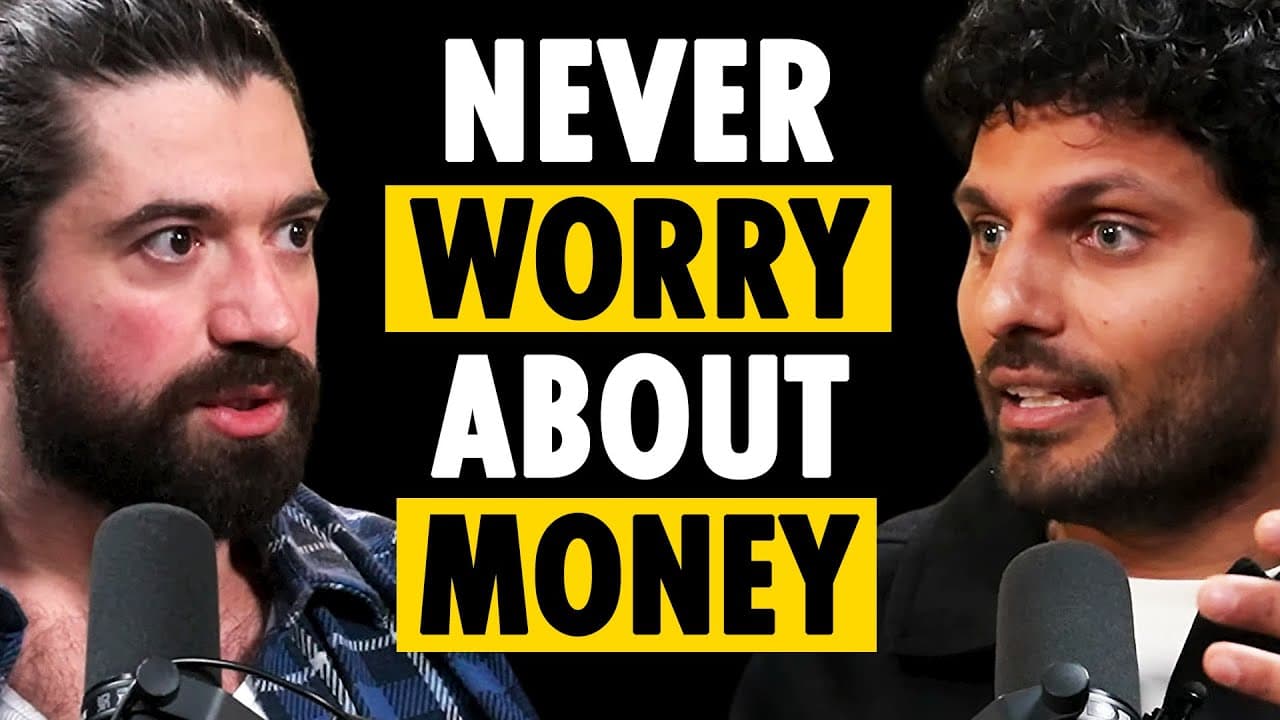
Alex Hormozi says making money begins with active income, while investing comes last because excess cash flow enables riskier bets. He recommends increasing earnings per unit of time, learning before expecting to earn, and repeatedly taking the observable actions a business requires. A very big business can be built in about 5 to 7 years, making the rest worth reading for his practical framework on income, fear, and execution.
Transcript
You can build something very big in about 5 to seven years. And the problem is most people spend that same 5 to seven years reliving the same 30 days over and over again. You have to stay in that painful place. Staying in the pain is what gives you the catalyst to learn how to get out of pain. Please welcome a serial entrepreneur, best-selling auth... Read More
Key Insights
- Sequence is the biggest misconception in building wealth. Most people believe making money comes from investing, but investing is the last thing you do, not the first. Active income comes before speculative bets.
- The people with the most money typically have tremendously high incomes. The excess cash flow from that income is what enables them to make big swings on riskier bets that sometimes pay off and sometimes don't.
- Working for free is really 'learning and then earning,' not free labor. Hormozi frames the reluctance to work for free as entitlement, since the exchange delivers skills and knowledge in place of immediate money.
- Failure comes from an obvious list nobody does, not a magical list nobody has. Like knowing you should eat less and move more to get in shape, people already know what to do but don't do it.
- Fear is the number one emotion people can't control that leads to failure, according to Hormozi when asked what most drives people to fail.
- Speculative investing is basically the greater fool theory. You keep selling to a greater and greater fool until someone becomes the greatest fool of all and the price drops, so the more it feels like luck, the bigger the red flag.
- Nothing is truly passive because a single passive investment usually requires reviewing about a hundred deals with real diligence first. All that research and analysis is still work, even if it happens before the investment.
- Increasing income is a solvable, low-risk problem of raising money earned per unit of time. Since money is collected over time, the real question is finding things you can trade your time for that pay more than you currently get.
Install to Summarize YouTube Videos and Get Transcripts
Explore YouTube Video Summarizer or Get YouTube Transcript Extractor
Questions & Answers
Q: How does Alex Hormozi recommend making money without falling into the passive income trap?
Hormozi recommends building active income before pursuing investments or speculative bets. He says people with the most money typically have tremendously high incomes, and the resulting excess cash flow allows them to take riskier swings later.
Q: What is the biggest misconception about building a business and making money?
Hormozi says people conflate the proper sequence by assuming that making money begins with investing. In his view, investing is the last step rather than the first because dependable cash flow must come before risky bets.
Q: Why does Hormozi consider speculative investing a form of gambling?
A person cannot reasonably claim they would have selected only a past winner such as Bitcoin in 2013. Hormozi says the same decision process would require taking every comparable long-shot bet, which could mean losing on 99 other bets.
Q: What actions does a business need to create income?
Hormozi says a business must tell people about what it offers, have something to sell, and charge more than it costs to deliver that offering. The business then tries to repeat that process as many times as possible.
Q: What does Alex Hormozi mean by earning money per unit of time?
Hormozi evaluates income according to how much money is collected over a unit of time instead of treating active and passive income as a simple binary. The practical goal is to develop skills and find exchanges of time that pay more than the current alternative.
Q: How do you overcome not wanting to work for free?
Hormozi describes that resistance as entitlement and reframes the exchange as learning before earning. Although immediate payment may be absent, the person receives skills and knowledge that can support greater earnings later.
Q: Why do people fail even when they know what to do?
Hormozi says failure usually comes from an obvious list that nobody follows, not a magical list that nobody possesses. For getting in shape, for example, people already know to eat less and move more; the unresolved question is why they do not act.
Q: How long can it take to build something very big, according to Alex Hormozi?
Hormozi says something very big can be built in about 5 to 7 years. The problem is that many people spend the same period reliving the same 30 days instead of remaining in the painful situation long enough to learn how to escape it.
Summary & Key Takeaways
-
Hormozi argues most people conflate sequence when trying to build wealth. They believe money comes from investing, but investing is the last step, not the first. Active income should come first, and making active income 'cool again' is the fix for the passive-bet gambling mindset.
-
The something-for-nothing fallacy drives people to chase get-rich-quick schemes like crypto. Hormozi warns that if you can't name the variables, you're purely gambling, and that retail investors usually discover an asset at its peak, when it is already too late to profit.
-
Rather than framing money as active versus passive, Hormozi thinks in terms of money earned per unit of time. Since we live in time and collect money over time, the goal is to build skills so each hour traded earns more, trading up continuously across a career.
Read in Other Languages (beta)
Share This Summary 📚
Summarize YouTube Videos and Get Video Transcripts with 1-Click
Try YouTube Summary with ChatGPT & Claude or YouTube Transcript Generator
Explore More Summaries from Jay Shetty Podcast 📚




Summarize YouTube Videos and Get Video Transcripts with 1-Click
Try YouTube Summary with ChatGPT & Claude or YouTube Transcript Generator