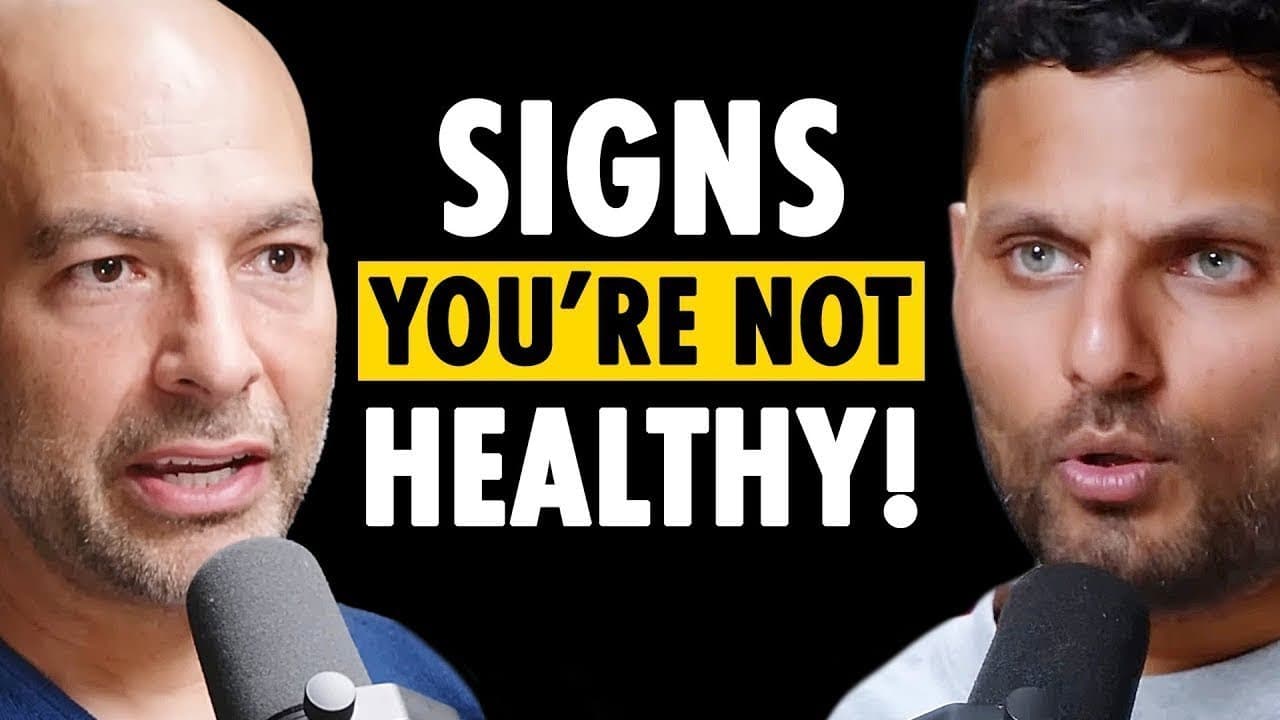
The LONGEVITY Doctor: Are You Actually HEALTHY? 70% Of The Population Is NOT | Dr. Peter Attia
TL;DR
Most people think they're healthy but may have underlying health issues like insulin resistance or genetic predispositions to diseases. Dr. Peter Attia emphasizes the importance of understanding personal health metrics and family history to proactively manage health and longevity. Investing in health early, through lifestyle changes and regular screenings, can significantly impact long-term well-being.
Transcript
you talk to a person the day before they're going to die they would give anything and everything for more chance at life the best-selling author and host the number one Health and Wellness podcast on purpose with Jay Shetty could you walk us through what it feels like to think you're healthy to maybe even feel you're doing okay but in reality there... Read More
Key Insights
- Insulin resistance is a common but often undetected health issue that can lead to type 2 diabetes.
- Family history provides crucial insights into potential health risks that genetic tests alone cannot reveal.
- Atherosclerosis begins at birth and progresses over time, making early prevention crucial.
- Cognitive capacity improves until the third decade of life, then begins to decline.
- Physical capacity peaks in the 20s and 30s, underscoring the importance of maintaining fitness.
- Preventive health measures should start early, even before visible signs of aging or disease.
- Regular health screenings, including family history assessments, can help identify risks before they become critical.
- Lifestyle changes, such as improved diet and exercise, can significantly impact long-term health outcomes.
Install to Summarize YouTube Videos and Get Transcripts
Explore YouTube Video Summarizer or Get YouTube Transcript Extractor
Questions & Answers
Q: How to assess if you are truly healthy?
To assess true health, it's important to go beyond feeling okay and consider underlying issues like insulin resistance or genetic predispositions. Regular health screenings, understanding family health history, and monitoring personal health metrics such as blood sugar levels and cholesterol can provide a more comprehensive view of health.
Q: When should you start investing in your health?
Investing in health should start as early as possible, ideally before visible signs of aging or disease. Preventive measures, including understanding family health history and adopting healthy lifestyle habits, can significantly impact long-term health outcomes.
Q: Why is family health history important?
Family health history is crucial because it provides insights into potential genetic predispositions that genetic tests alone cannot reveal. Knowing the health history of parents, grandparents, and siblings can help identify risks for conditions like heart disease, diabetes, and certain cancers.
Q: What are the earliest signs of atherosclerosis?
Atherosclerosis begins at birth and progresses over time. While it doesn't cause immediate symptoms, early signs can include elevated cholesterol levels or high blood pressure. Regular screenings and a healthy lifestyle can help manage and slow its progression.
Q: How does cognitive capacity change with age?
Cognitive capacity generally improves until the third decade of life, after which it begins to decline. Engaging in activities that promote neuroplasticity and maintaining a healthy lifestyle can help preserve cognitive function as one ages.
Q: What lifestyle changes can improve long-term health?
Lifestyle changes such as adopting a balanced diet, regular physical activity, adequate sleep, and stress management can significantly improve long-term health. These changes help manage weight, improve metabolic health, and reduce the risk of chronic diseases.
Q: How does physical capacity change with age?
Physical capacity, including muscle mass and cardiovascular fitness, peaks in the 20s and 30s. After this, there is a gradual decline, making it important to maintain regular exercise routines to preserve strength and fitness throughout life.
Q: What preventive health measures are recommended?
Preventive health measures include regular screenings for blood pressure, cholesterol, and glucose levels, understanding family health history, and adopting a healthy lifestyle. Early detection and management of potential health issues can prevent future complications.
Summary
In this video, Dr. Peter Attia discusses various aspects of health, wellness, nutrition, and supplements. He shares his personal experiences and insights on topics such as the wake-up calls for taking charge of one's health, the importance of understanding family history, the right time to invest in health, the role of nutrition and supplements, and the significance of glucose control.
Questions & Answers
Q: What were the wake-up calls for Dr. Attia to prioritize his health?
Dr. Attia experienced two wake-up calls that made him realize the importance of his health. The first was discovering that he was insulin resistant and overweight, despite being highly active. The second wake-up call was the realization that his family history of premature heart disease could be his destiny. These realizations, along with the birth of his daughter, motivated him to take action.
Q: How did Dr. Attia's background in medicine and finance influence his health journey?
Dr. Attia had a background in medicine but left the field and was working in finance at the time of his health wake-up calls. His medical training provided him with the knowledge and understanding of his health risks, while his experience in finance allowed him to approach his health journey more analytically and systematically.
Q: What fear did Dr. Attia have during his wake-up call period?
Dr. Attia's biggest fear during that time was not being around to enjoy life with his future grandchildren. The birth of his daughter made him realize the joy of having children and the desire to experience the same joy with future generations.
Q: When should people start investing in their health, and what factors influence this decision?
The right time to start investing in one's health is challenging to determine. Dr. Attia believes that people need to go through a phase of decline and maturity to recognize the importance of health. The intersection of motivation and the realization of decline is a crucial point for individuals to start investing in their health.
Q: How does aging affect the human body, and when is the best time to start prevention?
Aging has both positive and negative effects on the body. Some aspects, like the damage to arteries, start immediately after birth, while other aspects, like cognitive capacity, improve until reaching a peak and then decline. Dr. Attia emphasizes that most people are in a state of decline and should focus on slowing down the rate of decline as much as possible. The ideal time to start prevention is when a person recognizes their own fallibility and can project their future health based on their family's health history.
Q: How important is family history in understanding individual health risks?
Family history plays a crucial role in understanding individual health risks. Dr. Attia emphasizes the importance of gathering detailed information about the health history of parents, grandparents, siblings, and other relatives. Genetic tests alone are insufficient to determine individual risk factors, as most health conditions are influenced by a combination of genes and environmental factors.
Q: What is the best approach to gathering comprehensive family health history?
Gathering comprehensive family health history can be challenging, especially if some family members are deceased. Dr. Attia recommends asking specific questions about various health conditions and medications for multiple generations. While there may be limitations, it is essential to prompt family members with the right questions to gather relevant information.
Q: What is the role of nutrition in overall health, and how can individuals determine the right eating habits?
Nutrition is an essential aspect of overall health, but there is still much unknown about the relationship between nutrition and health. Dr. Attia advises against fixating on social media fads and emphasizes the importance of meeting protein requirements while balancing energy intake. He suggests focusing on protein intake, caloric restriction, dietary restriction, and fasting to match individual needs and capabilities.
Q: What is Dr. Attia's take on supplements and their importance for optimal health?
Dr. Attia takes specific supplements based on his research and personal experiences. He highlights the importance of protein, B vitamins, vitamin D, magnesium, ashwagandha, glycine, and fish oil. While these supplements have suggested benefits, Dr. Attia emphasizes the need for individual discernment and understanding of limitations and possible side effects.
Q: Can Dr. Attia provide insights on glucose control and the significance of managing blood glucose levels?
Blood glucose control is crucial for overall health, even for individuals without diabetes. Dr. Attia explains that elevated blood glucose can lead to various health issues, such as heart disease, kidney disease, and Alzheimer's disease. Matching glucose consumption with individual capabilities, including sleep, exercise, muscle mass, and stress management, is essential for optimal health.
Takeaways
Dr. Peter Attia discusses the importance of recognizing wake-up calls for preserving and improving health. He emphasizes the significance of understanding family health history, taking action at the right time, and focusing on individual nutrition needs. Dr. Attia highlights the potential benefits of certain supplements, such as protein, B vitamins, vitamin D, magnesium, ashwagandha, glycine, and fish oil. Additionally, he emphasizes the importance of glucose control for overall health and well-being.
Summary & Key Takeaways
-
Understanding personal health metrics and family history is crucial for proactive health management. Insulin resistance and genetic predispositions can often go unnoticed but have significant long-term health implications.
-
Atherosclerosis and cognitive decline start early in life, making preventive measures essential. Physical and cognitive capacities peak in early adulthood, highlighting the need for ongoing fitness and mental health practices.
-
Early investment in health through lifestyle changes and regular screenings can greatly improve long-term well-being. Recognizing and addressing underlying health issues can prevent future complications.
Read in Other Languages (beta)
Share This Summary 📚
Summarize YouTube Videos and Get Video Transcripts with 1-Click
Try YouTube Summary with ChatGPT & Claude or YouTube Transcript Generator
Explore More Summaries from Health & Wellness 📚




Summarize YouTube Videos and Get Video Transcripts with 1-Click
Try YouTube Summary with ChatGPT & Claude or YouTube Transcript Generator