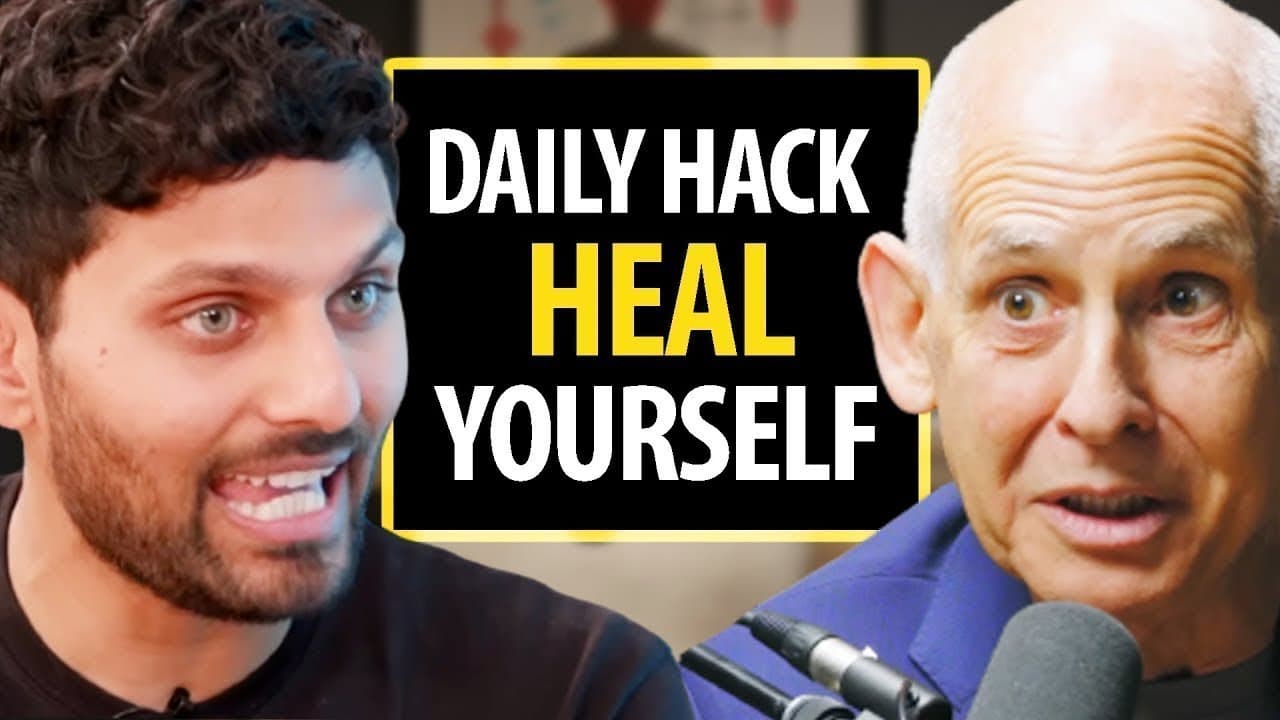
DO THIS Everyday To Completely Heal Your BODY & MIND | Dr. Daniel Amen & Jay Shetty
TL;DR
A healthy mind starts with protecting and supporting the physical brain through consistent daily choices. Favor beneficial foods, regular exercise, healthy blood flow, and protection from head injuries, while limiting repeated dopamine-heavy behaviors that encourage compulsive return. Small habits practiced every day can support better brain function, mental health, and happiness.
Transcript
you want to drip dopamine don't dump it because when you dump it with the fries and the alcohol the porn you don't have much left and so then you have to go back and do it again and all of a sudden the best-selling author and host the number one Health and Wellness podcast on purpose with Jay Shetty hey everyone welcome back to on purpose the numbe... Read More
Key Insights
- A healthy mind depends on a healthy brain because the brain's physical functioning creates the mind from moment to moment. When brain health deteriorates, memory, personality, judgment, and behavior can also change, making physical brain care a foundation for mental well-being.
- Brain damage can influence serious behavioral problems, so harmful conduct should prompt questions about brain function alongside accountability. Rehabilitation does not mean ignoring public safety. It means evaluating whether improving brain health can help a person develop a more meaningful and stable life.
- Brain health can be affected before birth because substance exposure during pregnancy may alter a child's developmental trajectory. The discussion specifically connects prenatal marijuana exposure with later concerns involving attention, behavior, and empathy, emphasizing that brain protection begins before a child is born.
- The standard American diet can harm brain health by disrupting blood sugar and contributing to unhealthy weight. Highly processed foods such as Pop-Tarts and sugary drinks are presented as especially concerning choices, particularly when they are routinely given to children.
- Low blood flow is a major brain-health concern, and prolonged inactivity can contribute to it. Regular exercise supports blood flow, while spending too much time sitting in front of television or streaming entertainment may work against the daily habits needed to protect the brain.
- Mild traumatic brain injuries can disrupt people's lives even when the original incident seems ordinary. Falls, contact sports, vehicle accidents, physical abuse, and recreational activities can all injure a brain that is soft and vulnerable inside a hard skull.
- Head injuries are associated in the discussion with depression, addiction, panic attacks, attention problems, homelessness, and suicide. This connection makes prevention important, including avoiding distracted driving or walking and taking the risks of concussions seriously rather than dismissing them.
- Dopamine is better approached as a steady drip than a large dump because intense rewards can leave a person wanting to repeat the same behavior. Foods, alcohol, and pornography are cited as examples of experiences that may encourage a cycle of repeated stimulation.
- Related book: Feeling Good
- Export your Kindle highlights to Glasp: How to Download Highlights and Notes from Kindle
Install to Summarize YouTube Videos and Get Transcripts
Explore YouTube Video Summarizer or Get YouTube Transcript Extractor
Questions & Answers
Q: How does brain health affect mental health?
Brain health affects mental health because the physical functioning of the brain creates the mind from moment to moment. When the brain is not functioning well, thoughts, memory, emotions, judgment, and behavior may also suffer. Alzheimer's disease is offered as a clear example because a damaged brain can profoundly change recognition, conduct, and relationships with loved ones.
Q: What daily habits can support a healthier brain?
Daily brain care includes choosing food that benefits the body, exercising to support blood flow, protecting the head from injury, and avoiding routines that repeatedly harm brain function. Appreciation for people you love is also presented as part of a happiness practice. The central principle is consistency, since brain and mental health depend on habits practiced every day.
Q: Why are head injuries important to mental health?
Head injuries matter because the brain is soft and sits inside a hard skull with sharp bony ridges. Even a mild traumatic injury can have lasting consequences. The discussion associates concussions and similar injuries with depression, addiction, panic attacks, attention difficulties, homelessness, and suicide, showing why prevention and proper evaluation are important.
Q: What activities can cause traumatic brain injuries?
Traumatic brain injuries can result from falls, vehicle accidents, physical abuse, football, soccer, snowboarding, horseback riding, and other impacts to the head. Distracted driving and distracted walking are also identified as risks. Because apparently mild injuries may still affect behavior and mental health, head protection and careful attention during risky activities are essential.
Q: How can diet affect brain function and mood?
Diet can affect the brain through blood sugar, weight, and the quality of nutrients consumed. The standard American diet is described as damaging to brain health, with Pop-Tarts and Coca-Cola used as examples of highly concerning foods and drinks. A better approach is to choose foods that benefit the body rather than relying on heavily processed, sugary options.
Q: Why is exercise beneficial for the brain?
Exercise is beneficial because it supports blood flow, which is presented as a crucial factor in brain health. Inactivity and spending excessive time in front of television or streaming entertainment can work against healthy circulation. Making movement a regular practice helps address a modifiable risk while reinforcing the broader principle that mental health requires daily physical care.
Q: How should people manage dopamine-driven habits?
Dopamine-driven habits should favor a gradual drip of reward instead of a large dump. Intense stimulation from fries, alcohol, pornography, or similar experiences may leave a person with less satisfaction afterward and create pressure to repeat the behavior. Moderating these rewards can help interrupt a cycle in which short-lived stimulation repeatedly drives the next choice.
Q: Can improving brain health help change harmful behavior?
Improving brain health may help change harmful behavior when damaged brain function contributes to poor judgment or conduct. The discussion argues for understanding, evaluating, and rehabilitating the brain rather than treating every harmful person as simply bad. Public safety still matters, but rehabilitation can create the possibility of a more stable and meaningful life without excusing serious actions.
Summary
In this video, Jay Shetty interviews Dr. Daniel Amen, a physician, psychiatrist, and founder of Amen Clinics, about brain health and happiness. They discuss the importance of taking care of our brains, the habits that damage our brains, and practical ways to improve brain health. Dr. Amen shares insights on accurate thinking, EMDR therapy, and the relationship between feeling good and doing what is good for our brains.
Questions & Answers
Q: What is the relationship between dopamine and our habits?
Dr. Amen explains that when we dump dopamine with unhealthy habits like eating fries, drinking alcohol, or watching porn, we deplete our dopamine levels, making us seek out these activities again to replenish it. It becomes a cycle that can lead to addiction and a decrease in overall happiness.
Q: How can we improve brain health on a daily basis?
Dr. Amen suggests practicing daily habits that are good for our brains, such as eating a healthy diet, exercising, and engaging in activities that promote positive brain function. He also emphasizes the importance of accurate thinking and consciously choosing habits that are beneficial for our brain health.
Q: What are some habits that damage our brains?
According to Dr. Amen, there are several habits that can damage our brains, including a poor diet high in processed foods, physical trauma from falls or accidents, and exposure to substances like marijuana and alcohol, especially during pregnancy. He also mentions the negative impact of excessive screen time and using smartphones while driving.
Q: How do we develop a relationship with our brains?
Dr. Amen explains that our brains are responsible for creating our minds and our overall well-being. Developing a relationship with our brains involves understanding the impact of our brain health on our mental state, addressing any issues that may affect brain function, and consciously taking care of our brains through healthy habits and accurate thinking.
Q: What is the difference between positive thinking and accurate thinking?
According to Dr. Amen, positive thinking can sometimes be misleading or overly optimistic. Accurate thinking, on the other hand, involves aligning our thoughts and beliefs with reality and making choices based on accurate information. It's about understanding the truth and making decisions that are beneficial for our overall well-being.
Q: How can accurate thinking help us make better choices?
Accurate thinking allows us to assess situations objectively and make decisions based on accurate information rather than just relying on our emotions or desires. By practicing accurate thinking, we can make choices that are in line with our values, goals, and overall well-being, leading to better outcomes and a sense of fulfillment.
Q: How can we change our thought patterns and develop healthier habits?
Dr. Amen suggests using daily practices to change our thought patterns and develop healthier habits. This includes questioning our thoughts, challenging negative beliefs, and focusing on the positive aspects of our experiences. By consciously choosing healthier habits, such as incorporating brain-healthy foods, exercising regularly, and adopting positive daily rituals, we can gradually rewire our brains for better overall well-being.
Q: What is EMDR therapy, and how does it help with trauma?
EMDR (Eye Movement Desensitization and Reprocessing) therapy is a specific treatment for trauma. It involves targeting specific traumas, identifying negative and positive beliefs associated with those traumas, and using eye movements, tapping, or other bilateral stimulation to help the brain process and integrate the traumatic experiences from an adult's perspective. EMDR therapy can help alleviate distress associated with trauma and facilitate healing.
Q: How can we support someone who is struggling with mental health or trauma?
Dr. Amen recommends learning more about brain health, trauma, and mental illness, and understanding the importance of accurate thinking and brain-based therapies. By offering support, listening without judgment, and encouraging them to seek professional help, we can provide a safe and compassionate space for healing and recovery.
Q: How can we overcome the stigma around mental health and seek appropriate help?
Dr. Amen encourages open and honest conversations about brain health and mental illness, as well as a shift in language from "mental illness" to "brain health." By reframing the discussion, raising awareness, and promoting brain-healthy habits, we can reduce the stigma surrounding mental health and empower individuals to seek appropriate help.
Takeaways
Taking care of our brain health is essential for overall well-being and happiness. It involves practicing accurate thinking, engaging in brain-healthy habits, and addressing any past trauma or mental health issues. By nurturing our brains through proper nutrition, exercise, and positive daily rituals, we can improve our mood, focus, and overall brain function. It's important to prioritize brain health and seek appropriate help when needed.
Summary & Key Takeaways
-
Brain function shapes the mind from moment to moment, so mental health cannot be separated from physical brain health. Damage associated with disease or injury can affect memory, judgment, empathy, and behavior. This perspective encourages people to ask what may be affecting the brain before simply labeling someone as bad.
-
Everyday risks to brain health include poor diet, unstable blood sugar, inactivity, prolonged sedentary entertainment, substance exposure before birth, and traumatic brain injuries. Falls, vehicle accidents, contact sports, and physical abuse can injure the brain. Protecting the head and supporting blood flow are therefore central preventive habits.
-
Brain and mental health require daily practice, much like maintaining physical fitness. Small, repeatable actions can make meaningful differences over time. The recommended approach combines nourishing food, exercise, injury prevention, appreciation for loved ones, and restraint around intense rewards that can drive repeated consumption rather than lasting happiness.
Read in Other Languages (beta)
Share This Summary 📚
Summarize YouTube Videos and Get Video Transcripts with 1-Click
Try YouTube Summary with ChatGPT & Claude or YouTube Transcript Generator
Explore More Summaries from Health & Wellness 📚






Summarize YouTube Videos and Get Video Transcripts with 1-Click
Try YouTube Summary with ChatGPT & Claude or YouTube Transcript Generator