Why Is the Internet Making Us More Divided?
TL;DR
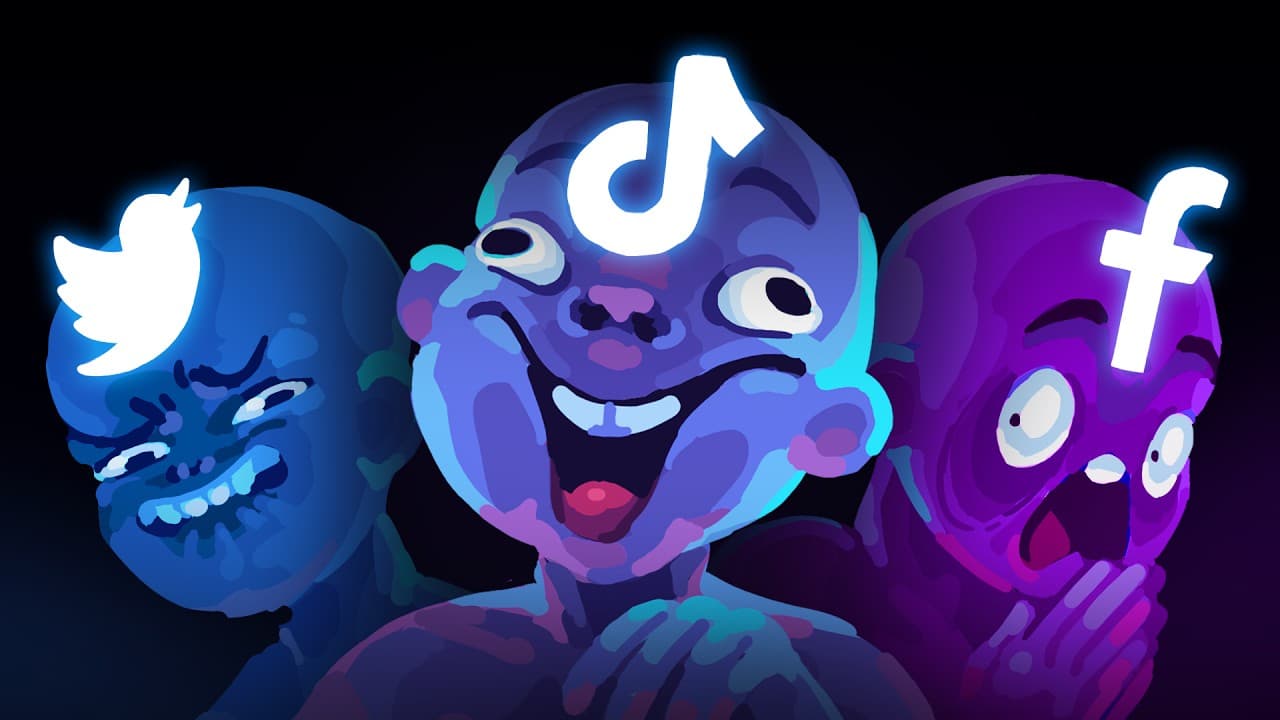
The internet exacerbates division not through filter bubbles, but by presenting us with diverse views our brains struggle to process. As a result, we tend to sort people into opposing teams, amplifying polarization. To tackle this, focusing on smaller online communities might help us regain social connection and understanding.
Transcript
In 2022 nearly half of Americans expected a civil war in the next few years, one in five now believes political violence is justified. And it's not just the US but around the world. People increasingly see themselves as part of opposing teams. There are many different reasons for this, but one gets blamed a lot: social media. Social media d... Read More
Key Insights
- 🛟 Social media is not solely responsible for polarization; real-life interactions are more ideologically isolated.
- 🤕 Our brains evolved to prioritize cooperation within tribal communities and struggle to adapt to the diversity of opinions in the digital age.
- 🤔 Social media amplifies disagreements, fosters team-based thinking, and fuels polarization through the optimization of engagement.
- 👥 Returning to smaller online communities may help reduce polarization by creating more cohesive and aligned groups.
Install to Summarize YouTube Videos and Get Transcripts
Explore YouTube Video Summarizer or Get YouTube Transcript Extractor
Questions & Answers
Q: Does social media create filter bubbles where we only see content that aligns with our views?
Studies show that online filter bubbles are rare. People are constantly exposed to opinions and worldviews that differ from their own. The filter bubble exists more in our real-life interactions than online.
Q: Why does social media exacerbate polarization?
Our brains are wired to sort people into teams based on worldviews. On social media, disagreement becomes a central part of others' identities, making it difficult for us to align and seriously consider their perspectives.
Q: How does social media amplify extreme opinions?
Social media platforms optimize engagement, and anger is the most engaging emotion. The algorithms prioritize showing the most extreme and controversial opinions, leading to an exacerbation of polarization.
Q: Can we do something to mitigate the negative effects of social media?
Awareness of how social media affects our brains is crucial. We can examine our own beliefs and biases and be mindful of how we respond to information based on who is sharing it. Returning to smaller online communities may also reduce social sorting and polarization.
Key Insights:
- Social media is not solely responsible for polarization; real-life interactions are more ideologically isolated.
- Our brains evolved to prioritize cooperation within tribal communities and struggle to adapt to the diversity of opinions in the digital age.
- Social media amplifies disagreements, fosters team-based thinking, and fuels polarization through the optimization of engagement.
- Returning to smaller online communities may help reduce polarization by creating more cohesive and aligned groups.
- Media literacy tools like Ground News can provide transparency and help individuals think critically about the information they consume.
Summary & Key Takeaways
-
Nearly half of Americans predict a civil war in the next few years, and one in five believe political violence is justified.
-
Social media is often blamed for creating filter bubbles and extreme views, but research shows that real-life interactions are more ideologically isolated than online bubbles.
-
Our brains evolved to prioritize social structure and cooperation, but the digital town square of social media amplifies disagreements and fosters team-based thinking, leading to further polarization.
Read in Other Languages (beta)
Share This Summary 📚
Summarize YouTube Videos and Get Video Transcripts with 1-Click
Try YouTube Summary with ChatGPT & Claude or YouTube Transcript Generator
Explore More Summaries from Kurzgesagt – In a Nutshell 📚

Summarize YouTube Videos and Get Video Transcripts with 1-Click
Try YouTube Summary with ChatGPT & Claude or YouTube Transcript Generator