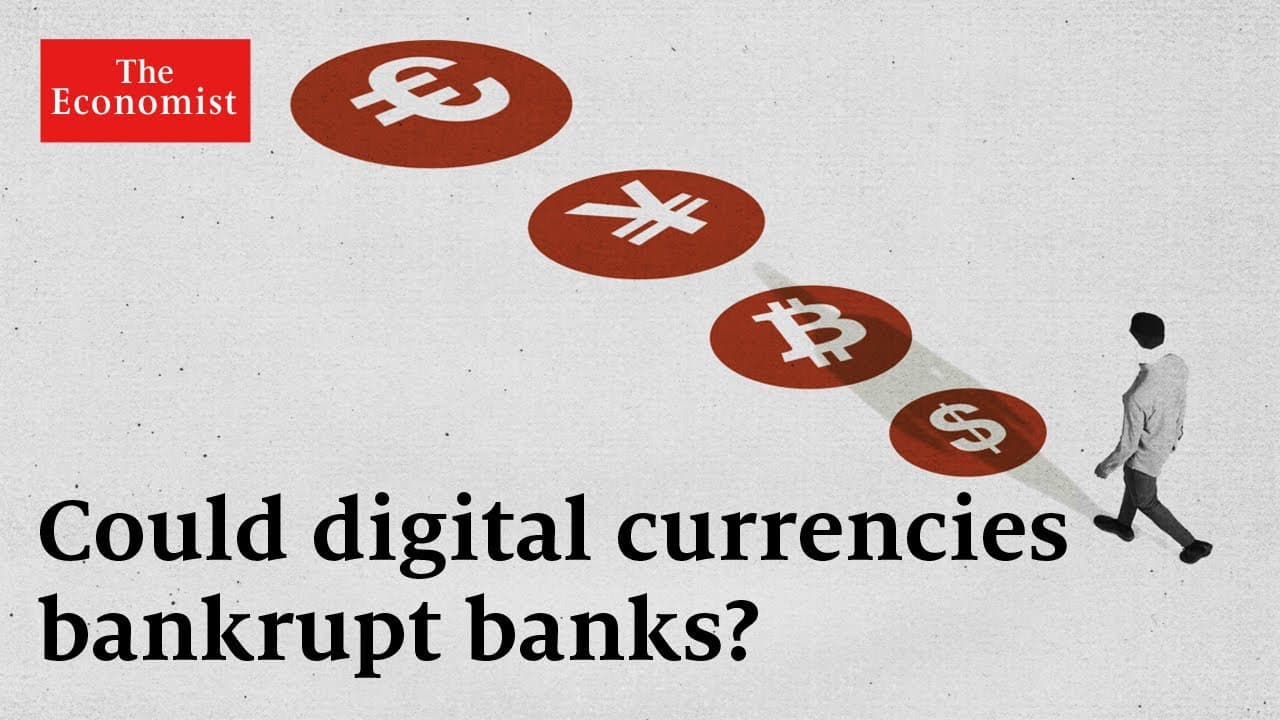
Could digital currencies put banks out of business?
TL;DR
Tech payment giants and digital currencies are revolutionizing the way people use money, which could have significant consequences for consumer privacy, government power, and the stability of the financial system.
Transcript
banks are one of the engines of the modern economy but the way they work is under threat tech payment giants and digital currencies are revolutionizing how people use money and this could have dramatic consequences far beyond banking it could affect consumer privacy government power and the stability of the entire financial system it is difficult t... Read More
Key Insights
- 💵 Banks' historical role in creating money through fractional reserve banking is being challenged by tech giants and digital currencies.
- 🏦 Commercial banks' ability to fund innovative businesses is diminishing, as banks are reluctant to lend against intangible assets.
- 😀 Mega apps like Alipay are providing alternative payment systems and financial services, bypassing traditional banks.
- 😚 Central banks fear losing oversight and control over the economy, leading them to explore the creation of their own digital currencies.
- 🏦 CBDCs could potentially render fractional reserve banks obsolete and give governments greater control over financial transactions.
- 💱 However, there are concerns about cyber warfare and state intervention in everyday transactions with the widespread adoption of digital currencies.
- 🤑 Supporters argue that CBDCs could increase financial inclusion and facilitate cheaper cross-border money transfers.
Install to Summarize YouTube Videos and Get Transcripts
Explore YouTube Video Summarizer or Get YouTube Transcript Extractor
Questions & Answers
Q: How do banks create money through fractional reserve banking?
Banks create money by lending out gold deposits and issuing IOUs as banknotes or digital money. This fractional reserve banking system allows banks to respond to demands for money in an economy and increase the supply of money when needed.
Q: Why are businesses turning to non-bank loans and securities for funding?
Banks are less inclined to lend to businesses that rely on intangible assets like software as security for loans. As a result, businesses, especially innovative startups, are seeking funding from equity investors rather than traditional banks.
Q: How are mega apps like Alipay changing the way people move and spend their money?
Mega apps like Alipay enable users to carry out various transactions, from buying lunch to investing in stocks and shares, without leaving the app. These apps also offer cheap international transactions and disregard national borders, making them popular alternatives to traditional banks.
Q: How are central banks responding to the disruption caused by tech giants and digital currencies?
Central banks are concerned about losing control over the economy and monetary policy. Some are creating their own digital currencies, called central bank digital currencies (CBDCs), to compete with tech giants' payment systems and maintain their influence.
Key Insights:
- Banks' historical role in creating money through fractional reserve banking is being challenged by tech giants and digital currencies.
- Commercial banks' ability to fund innovative businesses is diminishing, as banks are reluctant to lend against intangible assets.
- Mega apps like Alipay are providing alternative payment systems and financial services, bypassing traditional banks.
- Central banks fear losing oversight and control over the economy, leading them to explore the creation of their own digital currencies.
- CBDCs could potentially render fractional reserve banks obsolete and give governments greater control over financial transactions.
- However, there are concerns about cyber warfare and state intervention in everyday transactions with the widespread adoption of digital currencies.
- Supporters argue that CBDCs could increase financial inclusion and facilitate cheaper cross-border money transfers.
- The potential absence of banks could disrupt the financial equilibrium and have far-reaching consequences for the global economy and individuals' financial lives.
Summary & Key Takeaways
-
Banks have historically created money through fractional reserve banking, where they lend out gold deposits and issue IOUs as banknotes or digital money.
-
However, the traditional role of banks in financing businesses is diminishing, with non-bank loans and securities rising.
-
Mega apps like Alipay and initiatives by tech giants like Facebook and Amazon are disrupting the banking system by providing alternative payment systems and financial services.
-
Central banks fear losing control and oversight over the economy, leading some to develop their own digital currencies to rival tech giants' payment systems.
Read in Other Languages (beta)
Share This Summary 📚
Summarize YouTube Videos and Get Video Transcripts with 1-Click
Try YouTube Summary with ChatGPT & Claude or YouTube Transcript Generator
Explore More Summaries from The Economist 📚




Summarize YouTube Videos and Get Video Transcripts with 1-Click
Try YouTube Summary with ChatGPT & Claude or YouTube Transcript Generator