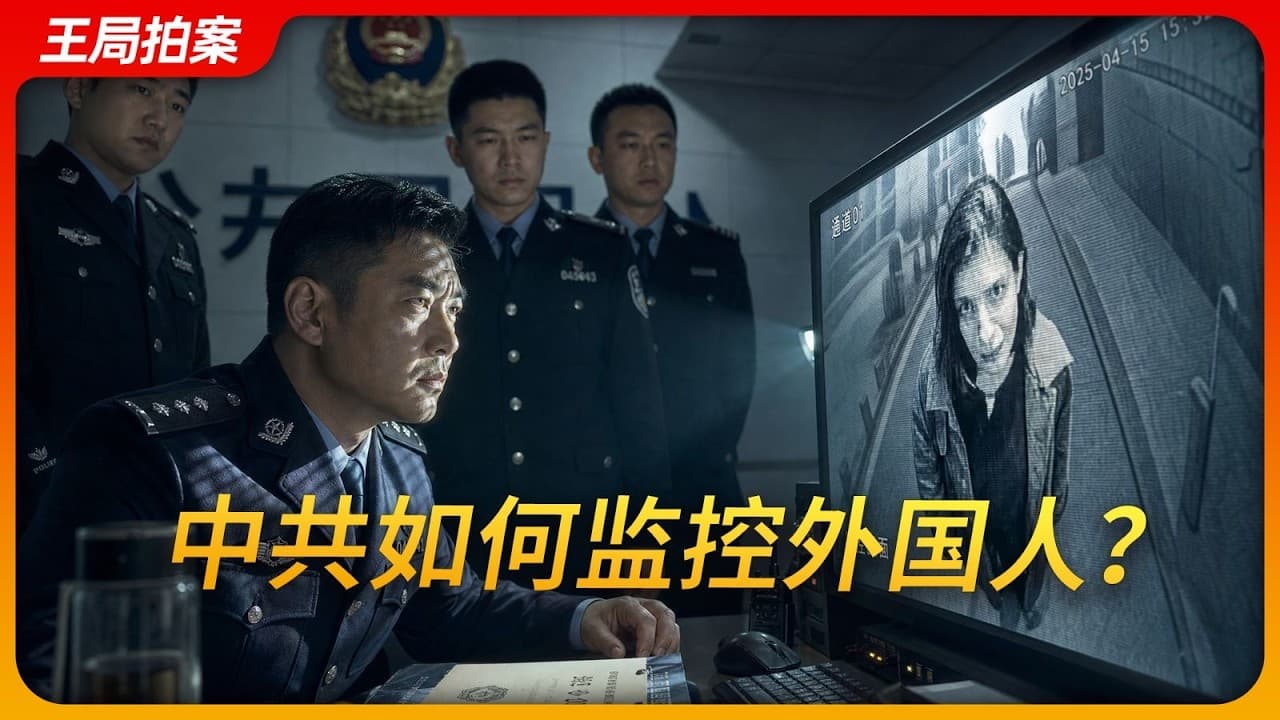
How China Tracks Foreigners: The Zhangjiakou Surveillance System
TL;DR
The system classifies foreign nationals by origin and purpose, then links travel, accommodation, and biometric data to a citywide camera network to build detailed movement profiles. It highlights Five Eyes scrutiny and shows journalists, students, and family visitors as key monitoring targets. The data sources include IDs, tickets, hotel records, and facial recognition.
Transcript
Today, we're going to talk about a highly sophisticated electronic surveillance system the Chinese Communist Party h as developed in recent years to monitor foreign nationals. The system was first uncovered by a Dutch journalist named Mark Hofer. Mark had previously worked as a correspondent in China. After leaving, he moved to Amsterdam and became... Read More
Key Insights
- Foreign national monitoring is organized by nationality and purpose, creating tailored categories for easier risk assessment.
- The system uses travel records, hotel stays, and registration data to reconstruct a foreigner’s movements with high precision.
- Facial recognition is integrated with camera networks to link identities to locations, enabling real-time or near real-time tracking across sites.
- Five Eyes countries receive special scrutiny, suggesting political considerations influence data segregation and alerting.
- Certain national groups like Hong Kong, Macau, and Taiwan residents face heightened monitoring due to political sensitivities.
- Journalists form a distinct monitoring category with detailed personal data to enable rapid alerting when they travel to or within cities.
- The platform appears designed to trigger alerts for foreign visitors who plan to or do travel to key cities, enhancing proactive security measures.
- The system combines government data with commercial and lifestyle information such as gas station visits to complete movement profiles.
Install to Summarize YouTube Videos and Get Transcripts
Explore YouTube Video Summarizer or Get YouTube Transcript Extractor
Questions & Answers
Q: What groups are explicitly prioritized in the monitoring system?
The monitoring system classifies foreign nationals by origin and purpose, with Five Eyes countries receiving separate attention due to tense relations. Other groups flagged for extra scrutiny include nationals from Israel, Morocco, Pakistan, India, Iran, and Afghanistan, as well as Russians and Ukrainians. This categorization guides where resources and officials focus their attention and how intensively people are tracked.
Q: How does the system gather and connect data about a foreigner’s movements?
Data is collected from train and airline tickets, hotel registrations, and accommodation records, which are then linked to identity documents and photo IDs. Facial recognition cameras across the city are connected to the database, allowing automatic matching of individuals to locations and dates. This integration enables a reconstructed map of movements and daily life across various venues.
Q: What role do hotels and registration play in surveillance?
Accommodation records and mandatory registrations provide continuous, verifiable evidence of where a foreign national stays, enabling authorities to trace overnight locations and dwelling patterns. Even when a person moves, the new site is registered and logged, creating a chain of custody for every stay, which can be cross-referenced with travel ticket data and camera footage.
Q: Why are journalists given special treatment in the system?
Journalists are assigned a separate category with detailed personal data, including passport information, family details, and contact information. The purpose appears to be to monitor when journalists move into or through particular cities, allowing authorities to anticipate reporting visits and potential security concerns, while ensuring rapid awareness of their presence.
Q: How might facial recognition enhance monitoring for foreigners?
Facial recognition links facial data from passports and visas to real-time camera feeds. When a foreign national appears in a monitored area, the system can flag the event and trace movements through multiple locations, building a continuous, location-based history that informs security personnel about potential risk or outreach opportunities.
Q: What does the system suggest about monitoring hospitality and leisure activities?
The platform records activities at ski resorts, restaurants, and shopping centers, indicating that leisure patterns are interpreted as potential indicators of travel behavior and risk. By tracking where foreigners spend time, authorities gain insight into routines and networks, not just locations visited, enabling more nuanced monitoring.
Q: What categories indicate potential political sensitivity in monitoring?
Groups connected to political sensitivities, such as residents from Hong Kong, Macau, and Taiwan, or individuals visiting for family reunification, are treated with particular scrutiny. This reflects a concern that political activity or affiliations could translate into security risks, prompting closer observation of movements and associations.
Q: What does the system reveal about the scale of surveillance in Zhangjiakou?
The system integrates data from thousands of cameras and multiple data streams to create a detailed portrait of foreign nationals in the city. It demonstrates how a localized platform can be connected to national intelligence concerns, highlighting the potential for broad, cross-dataset surveillance that extends beyond travel to daily life and personal associations.
Summary & Key Takeaways
-
The Zhangjiakou platform aggregates foreign national data into a centralized monitoring system that connects to multiple interfaces and external databases, enabling a detailed reconstruction of travel and daily activities within the city.
-
Foreign journalists, students, and family visitors are singled out for closer attention, with their information stored and potentially used to trigger alerts whenever they enter or move within targeted areas.
-
The system combines facial recognition with travel and accommodation records to create a comprehensive behavioural profile, illustrating how surveillance can extend beyond mere location tracking to implied intent and risk assessment.
Read in Other Languages (beta)
Share This Summary 📚
Summarize YouTube Videos and Get Video Transcripts with 1-Click
Try YouTube Summary with ChatGPT & Claude or YouTube Transcript Generator
Explore More Summaries from 王志安 📚


Summarize YouTube Videos and Get Video Transcripts with 1-Click
Try YouTube Summary with ChatGPT & Claude or YouTube Transcript Generator