How Can You Responsibly Vibe Code in Production? | Code w/ Claude
TL;DR
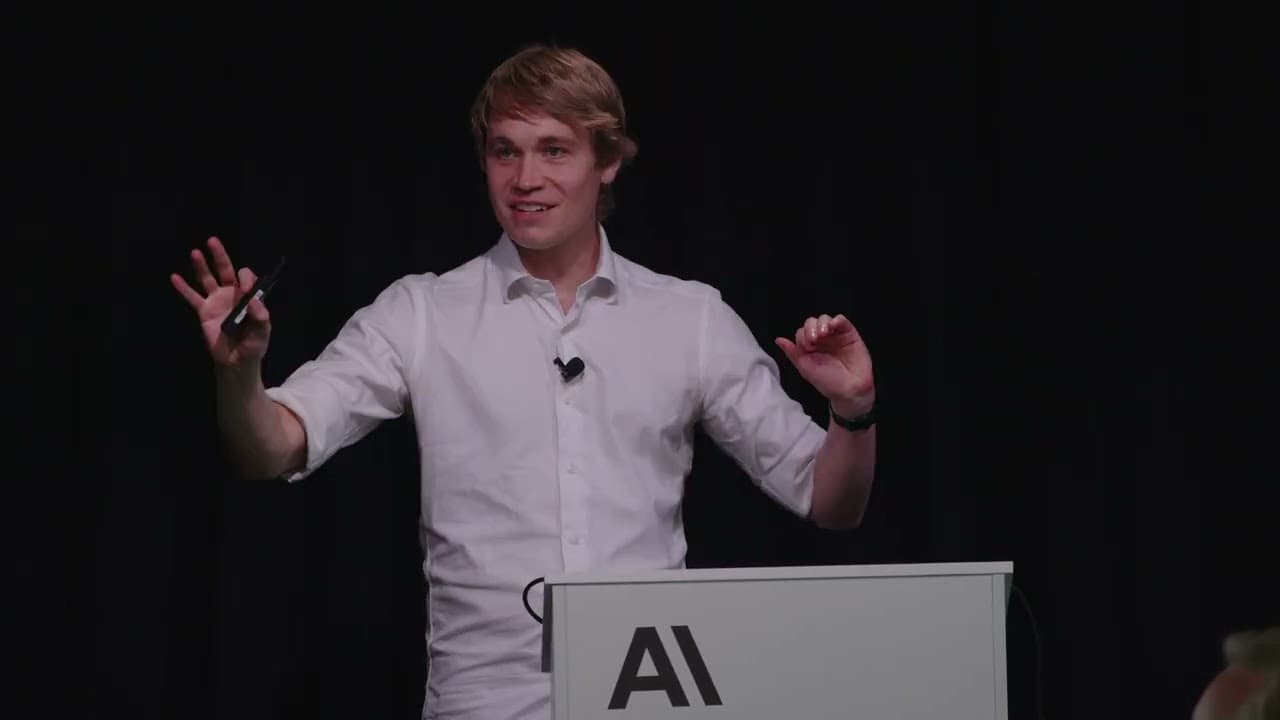
Responsible vibe coding in production means forgetting that the code exists without forgetting that the product exists. Eric recommends starting with low-stakes areas, giving the AI clear requirements and constraints, and verifying results through acceptance tests, checkpoints, and stress tests. Because the length of tasks AI can handle is described as doubling every seven months, these practices offer a timely framework worth exploring further.
Transcript
Hey everyone, welcome. I'm here to talk about everyone's uh favorite subject, vibe coding. Uh and somewhat uh controversially, how to vibe code in prod responsibly. So let's uh let's talk about vibe coding and like uh what this even is. So first of all, I'm Eric. I'm a researcher at Enthropic uh focused on coding agents. Uh I was the author... Read More
Key Insights
- Vibe coding is not just using AI to write code; it's about embracing AI's full potential while forgetting the code's existence.
- The exponential growth of AI capabilities means tasks it can handle double every seven months.
- Responsible vibe coding focuses on low-risk areas, or 'leaf nodes,' in the codebase where errors have minimal impact.
- Acting as a product manager for AI involves providing clear guidance and context to help AI succeed.
- Trust in AI-generated code can be built through verifiable checkpoints and stress tests for stability.
- Vibe coding is not suitable for everyone, especially those without technical expertise.
- AI tools can accelerate learning by providing instant insights and explanations on unfamiliar code.
- The software industry must adapt to leverage AI's exponential growth, or risk falling behind.
Install to Summarize YouTube Videos and Get Transcripts
Explore YouTube Video Summarizer or Get YouTube Transcript Extractor
Questions & Answers
Q: How can developers responsibly vibe code in production?
Developers should forget that the code exists, but not that the product exists. They should begin with low-risk areas, give the AI clear guidance and context, and verify the resulting product through acceptance tests, checkpoints, and stress tests.
Q: What does vibe coding mean?
Vibe coding means fully embracing AI-generated code and forgetting that the code itself exists. Eric distinguishes it from using Cursor or Copilot while remaining in a tight feedback loop and reviewing the generated code.
Q: Why should developers consider vibe coding for production?
The talk says the length of tasks AI can complete is doubling every seven months and is currently about an hour. If AI progresses to completing a day or week of work at a time, developers will not be able to review everything while moving in lockstep with it.
Q: What does “forget the code, not the product” mean?
Developers may stop examining every implementation detail while continuing to evaluate whether the product behaves correctly. The talk compares this approach to using compilers without routinely reading their assembly output.
Q: Why should vibe coding begin with low-risk or “leaf node” work?
Low-risk areas limit the impact of mistakes and make early use of AI-generated code safer. The positive examples discussed include video games and fun side projects where a bug is acceptable, while the existing page identifies suitable low-risk code areas as “leaf nodes.”
Q: What guidance should developers give an AI coding agent?
Developers should act like product managers by supplying clear requirements, specifications, constraints, and project context. This guidance helps the AI understand the intended product and gives developers concrete outcomes to evaluate.
Q: How can teams verify AI-generated code without reviewing every line?
Teams can define acceptance tests and use verifiable checkpoints to judge whether the product meets its requirements. Stress tests can further check stability, allowing teams to evaluate outputs and behavior instead of reading every implementation detail.
Q: What risks can irresponsible vibe coding create?
The talk describes unexpected activity that maximized API-key usage, users bypassing subscriptions, and unwanted changes in databases. These examples show why production use requires safeguards and verification even when developers are no longer reviewing every line of code.
Summary & Key Takeaways
-
Vibe coding allows AI to autonomously generate code, but doing so responsibly is key to avoiding pitfalls. By focusing on low-risk areas of the codebase and acting as an effective product manager for the AI, developers can leverage AI's growing capabilities. This involves providing clear guidance and ensuring code verifiability through stress tests.
-
The exponential growth of AI capabilities means developers must adapt to remain competitive. While AI can handle increasingly complex tasks, trust is built through careful planning and verification. Developers need to focus on areas where errors have minimal impact and ensure AI-generated code meets quality standards.
-
AI tools can enhance learning by offering immediate insights and explanations, but the responsibility lies with developers to guide AI effectively. As AI continues to evolve, the software industry must embrace these changes, focusing on leveraging AI's potential while ensuring code security and stability.
Read in Other Languages (beta)
Share This Summary 📚
Summarize YouTube Videos and Get Video Transcripts with 1-Click
Try YouTube Summary with ChatGPT & Claude or YouTube Transcript Generator
Explore More Summaries from Anthropic 📚




Summarize YouTube Videos and Get Video Transcripts with 1-Click
Try YouTube Summary with ChatGPT & Claude or YouTube Transcript Generator